General Appearance
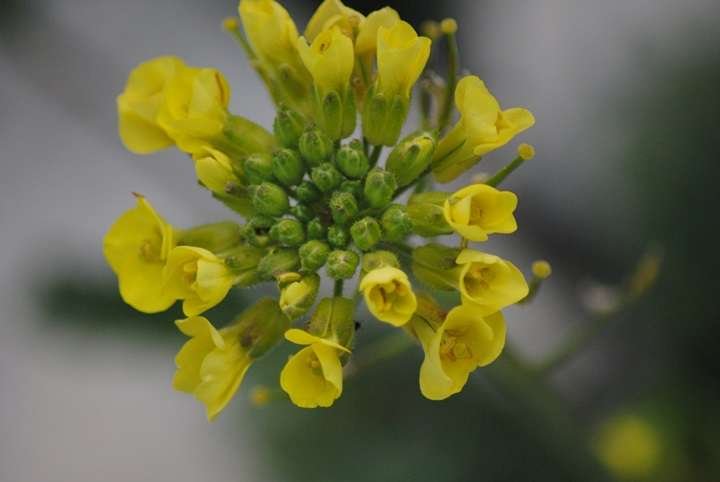
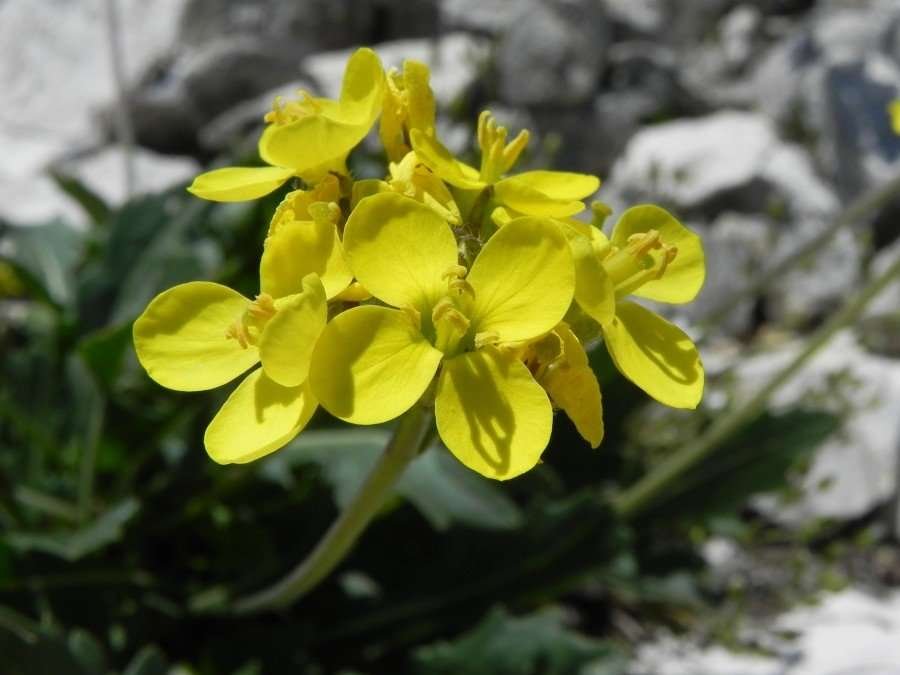
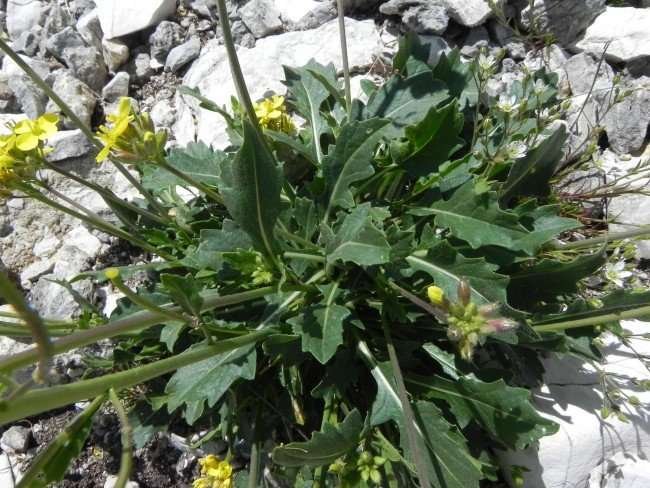
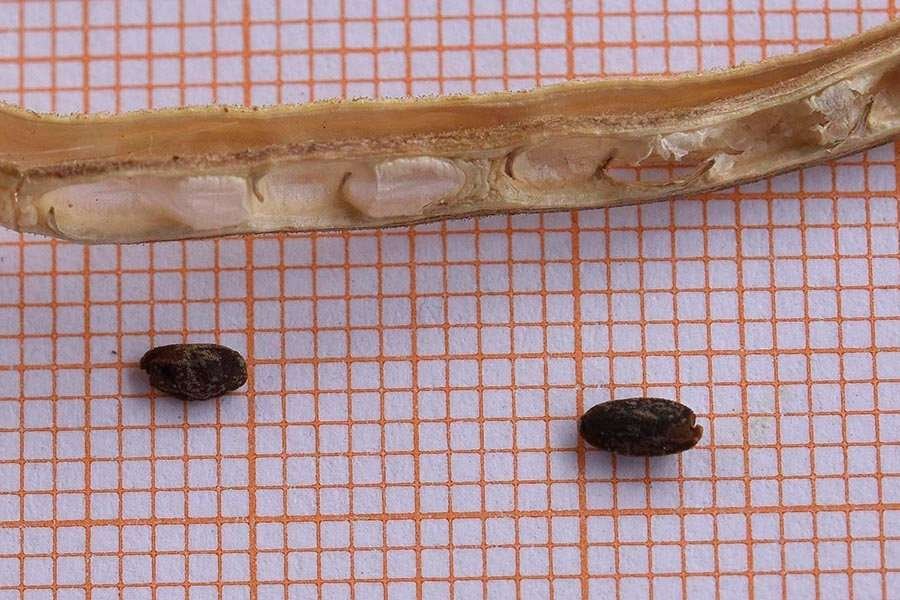
Guenthera gravinae (Ten.) Gómez-Campo / Homotypic Synonyms: Brassica gravinae Ten., it is a perennial herb, often caespitose, up to 10-30 (-60) cm tall in fruit, usually simple, pubescent or hispid. Basal leaves forming a dense rosete, oblong-obovate, lyrats to sinuate-dentate, sub fleshy, shortly petiolate. Cauline leaves absent or sometimes 1-2, sub-sessile, smaller, slightly dentate. Racemes 20-5O-flowered, corymbose, lax in fruit. Flowers yellow. Sepals 5-9 mm long, glabrous to hispid, obtuse. Petals 9-12 mm long, obovate. Stamens 5-6: 8-9 mm long; anthers 1.5 mm long. Siliquae 20-50.x 2-3 mm, sub terete, narrowed into it short, 2.5-4 mm long, seedless beak. Seeds globose, brownish, 1-1.5 mm in diameter.

Life Form
Phytochoria
Distribution in Libya
Marmarica Plateau: Cited from Tobruk et Bardia by Maire Reported in Marmarica north-eastern part of Libya by Pampanini 1930
Notes
Wild in Libya, a species growing in rocky and stony places.
This species is accepted: https://powo.science.kew.org/taxon/urn:lsid:ipni.org:names:279351-1
Link of images: https://www.actaplantarum.org/flora/flora_info.php?id=501659
For more information
https://powo.science.kew.org/taxon/urn:lsid:ipni.org:names:279351-1, https://www.ipni.org/n/60432254-2, https://www.worldfloraonline.org/taxon/wfo-0000571141, https://www.gbif.org/species/3042514, https://africanplantdatabase.ch/en/nomen/specie/140857/brassica-gravinae-ten, https://www.actaplantarum.org/flora/flora_info.php?id=501659
First: Encyclopedia Flora of Libyan:
Ali, S.I. & Jafri, S.M.H. (1977) Flora of Libya, Brassicaceae Vol. (23) Department of Botany, Al-Faateh Univ., Tripoli, Libya. Page. 17- under Brassica gravinae Ten.
Second: Researches and PhD theses, master theses, Sorted by Newest:
Saaed, M.W.B., EL-Barasi, Y.M. & Rahil, R.O. (2021) An updated checklist and quantitative analysis of the Marmarica Plateau flora, in the north-eastern part of Libya. Phytotaxa 509 (1): 001-055. https://phytotaxa.mapress.com/pt/article/view/phytotaxa.509.1.1
An-updated-checklist-and-quantitative-analysis-of-the-Marmarica-Plateau-flora-مضغوط
Leave a Reply