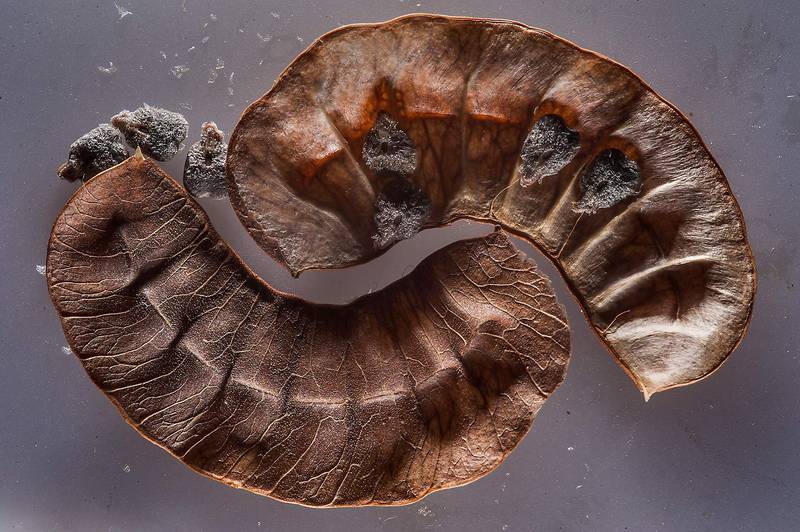
Senna italica Mill.

Common Name: Agerer, Senha.
Family: Fabaceae

General Appearance

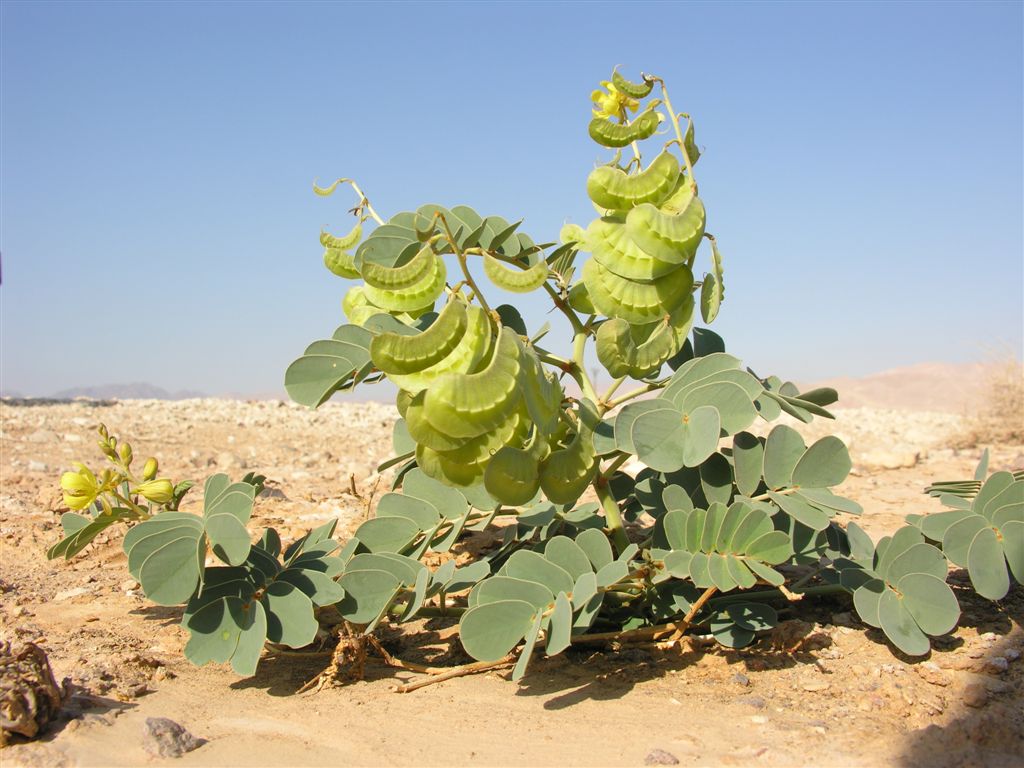
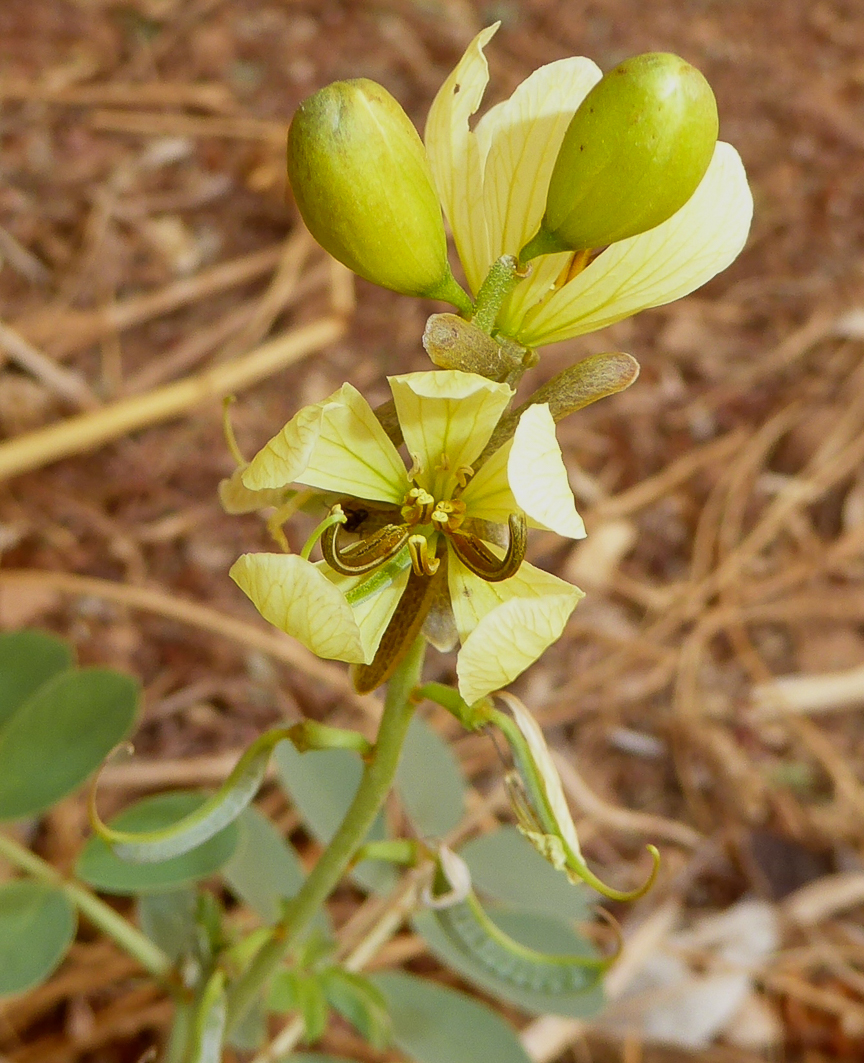
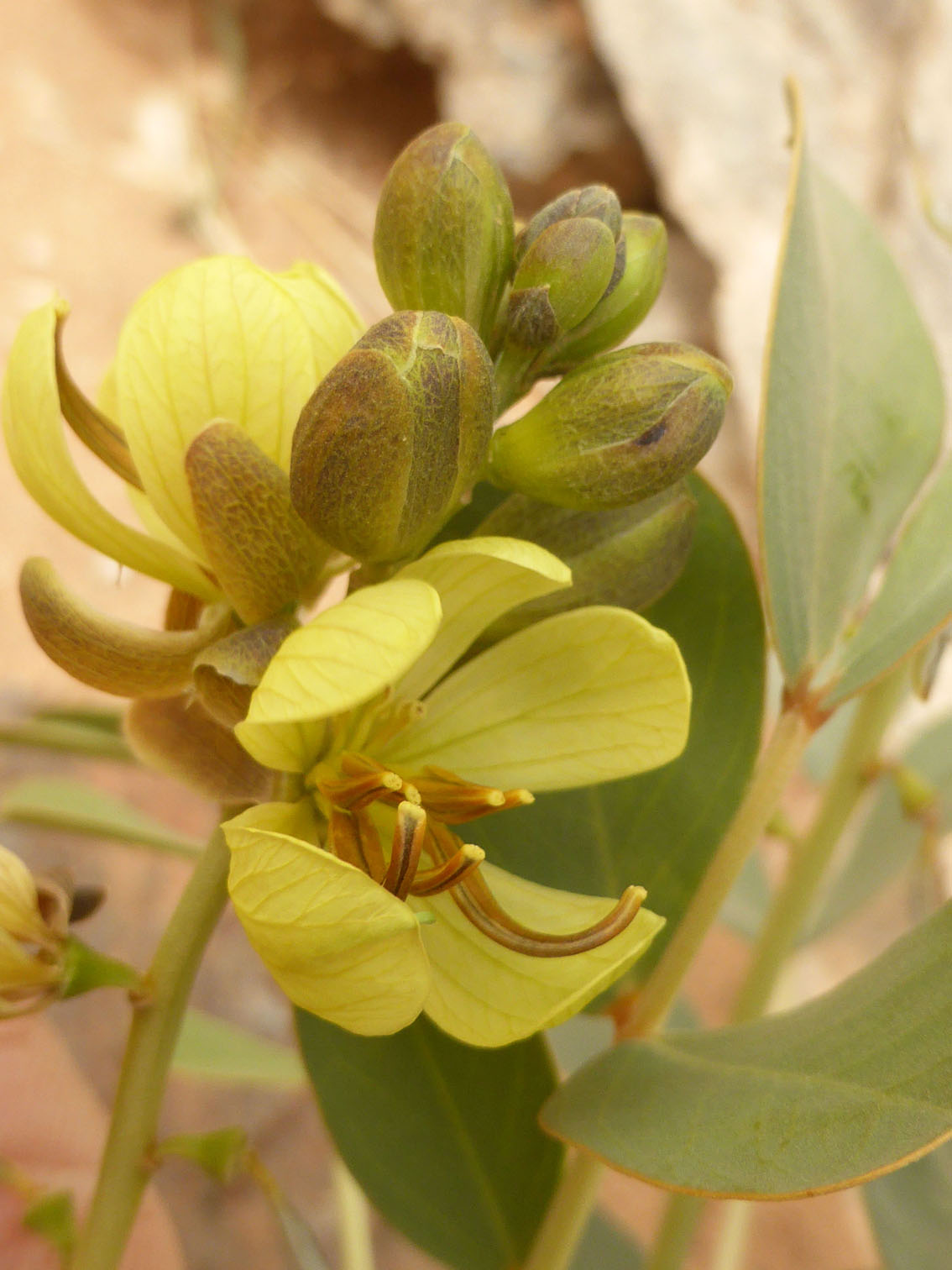
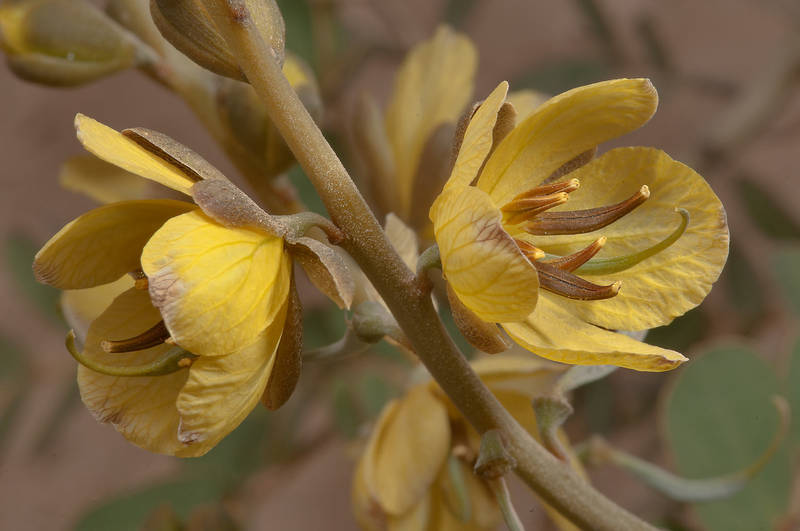
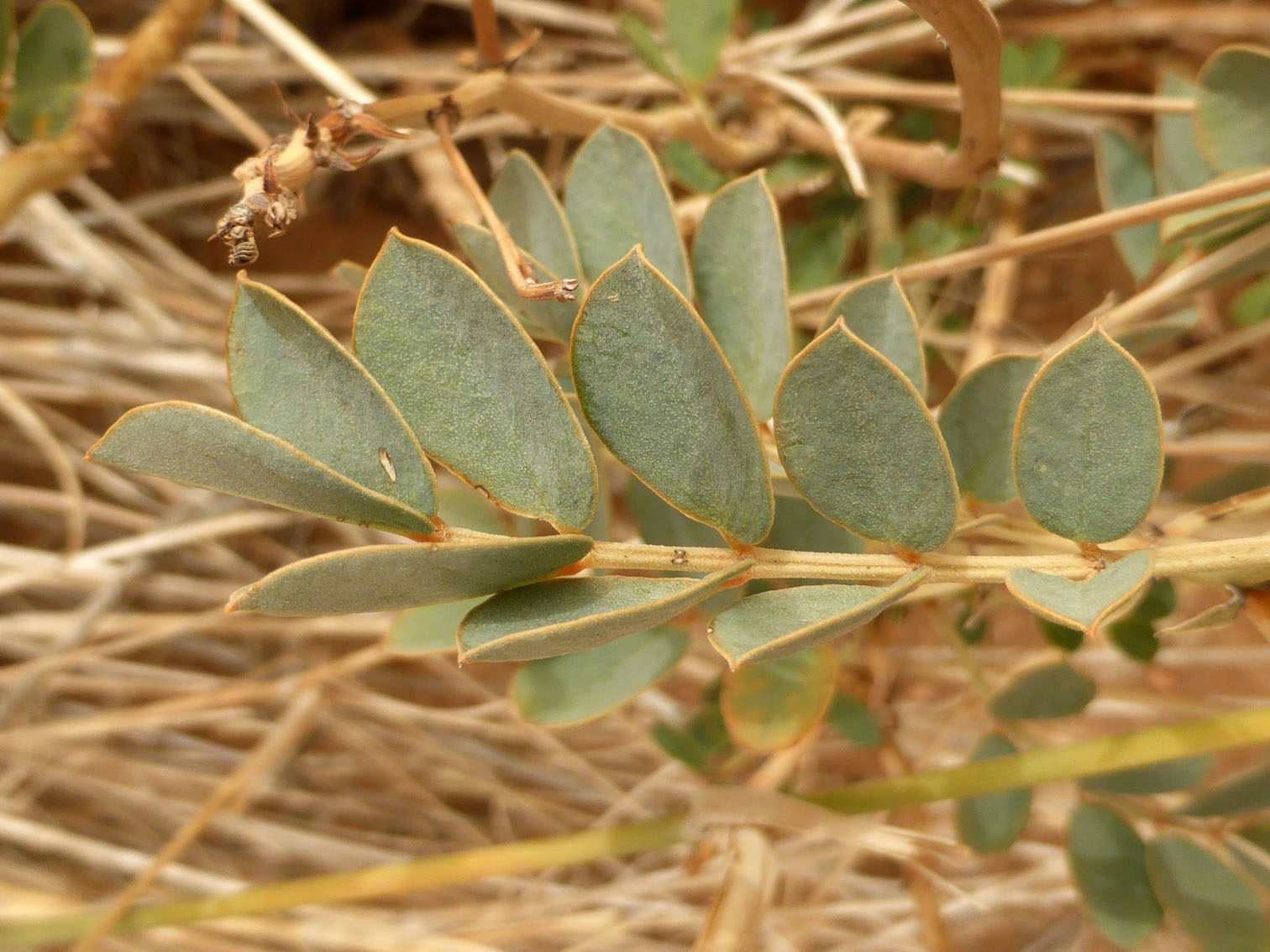
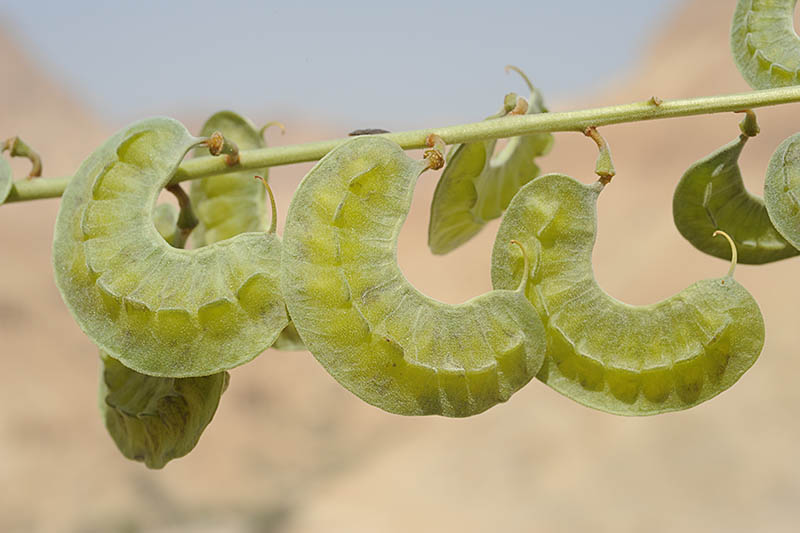
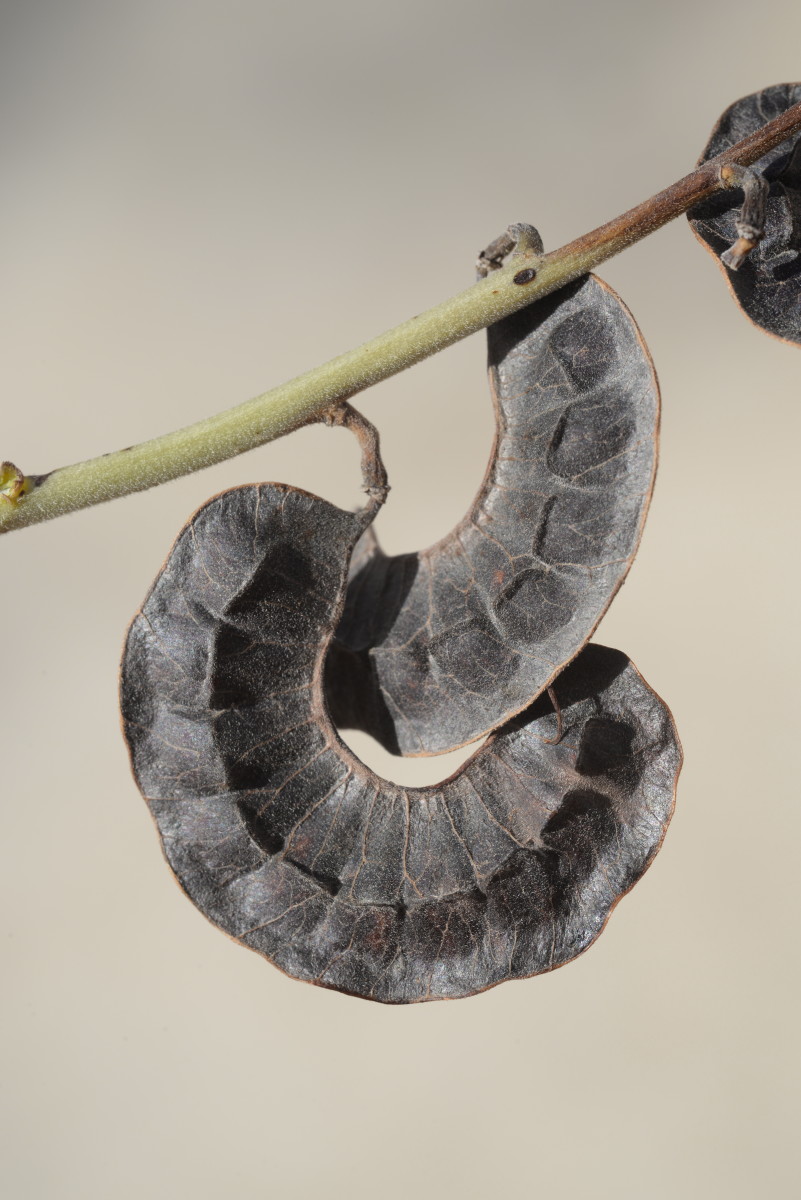
Senna italica Mill. / Synonyms: Cassia italica (Mill.) F.W.Andr. , it is a prostrate or ascending shrublet or herb from a woody base, to 15-60 cm high. Leaves paripinnate, stipules 5-6 × 1 mm, narrowly triangular, pubescent, persistent, petiole 0.3-2 cm long, pubescent, rachis 5.5-8 cm long, pubescent, eglandular or with a very small reddish gland between the leaflet pairs, leaflets in (4) 5-7 (8) pairs, 1.6-3.6 × 0.6-2 cm, the distal largest, oblong to broadly obovate, base broadly cuneate or rounded, slightly asymmetric, apex obtuse to rounded or retuse, usually mucronate, glabrous to sparsely pubescent, the margin and midrib beneath more densely pubescent, petiolules up to 1 mm long, glabrous to pubescent. Branchlets pale grey-brown, pubescent, weakly longitudinally ridged. Inflorescences axillary many-flowered racemes, 7-26 cm long, including the peduncle, bracts c.5 × 3 mm, broadly ovate, acuminate, pubescent, caducous, pedicels 2-3 mm long at anthesis. Sepals 5, elliptic to obovate, glabrous. Petals orange to yellow, obovate, slightly unequal. Stamens 10, two fertile with long arcuate anthers and very short filaments; five fertile with short straight anthers and straight filaments, three probably sterile with anthers curved into a semi-circle and straight filaments. Ovary flattened, glabrous to villous, style terete, stigma terminal. Pod weakly curved to almost straight, flattened, usually bearing distinct crests on the flat faces in the middle of each segment, mucronate (style-base), tardily dehiscent along both sutures. Seeds brown, 6-7 × 2-3 mm, obovate, flattened, with a narrowly elliptic areole c.2 mm long on each broad face.

Flowering in: Sept-Oct.

Life Form

Ch

Phytochoria

The native range of this species is Africa to Indian Subcontinent.

Distribution in Libya

Fezzan area:  (150 km) from Sebha to Germa 1973

Ghat area:   Ghat (Between Acacus and Tassili Mountains) 2004  Wadi Tanezzuft 2012

Jabal Al-Uwinat:  Gebel Uweinat 1968  Jabal Al-Uweinat region 2008

Notes

Wild in Libya, medicinal plant, rare species, confined to S. arid parts of Libya.

This species is accepted: https://powo.science.kew.org/taxon/urn:lsid:ipni.org:names:518341-1

Link of images: https://www.floraofqatar.com/senna_italica.htm,   https://www.teline.fr/en/photos/fabaceae/senna-italica,   https://flora.org.il/en/plants/senita/

First: Encyclopedia Flora of Libyan:

Jafri, S.M.H. & El-Gadi, A. (1978) Flora of Libya, Caesalpiniaceae Vol.  (61) Department of Botany, Al-Faateh Univ., Tripoli, Libya. Page. 3- under Cassia italica (Mill.) F.W.Andr.

Second: Researches and PhD theses, master theses, Sorted by Newest:

Mukassabi, T.A, Ahmidat, G., Sherif, I.M., ELMogasapi, A. (2012) Checklist and life forms of plant species in contrasting climatic zones of Libya. Biological Diversity and Conservation – 5 / 3 (2012) https://dergipark.org.tr/en/pub/biodicon/issue/55888/765799, https://www.researchgate.net/publication/259357995_Checklist_and_life_forms_of_plant_species_in_contrasting_climatic_zones_of_Libya

Checklist and life forms of plant species in contrasting climatic zones of Libya. 2012

Alzwai, A.M.H. (2008) A study of the vegetation covers of the Jabal Al-Uweinat region in Libya. Master Thesis – Botany Department – College of Science – Garyounis University – Libya. (In Arabic).

Ahmidat, Gh. (2004) Study of the vegetation cover of the area between the Acacus Mountains and the Tassili Mountains (Ghat). Master Thesis. Department of Botany.College of Science. Sebha University. Libya. (In Arabic).

Leave a Reply

Your email address will not be published. Required fields are marked *