General Appearance
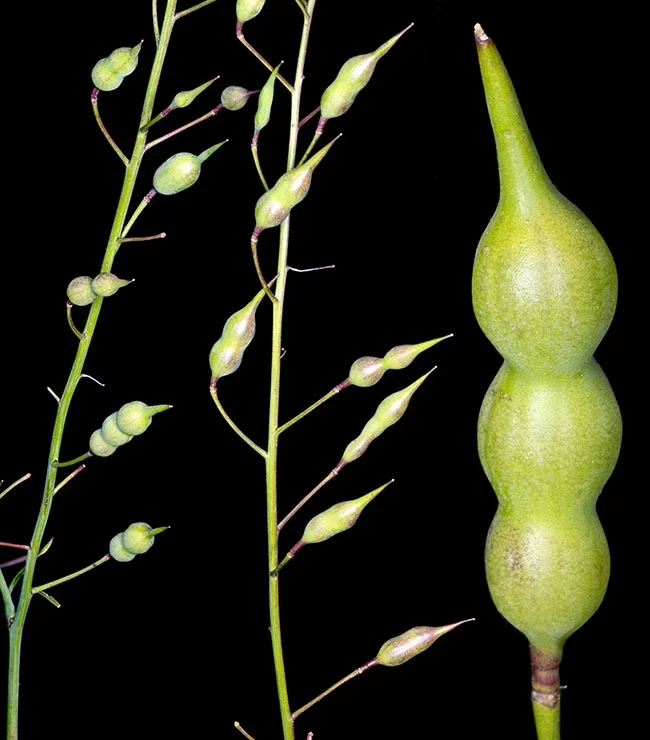
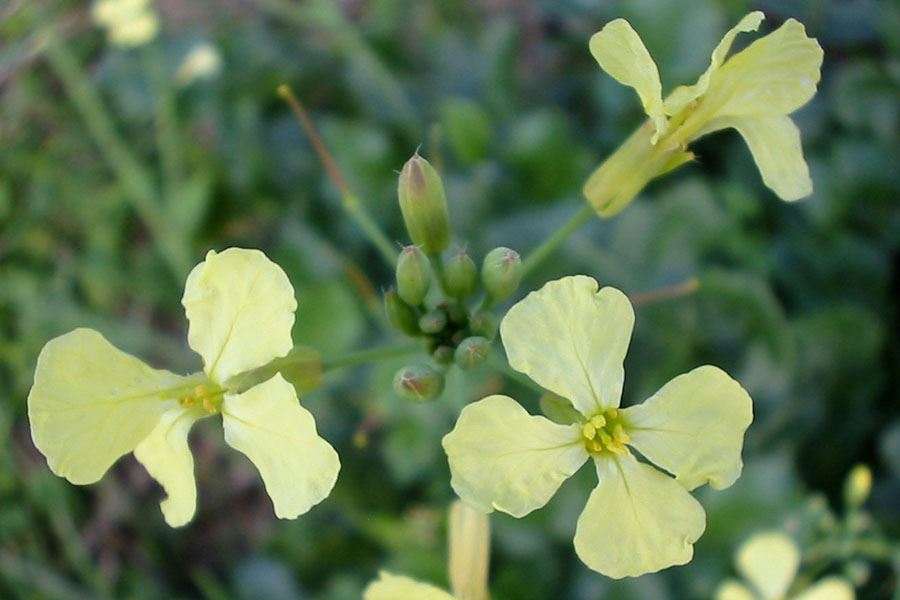
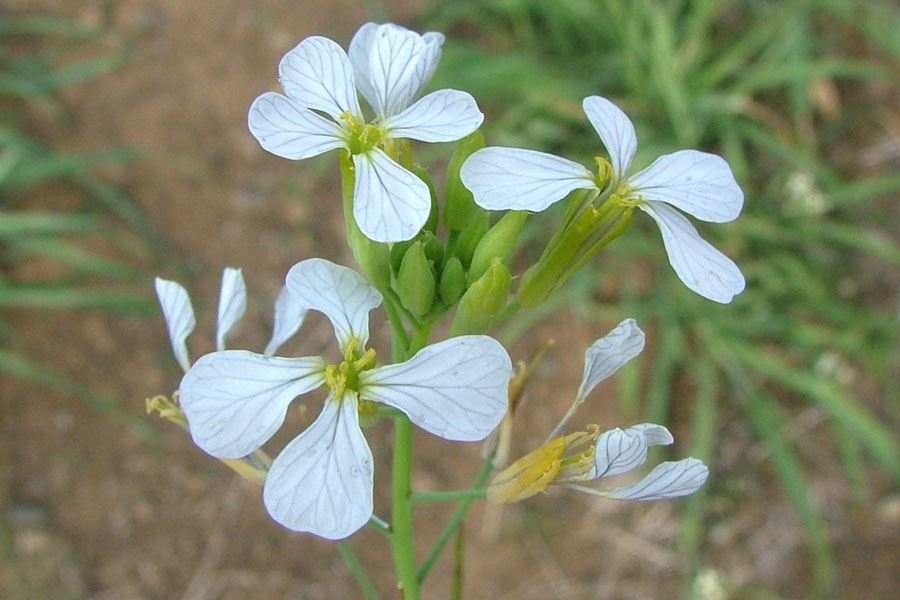
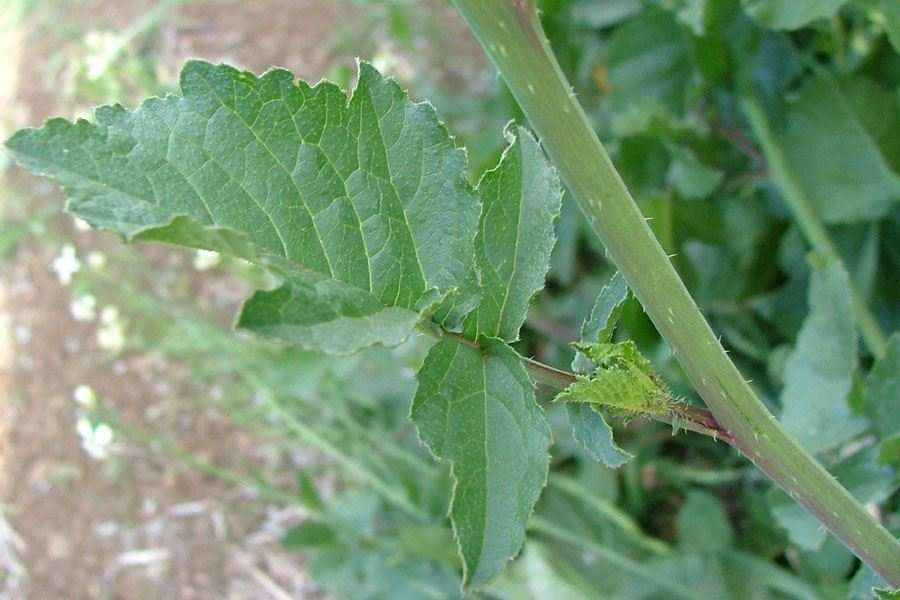
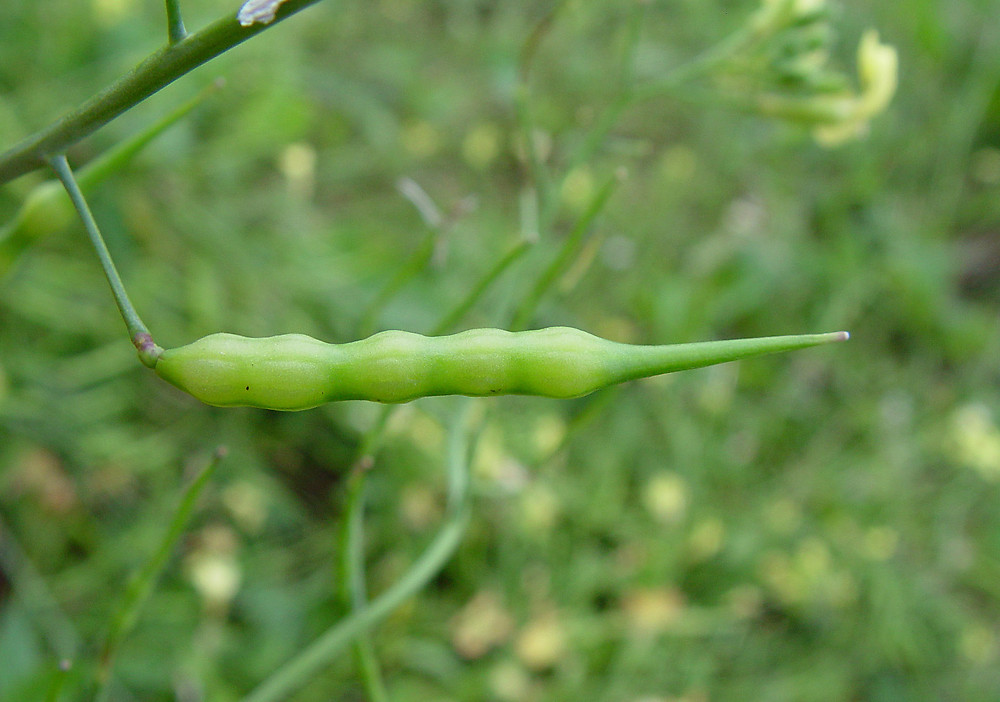
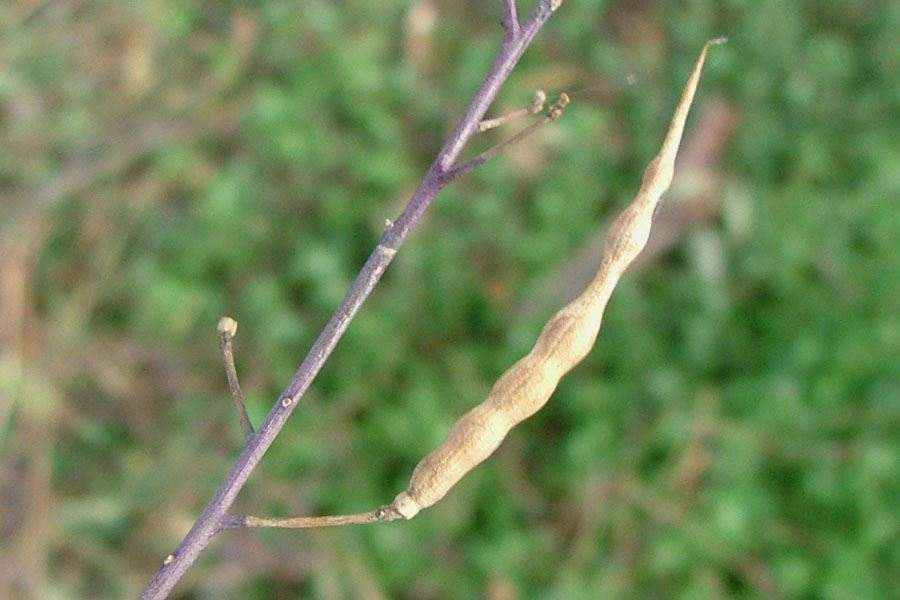
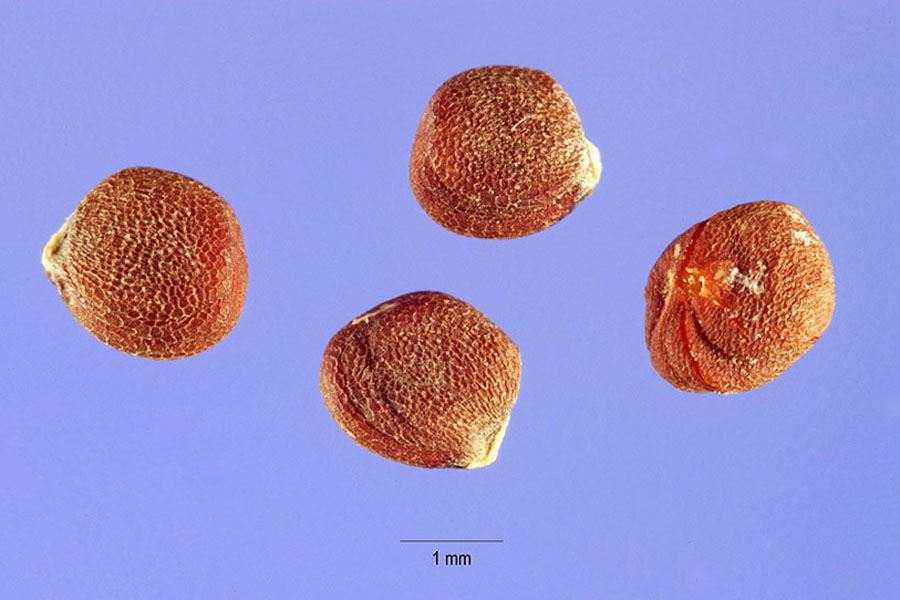
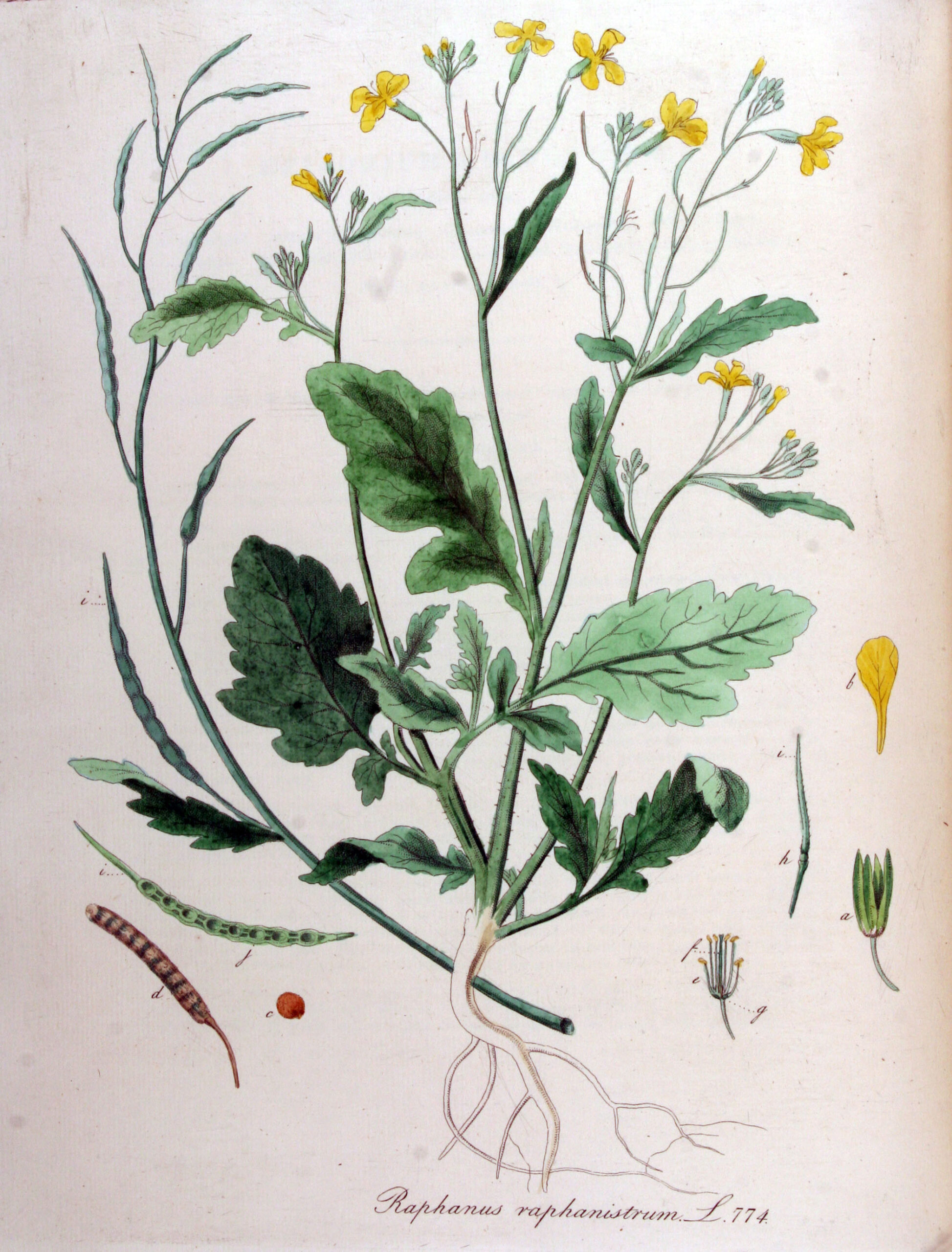
Raphanus raphanistrum L., it is an annual herb, up to 20-60 cm tall. creel herb with slender, non-tuberous root. Lower leaves 1-4-jugate with a large rounded terminal lobe; very variable in size. Upper leaves much smaller, pinnate or toothed. Flowers c. 1.5 cm across, whitish or yellowish with purple or dark veins. Pedicels up to 2 cm long in fruit. Sepals 6-8 x c. 2 mm. Petals 15-20 x 5-7 mm. Stamens 7-9: 10-12 mm; anthers 2-3 mm long. Siliquae, upper segment (15-) 20-60 x 3-5 (-7) mm, usually constricted between (2-) 3-8 (-10) seeds and ending into a slender, tapering, seedless beak, breaking into 1-seeded parts. Seeds ovate-oblong to sub spherical, 1.5-2.5 mm in diam.; lower segment inconspicuous 1-3 mm long, seedless.
Life Form
Phytochoria
Distribution in Libya
Al-Jafarah Plain: Tripoli, Universality Campus 1977 Sidi-Omeer 2016
Jabal Nafusa: Gasar Akhiar, Ghanima 2016
Al-Jabal Al-Akhder: Wadi Jarjar-Omma 2017
Notes
Wild in Libya, radish or charlock is a weed of cultivated areas.
This species is accepted: https://powo.science.kew.org/taxon/urn:lsid:ipni.org:names:217826-2
Link of images: https://gobotany.nativeplanttrust.org/species/raphanus/raphanistrum/, https://keyserver.lucidcentral.org/weeds/data/media/Html/raphanus_raphanistrum.htm, https://commons.wikimedia.org/wiki/File:Raphanus_raphanistrum_%E2%80%94_Flora_Batava_%E2%80%94_Volume_v10.jpg
For more information
https://powo.science.kew.org/taxon/urn:lsid:ipni.org:names:217826-2, https://www.ipni.org/n/217826-2, https://www.worldfloraonline.org/taxon/wfo-0000402425, https://www.gbif.org/species/3040983, https://africanplantdatabase.ch/en/nomen/specie/78012/raphanus-raphanistrum-l, https://flora.org.il/en/plants/RAPRAP/, https://www.monaconatureencyclopedia.com/raphanus-raphanistrum/?lang=en, https://gobotany.nativeplanttrust.org/species/raphanus/raphanistrum/, https://keyserver.lucidcentral.org/weeds/data/media/Html/raphanus_raphanistrum.htm, https://en.wikipedia.org/wiki/Raphanus_raphanistrum, https://commons.wikimedia.org/wiki/File:Raphanus_raphanistrum_%E2%80%94_Flora_Batava_%E2%80%94_Volume_v10.jpg
First: Encyclopedia Flora of Libyan:
Ali, S.I. & Jafri, S.M.H. (1977) Flora of Libya, Brassicaceae Vol. (23) Department of Botany, Al-Faateh Univ., Tripoli, Libya. Page. 42.
Second: Researches and PhD theses, master theses, Sorted by Newest:
Mukassabi, T.A., Thomas, P.A., ELMogasapi, A. (2017) Medicinal plants in Cyrenaica, Libya: existence and extinction. Biological Diversity and Conservation – 10/2 (2017) 183-192. https://eprints.keele.ac.uk/id/eprint/4064/
Medicinal plants in Cyrenaica, Libya 2017
Najah, A. M. (2016) The Natural Plant (Sidi Omir-Kasr El Khiar-Ghanima) as a model. Journal of Humanities, Scientific and Social Sciences, Faculty of Arts and Sciences, Qasr Kheyar, Al-Mirqab University, Issue 2, pp. (109-145). (In Arabic) http://khsj.elmergib.edu.ly/2016_2_ar.pdf

Leave a Reply