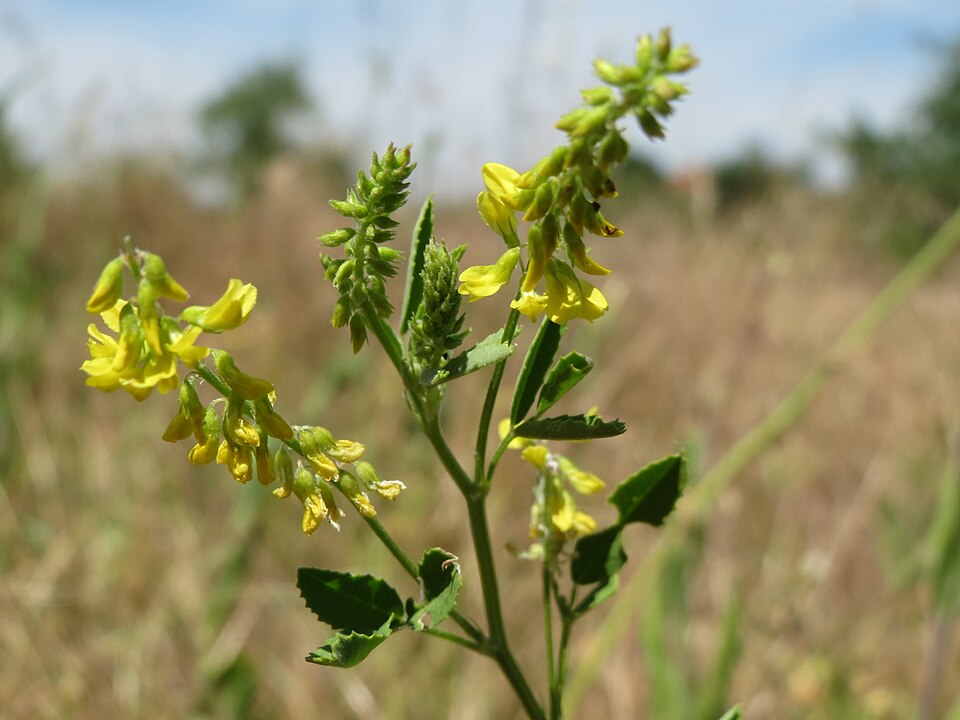
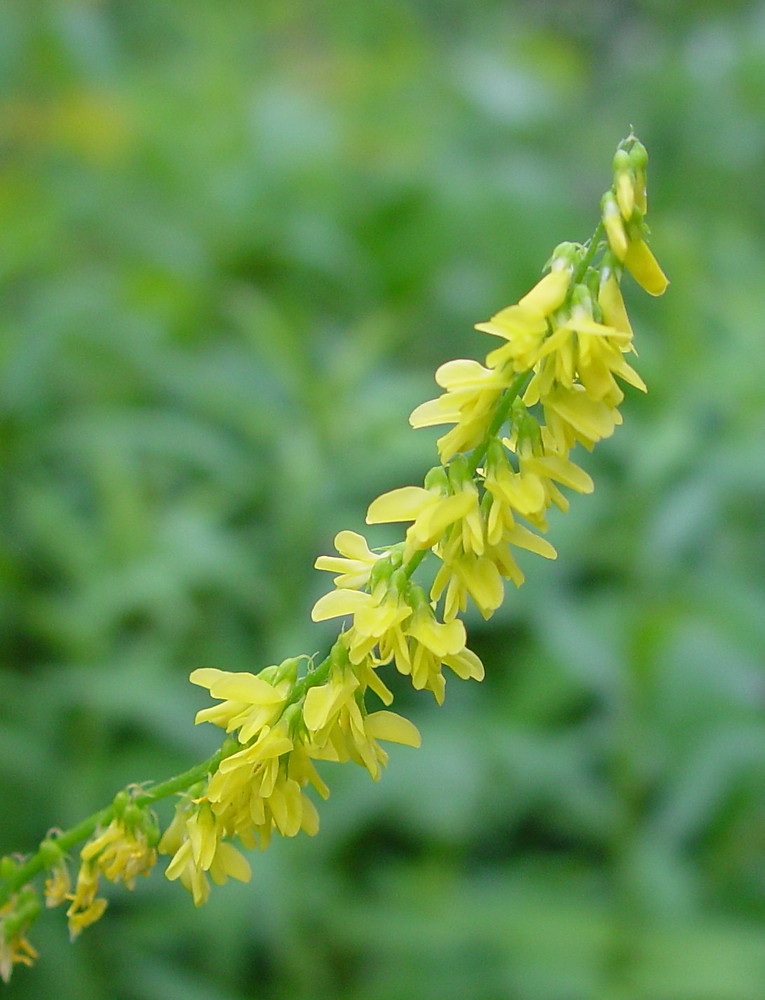
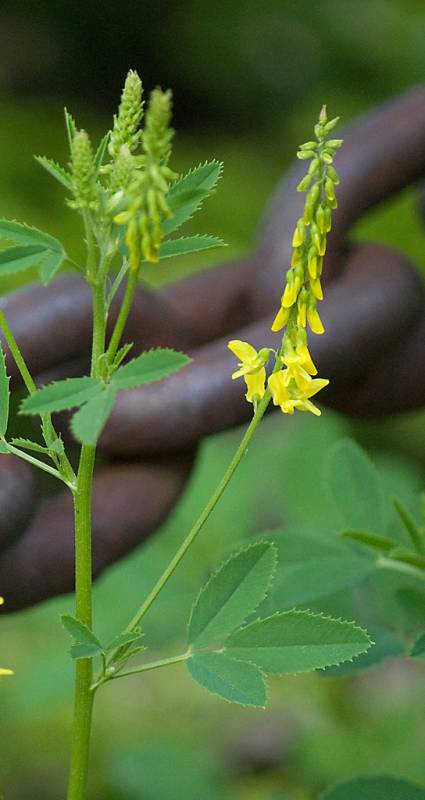
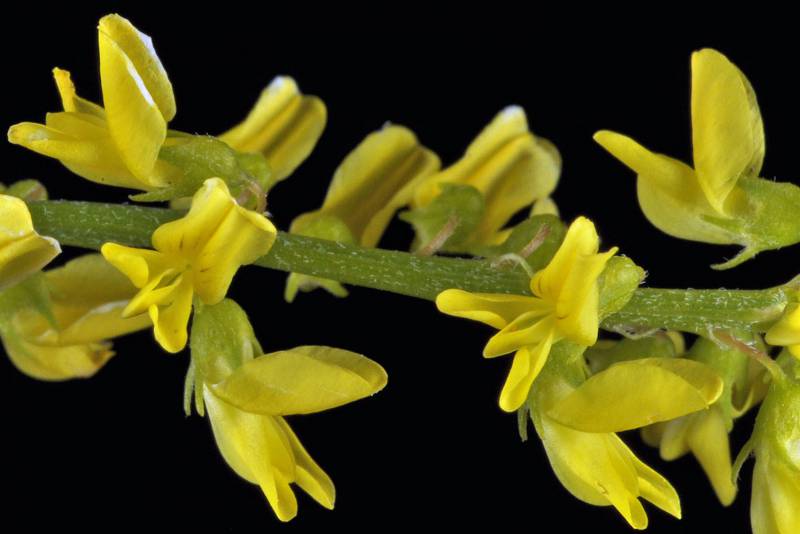
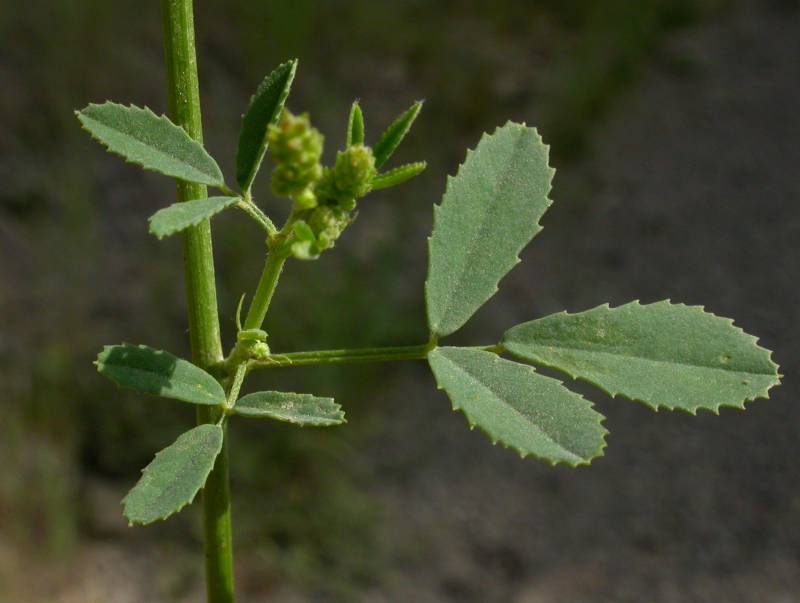
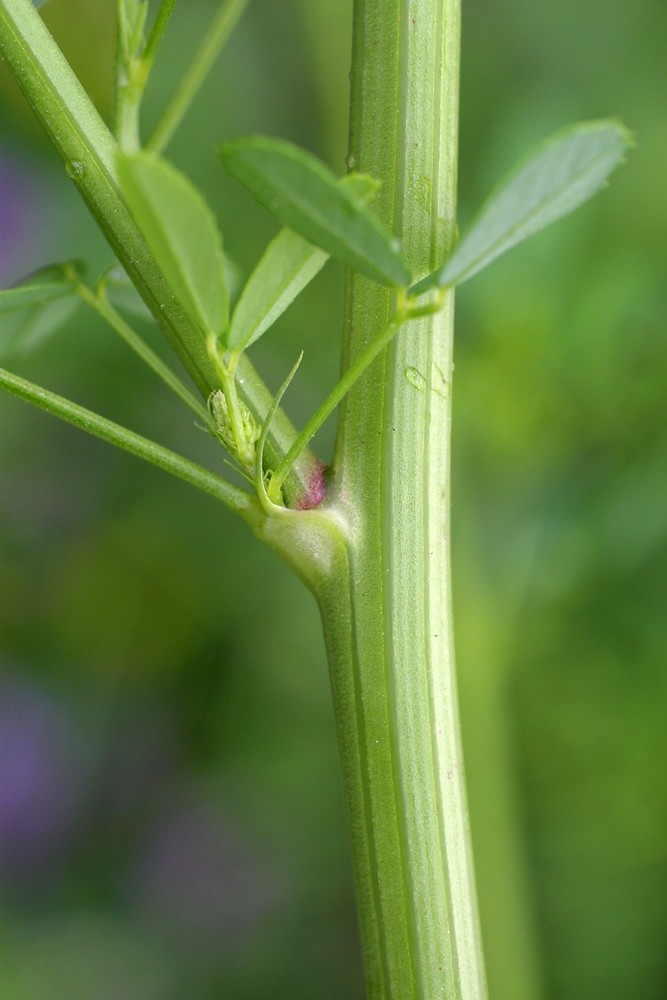
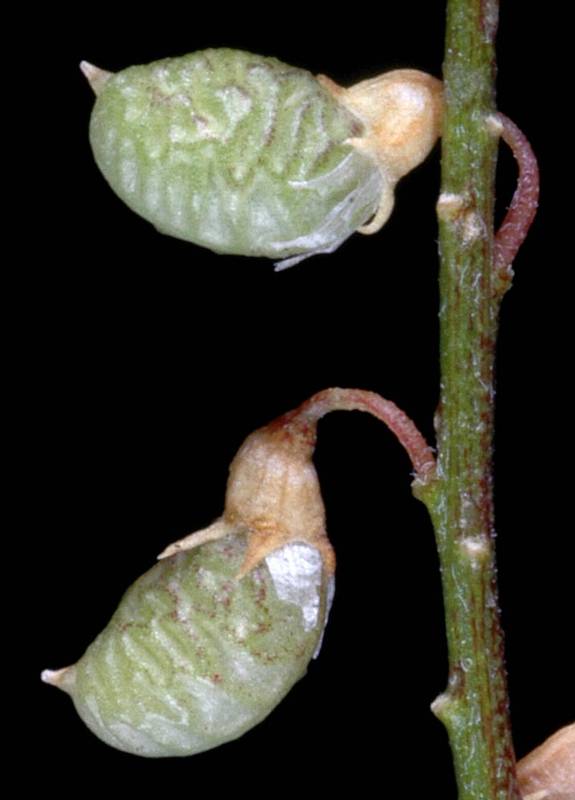
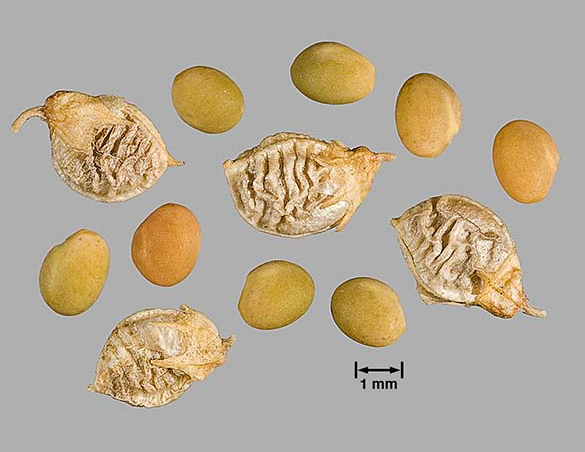
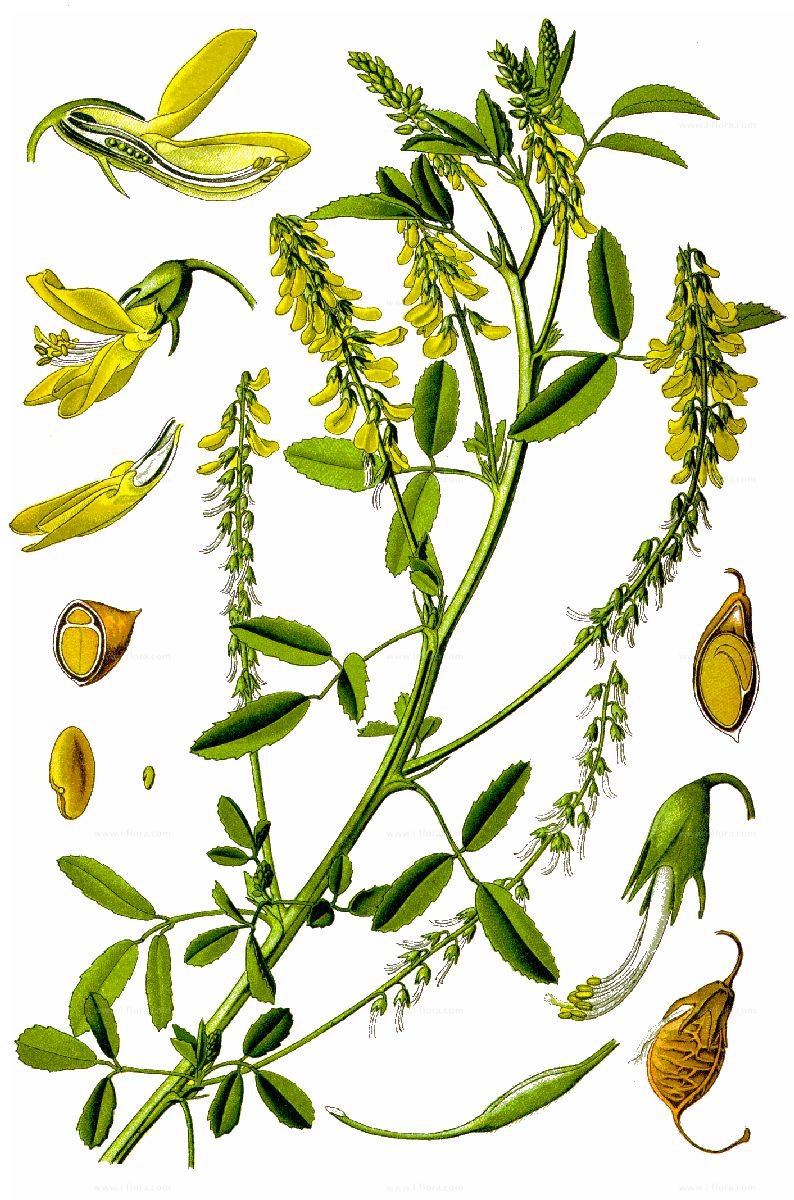
Melilotus officinalis (L.) Lam., it is an annual or biennial herb, ascending or erect, glabrescent, reaching 40-80 cm. Upper leaflets oblong, toothed, and stipules lanceolate, almost entire. Yellow, fragrant flowers, in fairly loose clusters longer than the leaf, peduncles awned, pedicels longer than the calyx tube with 5 ribs and not broken by the pod, very uneven petals, the standard longer than the wings extending beyond the keel. Fruit an indehiscent 1-2-seeded pod, ovoid, apex acute and beaked, 3-5 mm long x 2-4 mm wide, glabrous, brown, surface reticulately veined (mostly transversely), on reflexed stalk, with persistent calyx. Seed irregularly triangular-ovate in outline with a large, shallow, oblique peripheral notch near one end, somewhat compressed, cross-section elliptic to ovate, shallow (and often pale) grooves on either face of the seed mark the separation of radicle from cotyledons (the radicle side is slightly smaller and thinner), (1.7) 2-3 mm long x (1)1.3-1.6 mm wide x 0.9-1.1 mm thick. Surface dull, smooth (looks granular under magnification), greenish-yellowish or orangish-brown, often with randomly placed, small, reddish-brown spots, with a bilobal darkened area (“lens”) over the tips of the cotyledons and a smaller dark spot over the tip of the radicle. Hilum in notch, round, ca. 0.1 mm diameter, whitish with a round to slit-like opening near its center.



Leave a Reply