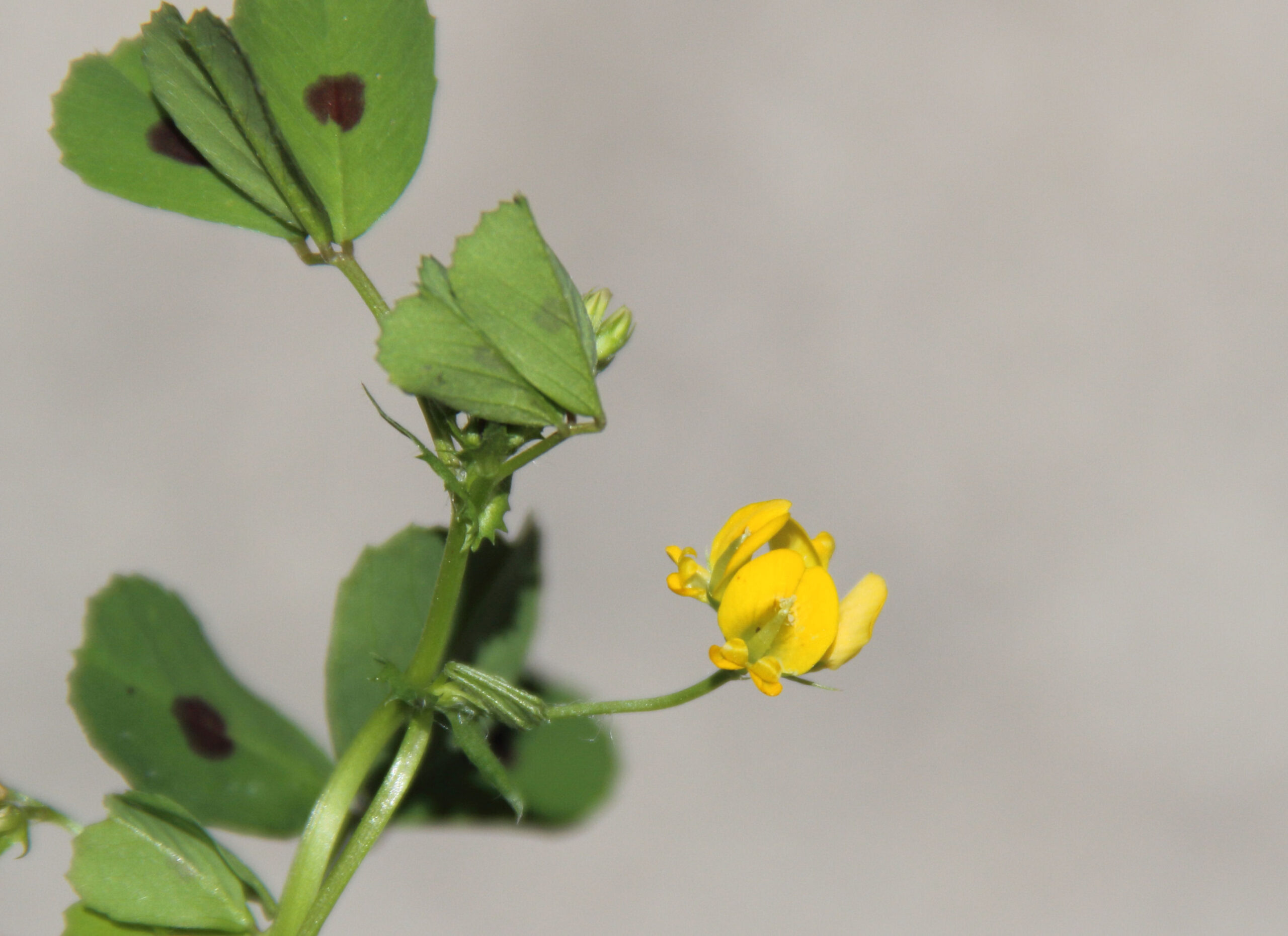
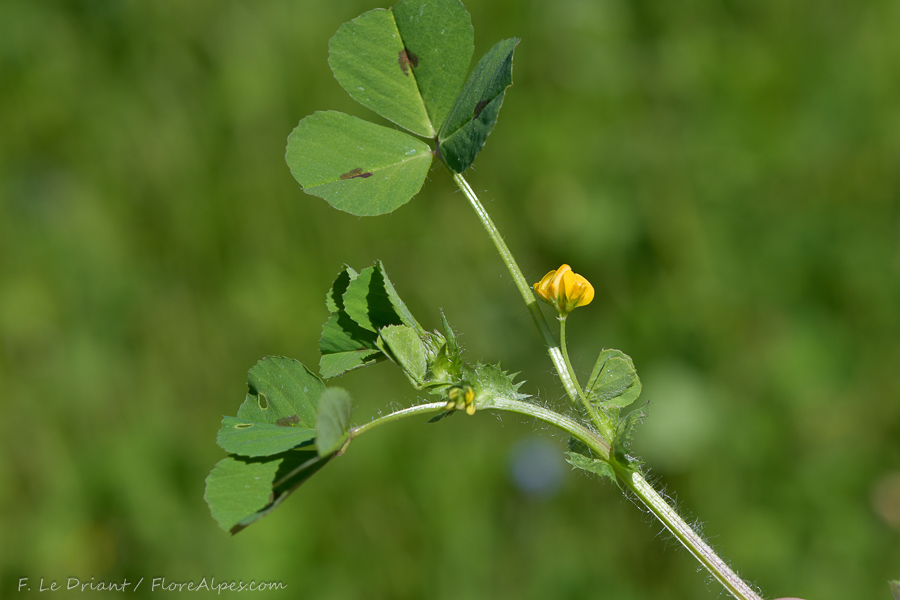
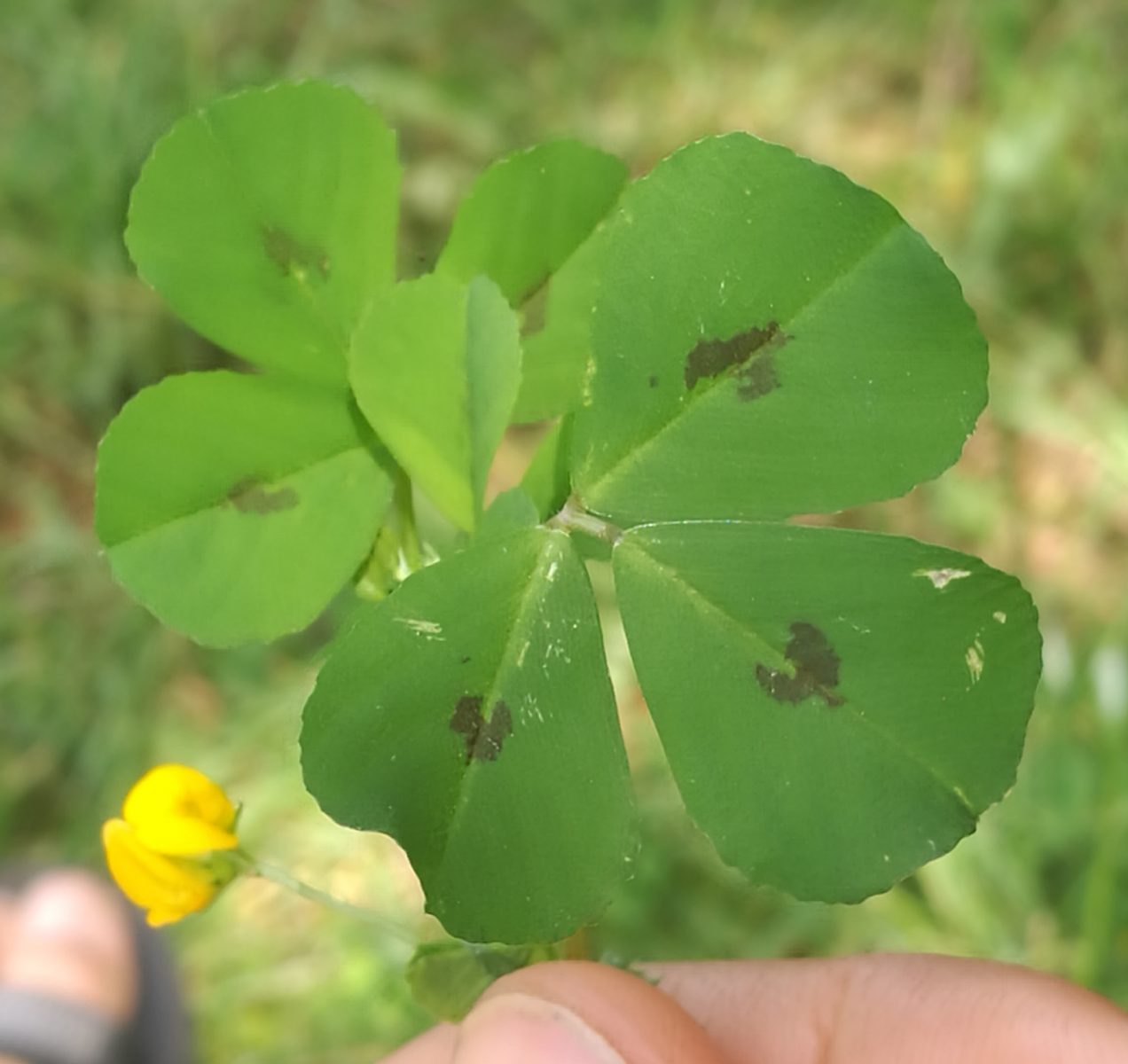
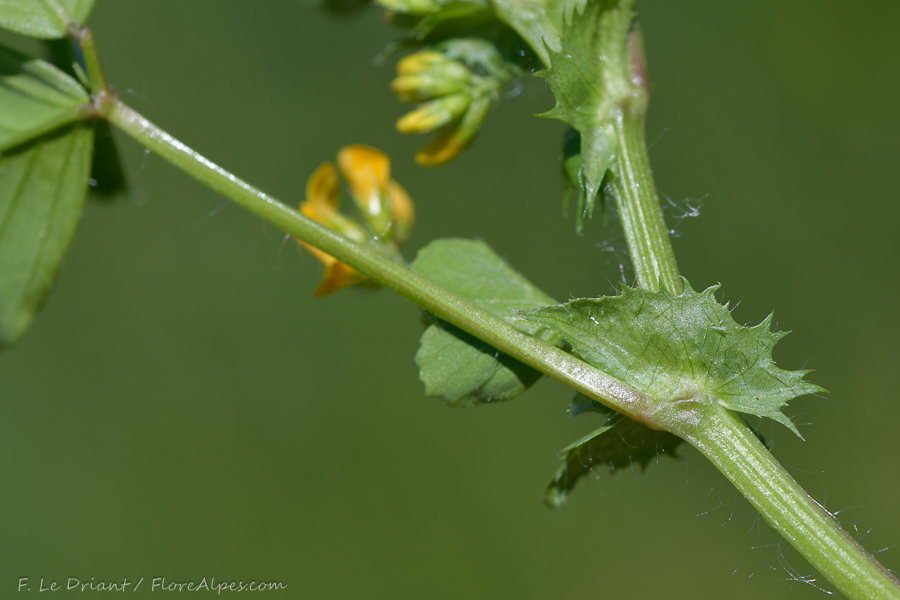
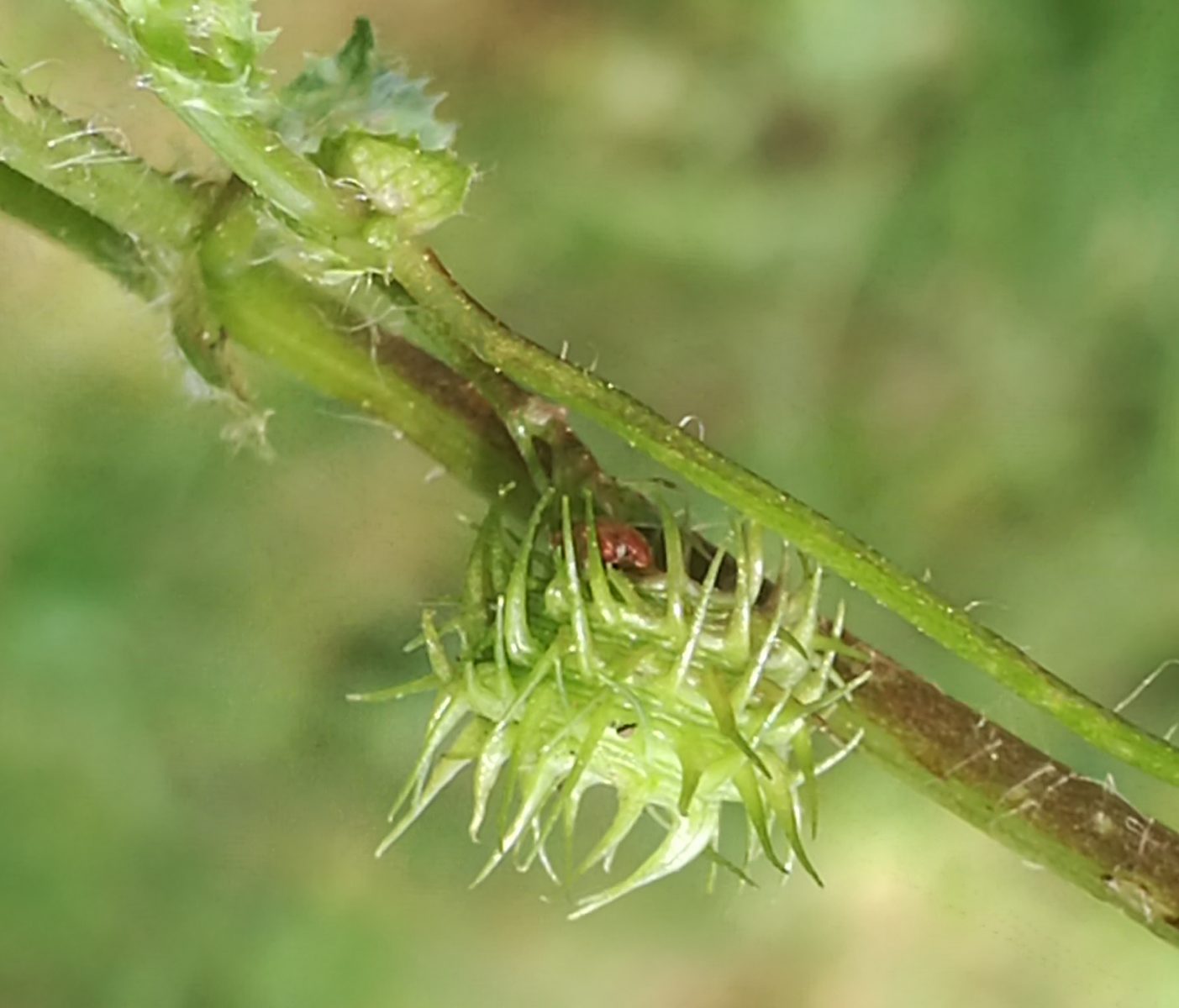
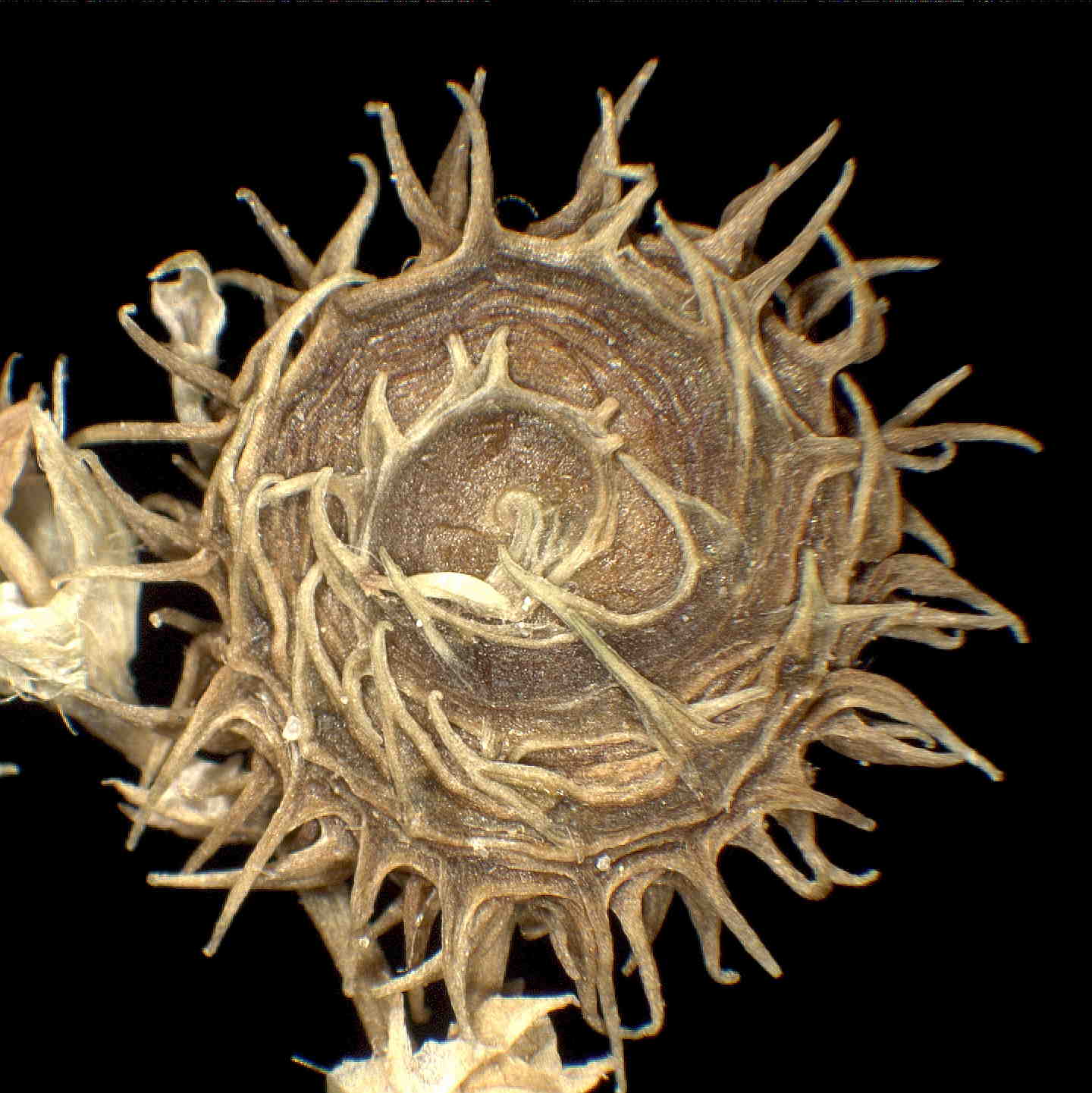
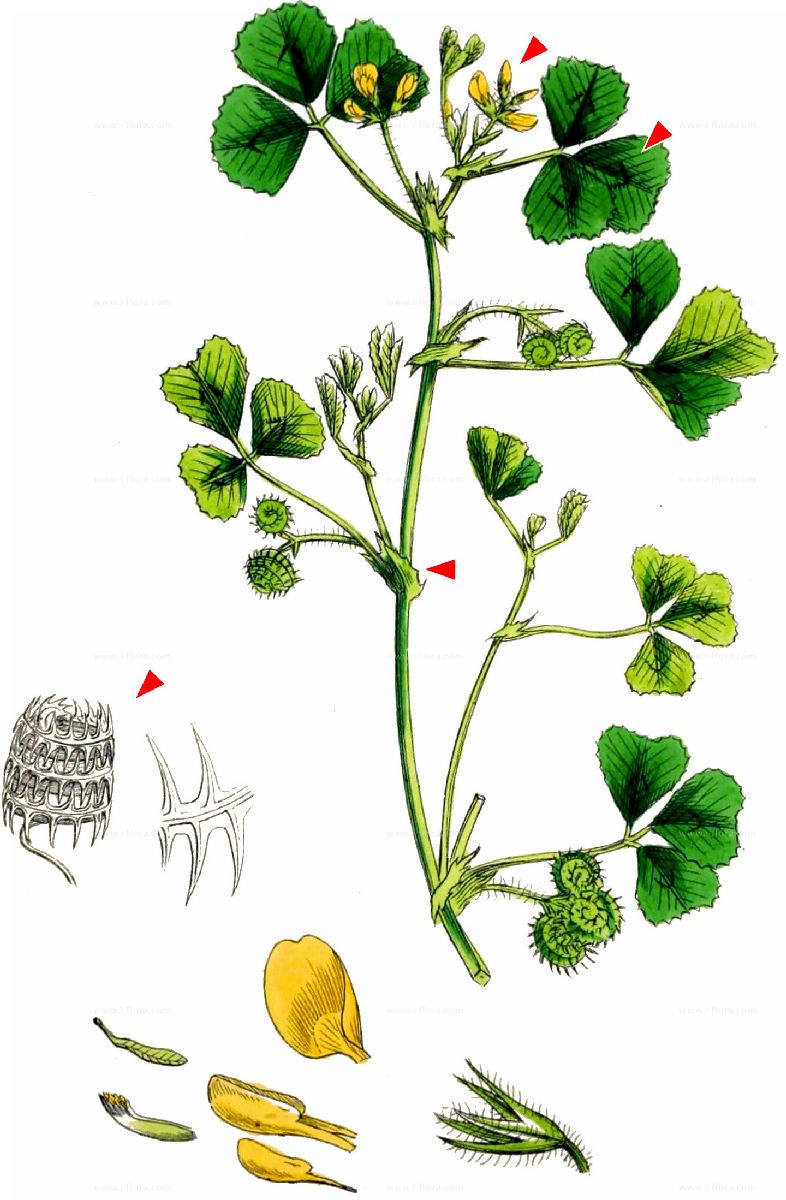
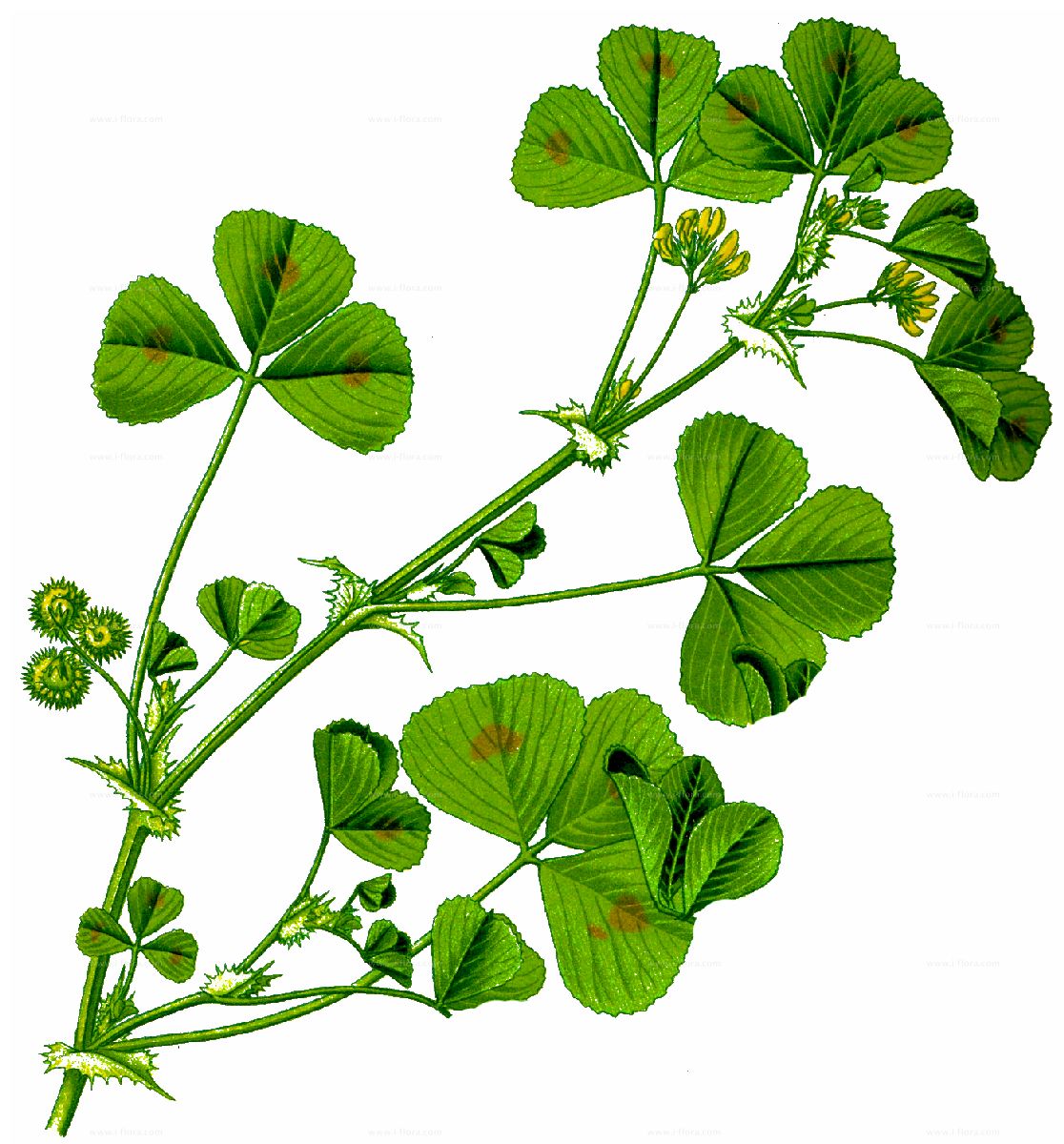
Medicago arabica (L.) Huds., it is an annual herb. prostrate or sprawling, rather robust, sub glabrous, up to 50 cm long; hairs multicellular. Stipules ovate, acuminate, deeply dentate or ± laciniate, 5-12 x 3-5 mm. Leaflets broadly obovate, or obcordate, 7-20 (-30) x 7-20 (-25) mm, generally with a conspicuous dark central blotch, glabrous above, thinly pilose below. Peduncles much shorter than the long petiole of leaves with raceme (1-) 2-5 (-6)-flowered. Flowers 4-5 mm long, yellow; pedicels c. 1 mm long. Calyx-teeth equal to exceeding the tube. Corolla about twice as long as the calyx. Pods discoid, sub globose to spherical, 5-7 mm high and about the same in diameter, with 3-5 (-7) anticlockwise coils; margin 3-grooved, softly spiny (nearly spineless); spines up to 4 mm long, hooked, deeply sulcate or grooved. Seeds 1-2 in each coil, oblong-ellipsoid, 3-3.5 x 1.5-2 mm, yellowish or light-brown. smooth.
Flowering in: May-Sept.



Leave a Reply