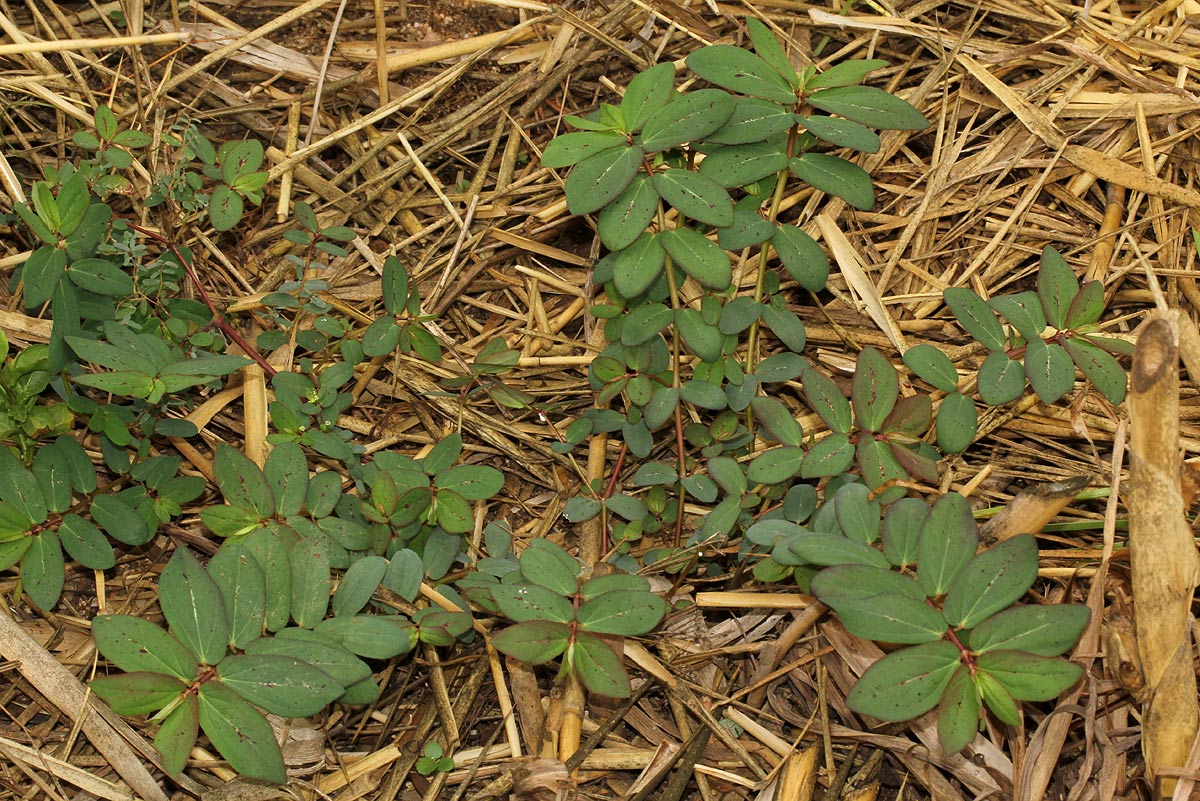
General Appearance
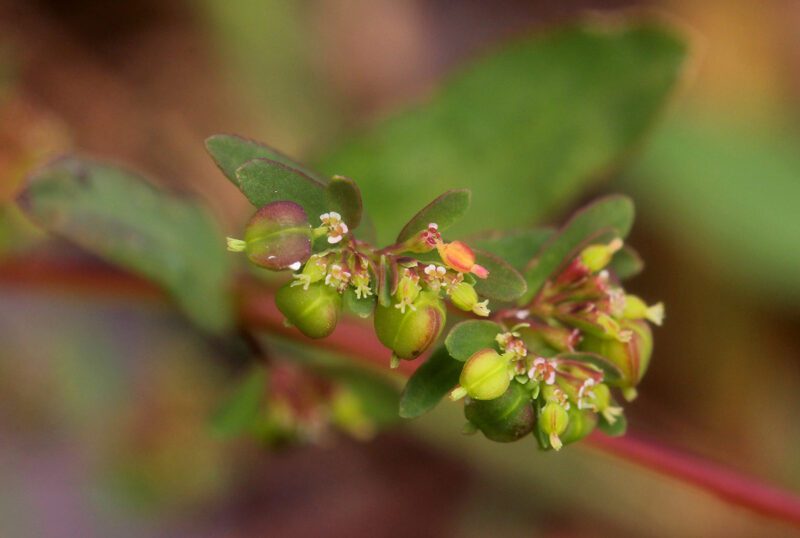
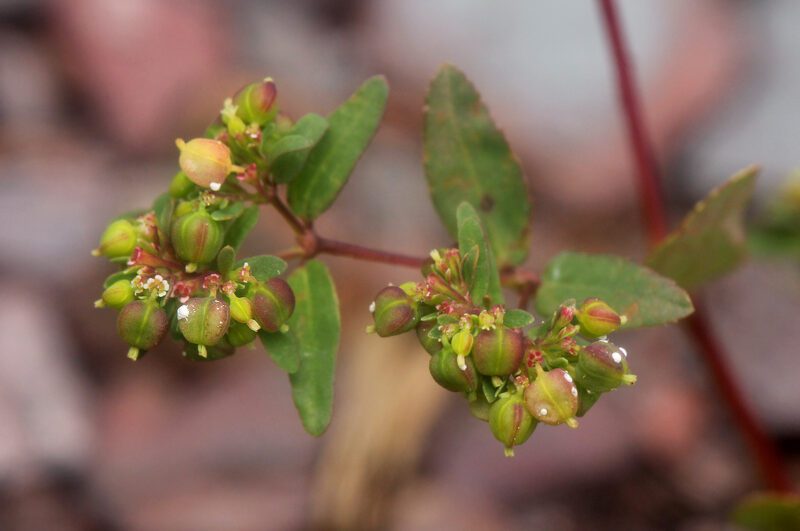
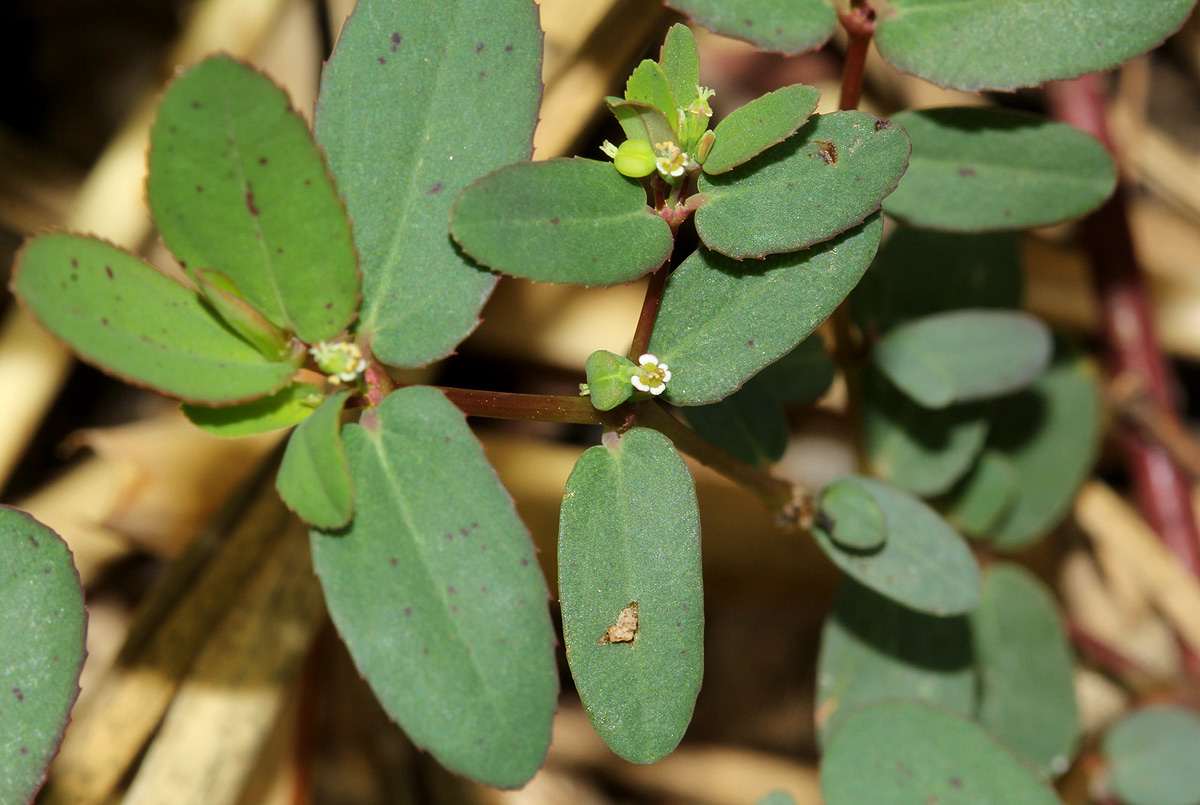
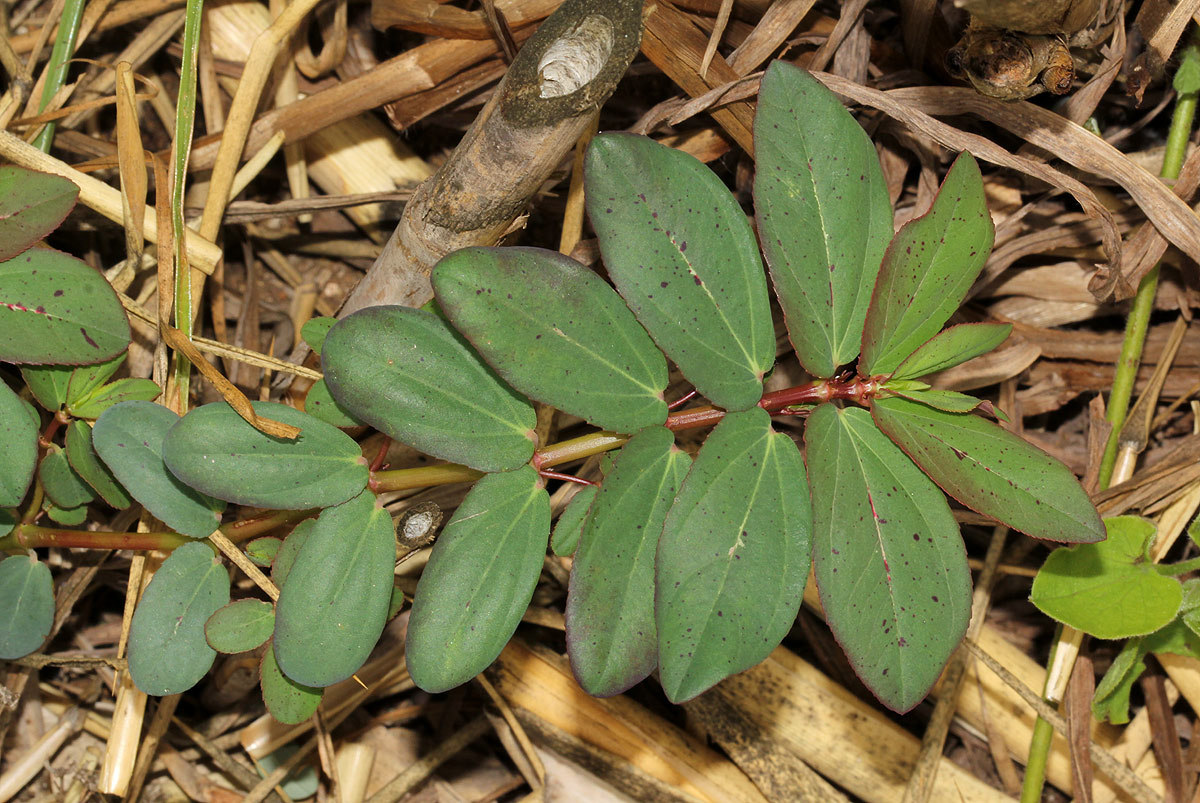
Euphorbia indica Lam., it is an annual herb, up to 50 high; stem glabrescent. Leaves opposite, elliptic-oblong, 8.2-16 x 05 – 08 mm, obliquely cordate at base, serrulate at margin, obtuse-retuseat apex, glabrouscent, glaucous beneath; 5-pairs; petiole 02 mm long, pubescent. Stipule united with petiole base, filiform, pubescent. Cyathia 2 mm across, pale pink, solitary, axillary, aggricated, lower and upper axile, peduncle, up to 1.5 cm long, pubescent. Gland 4, reddish, appendages, ovoid-oblong, petloid at limp. Male flowers, small, bracteole, striate. Stamens 5 – 10, filament united with pedicel, equal; anther 2-celled, ovoid, 0.2 mm across. Female flowers, pendulous, solitary, Ovary sub globose, 01 mm across, white puberlous, 3-loculed, ovules 3, solitary, style 3, 2-fid, 0.3 mm long, curved-reflexed, stigma minutely obtuse. Capsules 3-angled, ovoid-sub globose, puberlous, seeds 3, oblong-ellipsoid, transversely furrowed.

Life Form
Phytochoria
Distribution in Libya
Zliten-Misurata Plain: Misurata (Gaser Ahmed ) 2008
Notes
Introduced in Libya ???
This species is accepted: https://powo.science.kew.org/taxon/urn:lsid:ipni.org:names:346892-1
Link of images: https://www.ksanature.com/plants/euphorbia_indica/, https://www.mozambiqueflora.com/speciesdata/species.php?species_id=136060
For more information
https://powo.science.kew.org/taxon/urn:lsid:ipni.org:names:346892-1, https://www.ipni.org/n/346892-1, https://www.worldfloraonline.org/taxon/wfo-0000962709, https://www.gbif.org/species/3063803, https://africanplantdatabase.ch/en/nomen/specie/106256/euphorbia-indica-lam, http://www.eflorakkl.in/Details.php?id=160, https://www.mozambiqueflora.com/speciesdata/species.php?species_id=136060, https://tropical.theferns.info/viewtropical.php?id=Euphorbia+indica, https://www.floraofsrilanka.com/species/1647
First: Encyclopedia Flora of Libyan:
=====================
Second: Researches and PhD theses, master theses, Sorted by Newest:
Baayo, Kh. A. (2008) Floristic composition and Phytochorological Analysis of Misratah area, Libya, Assiut Univ.J. of Botany 37(2), P-P. 33-78 (2008).


Leave a Reply