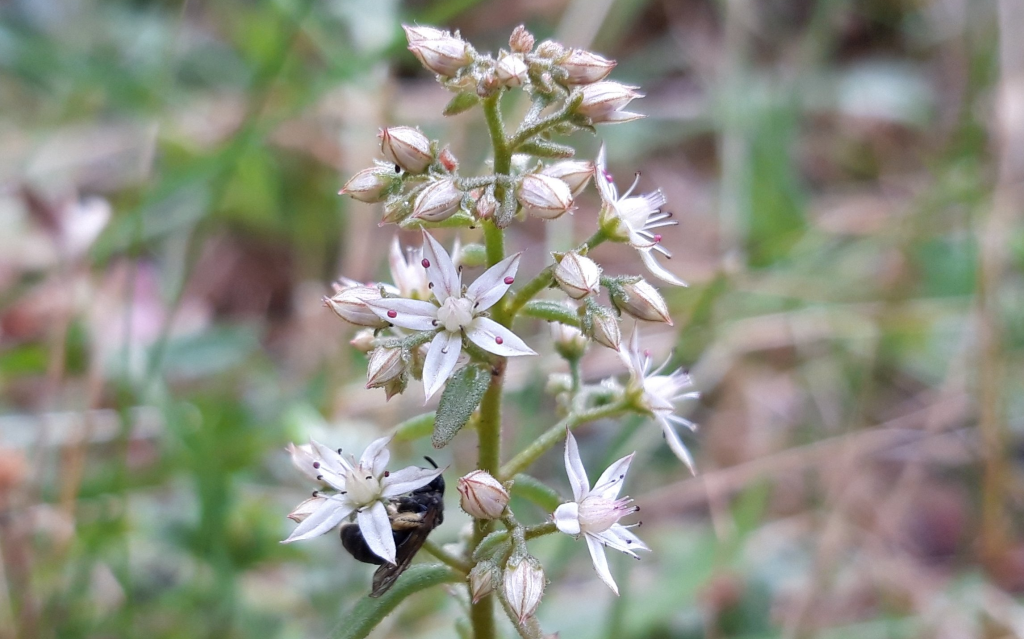
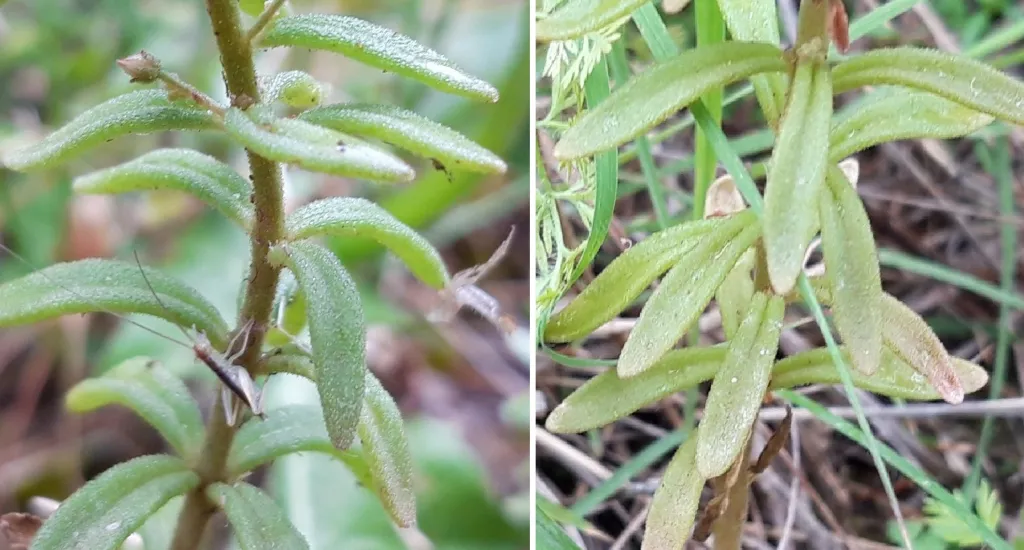
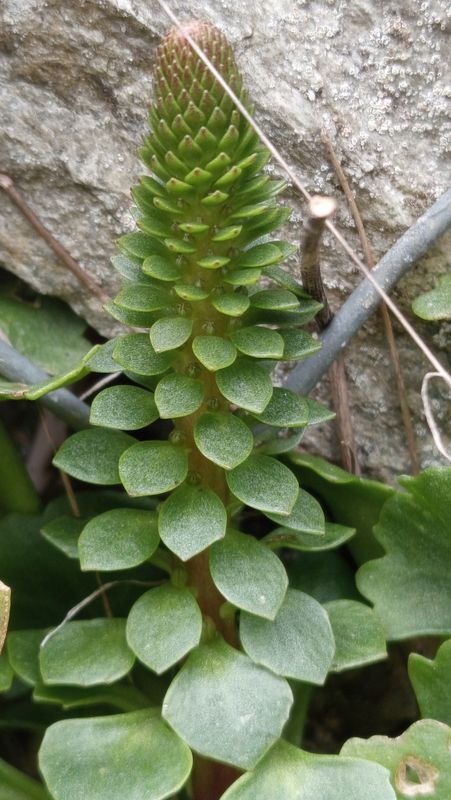
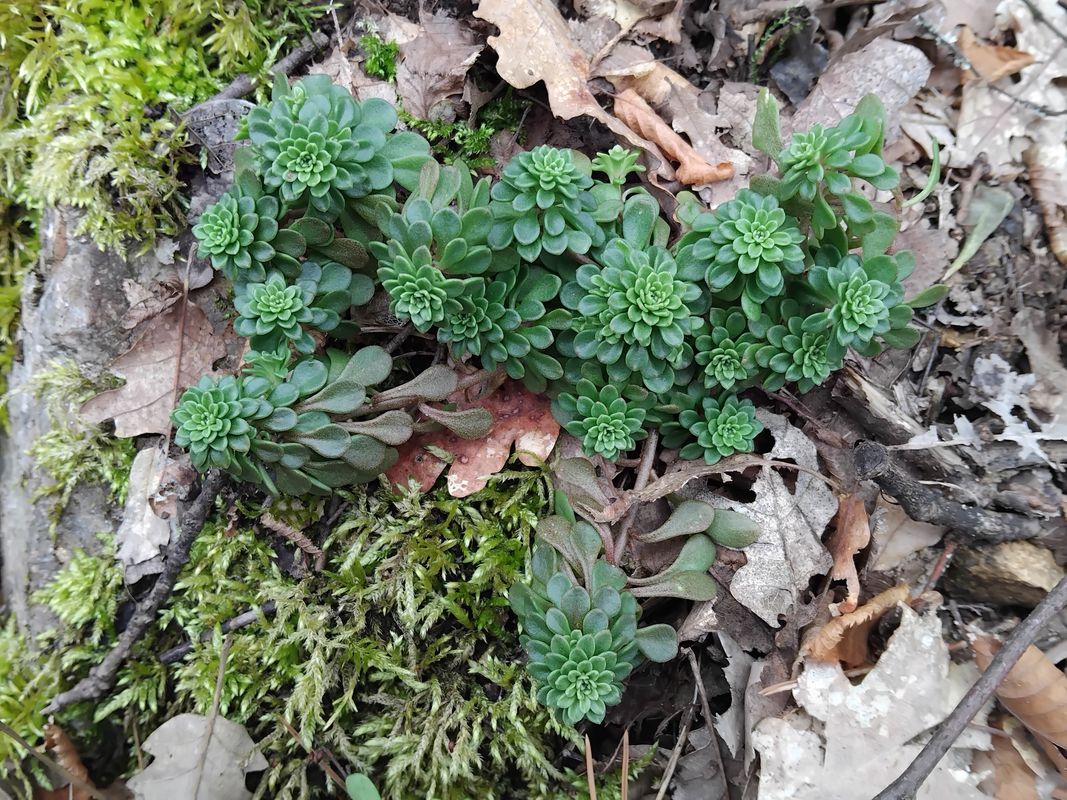
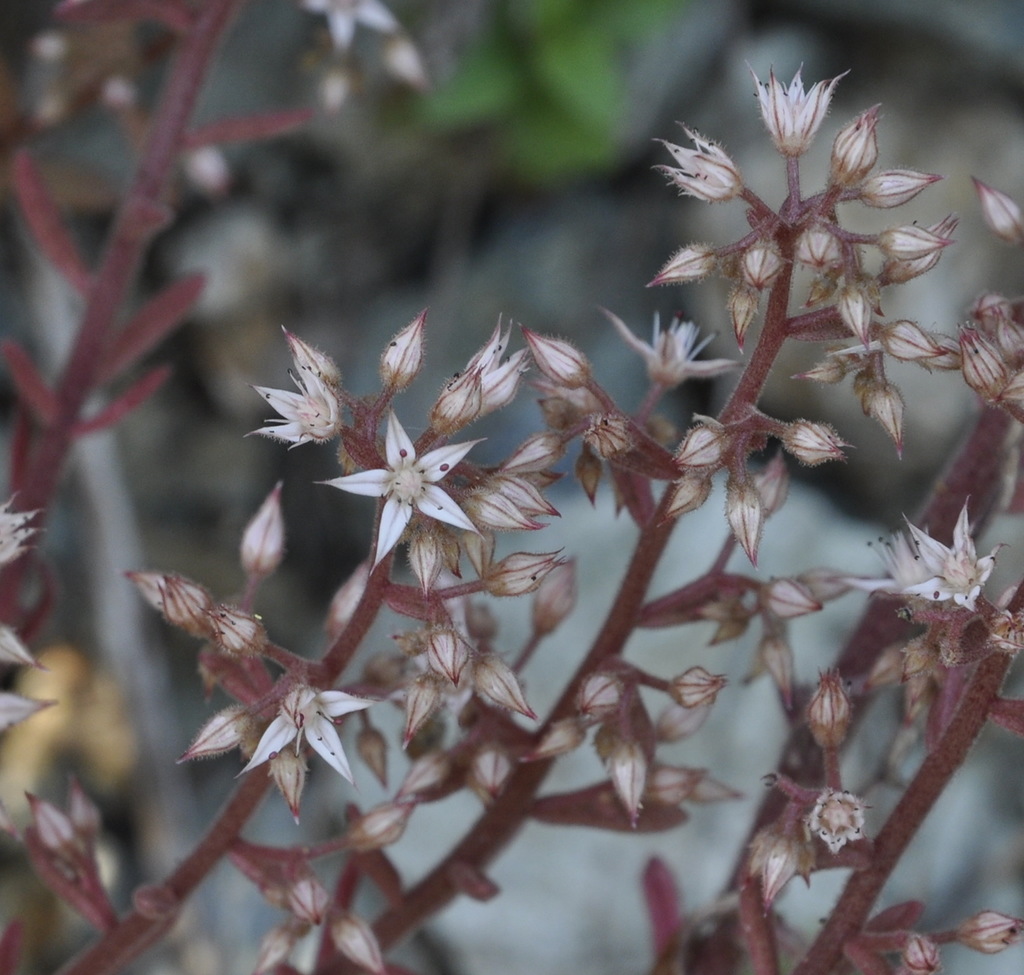
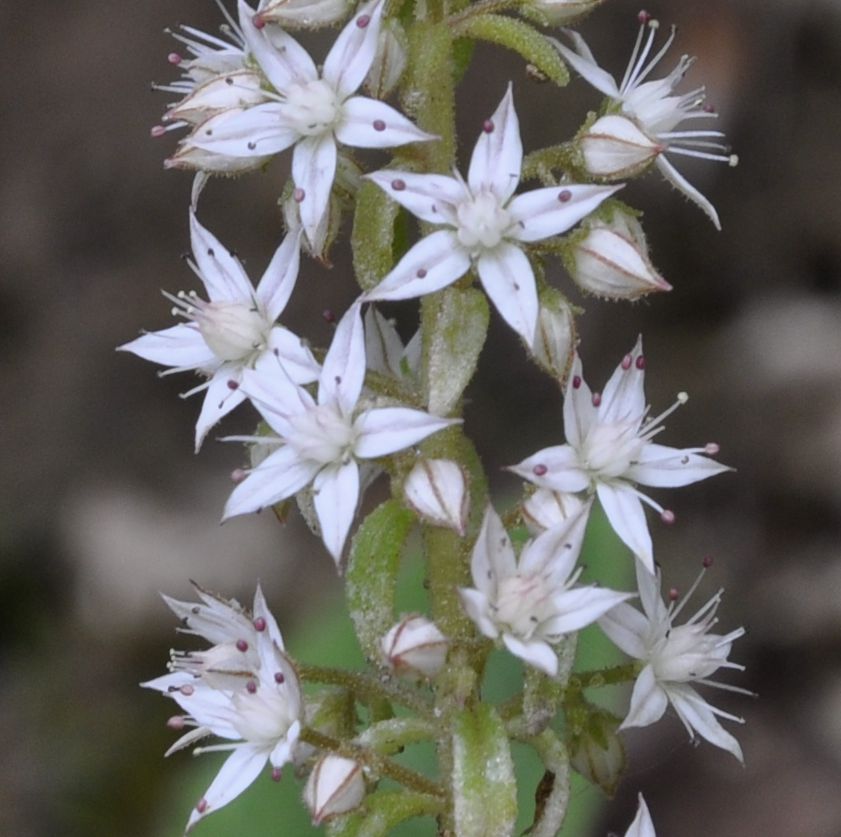
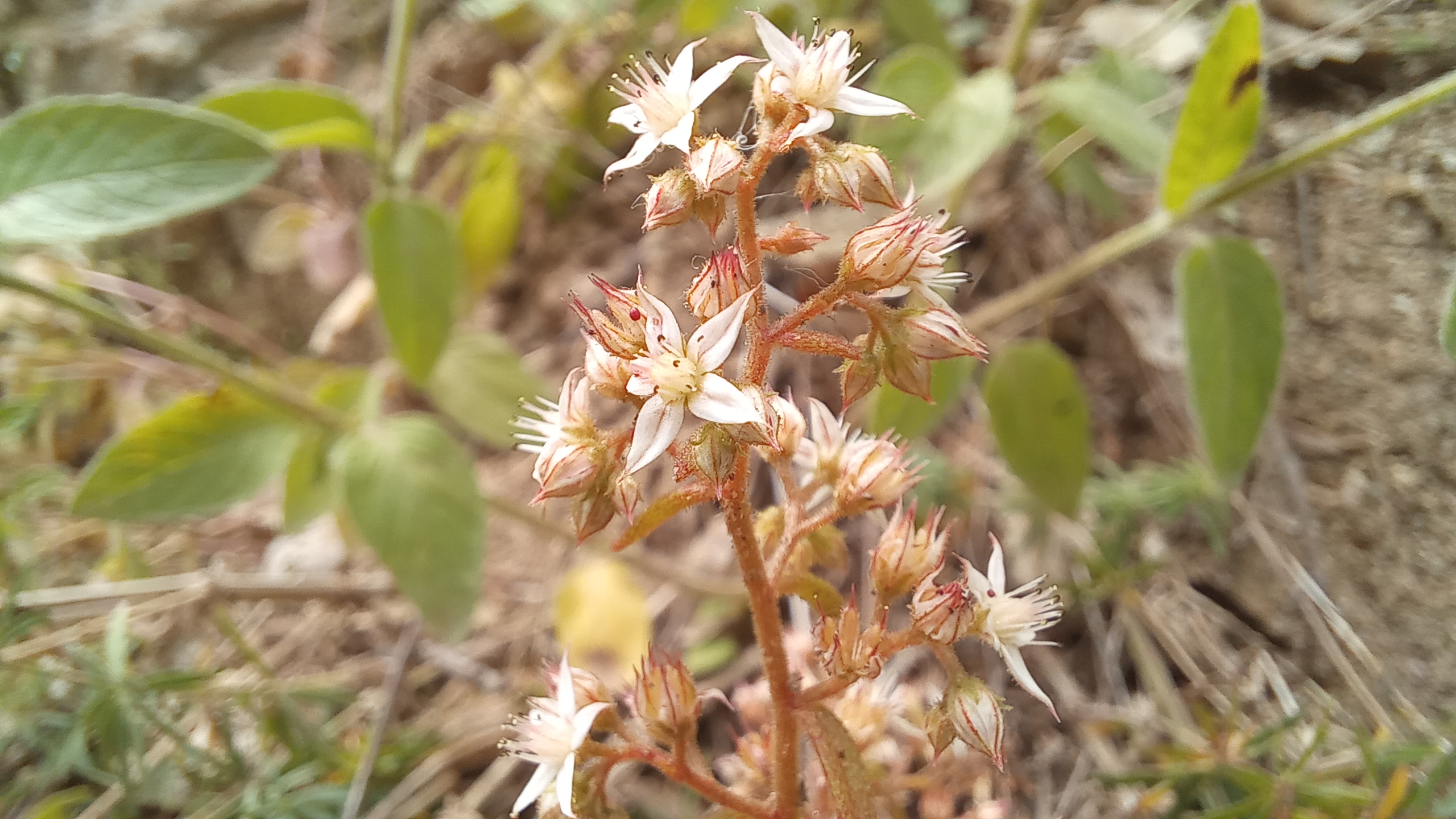
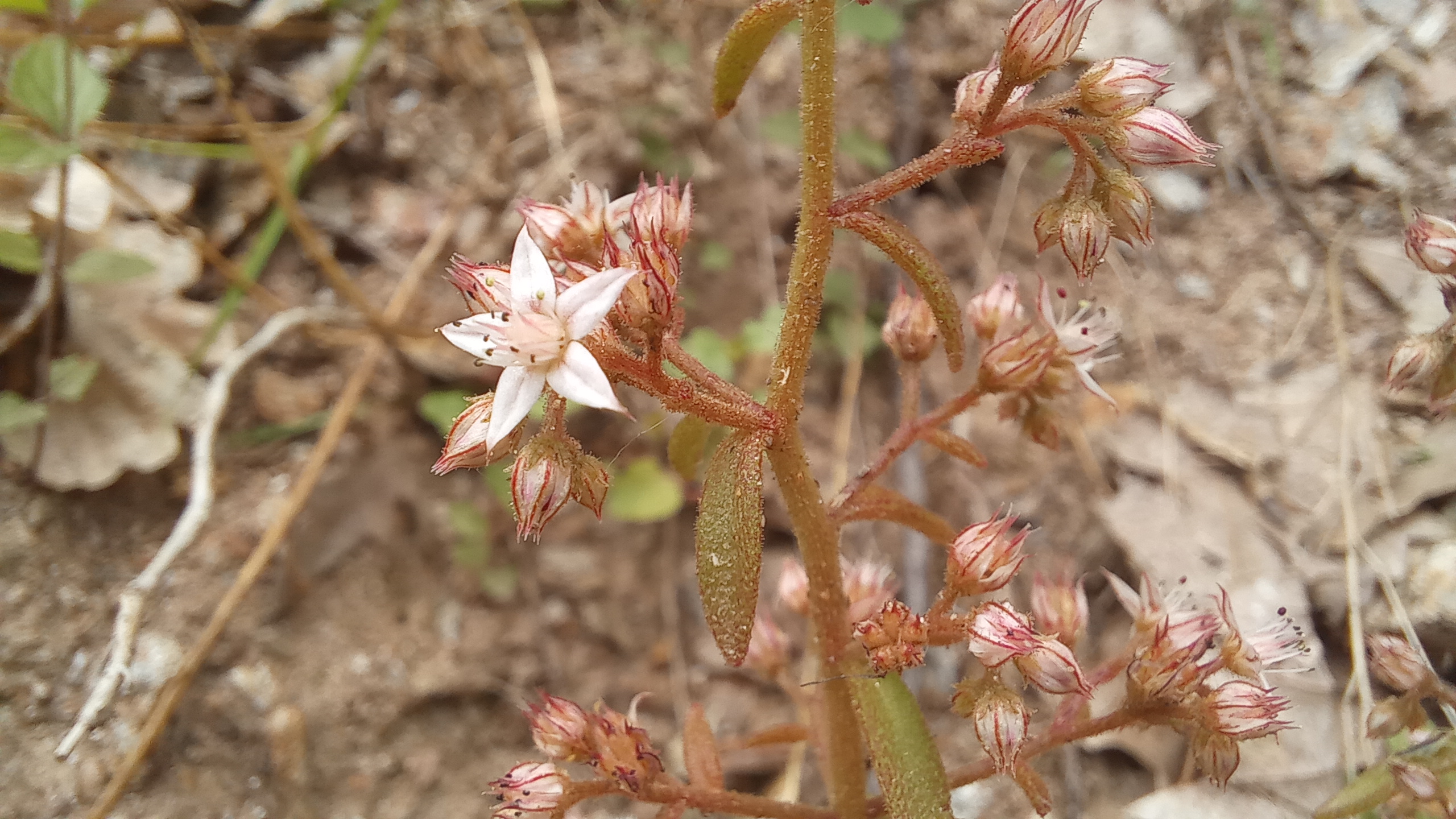
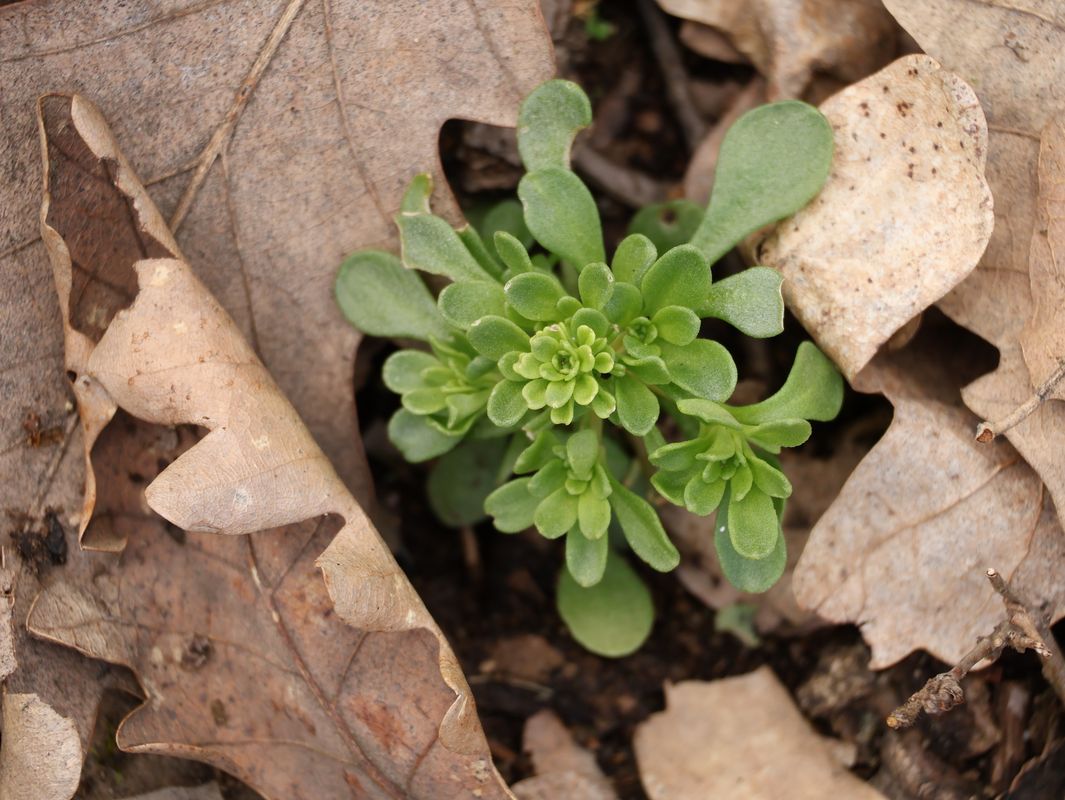
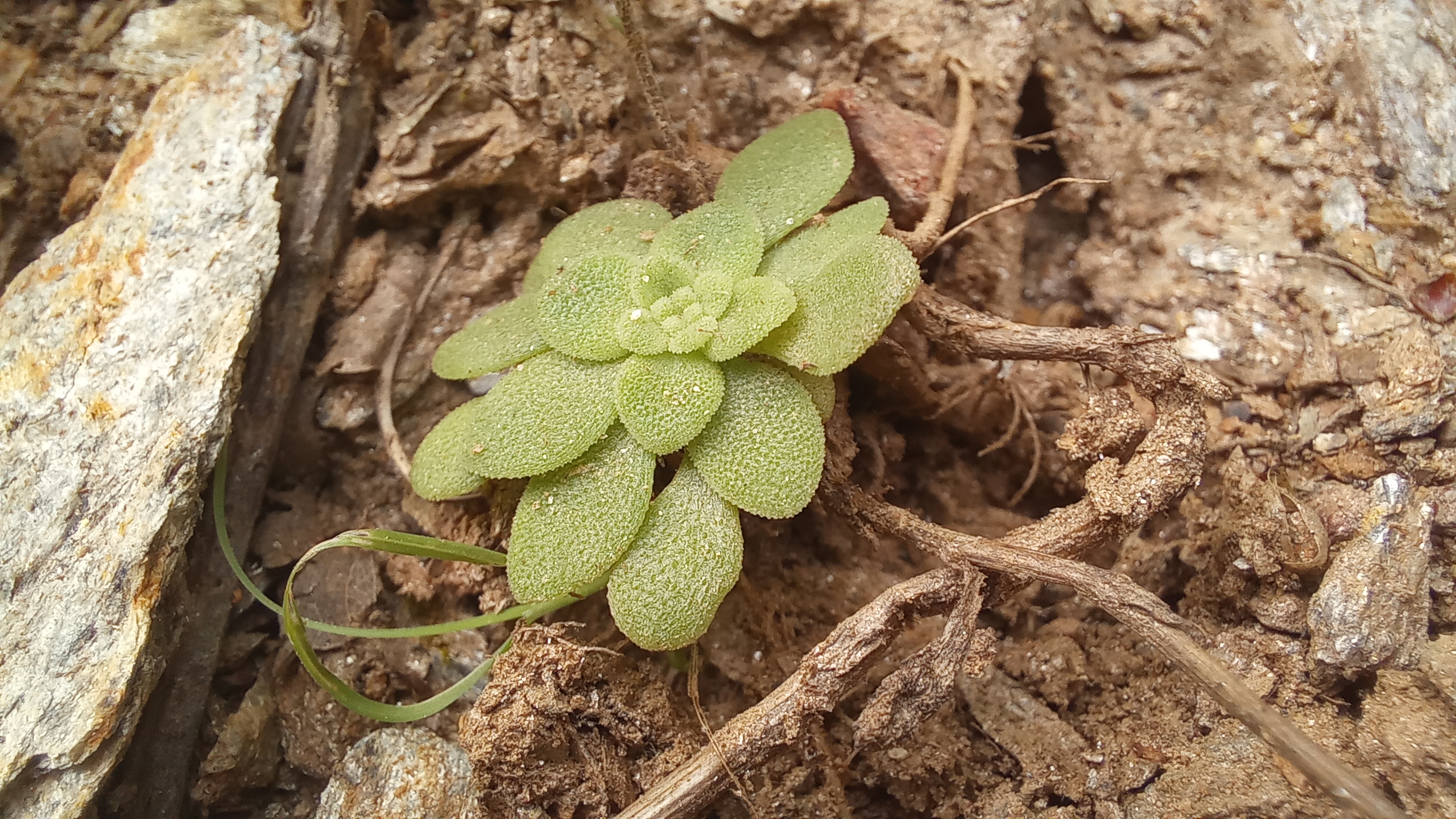
Sedum cepaea L., it is a succulent annual or biennial rarely perennating, green herb. Stem erect or ascending, 5-40 cm long, glandular-pubescent. Basal rosette leaves loose or ± dense, flat or little elongate, oblong-spathulate, obtuse, petiolate, 30 x 10 mm, glabrous. Cauline leaves mostly opposite or whorled in threes or fours, sessile, glabrous, linear-spathulate or oblanceolate-spathulate, obtuse. Inflorescence occupying the major part of the stem, constituting of one loose panicle, very ramose, and the branches terminating in uniparous cymes, loose and few flowered; primary branches of the. panicle often opposite or verticillate. Bracts very similar to the leaves, very small and± glandular pubescent. Flowers 5-merous, white or pale pinkish. Sepals briefly connate at the base, green, narrowly lanceolate, long acuminate with usually reddish keel. Stamens 10. Follicles erect and longitudinally grooved, 4-6 mm long.







Leave a Reply