Astragalus hispidulus DC.

Family: Fabaceae

General Appearance

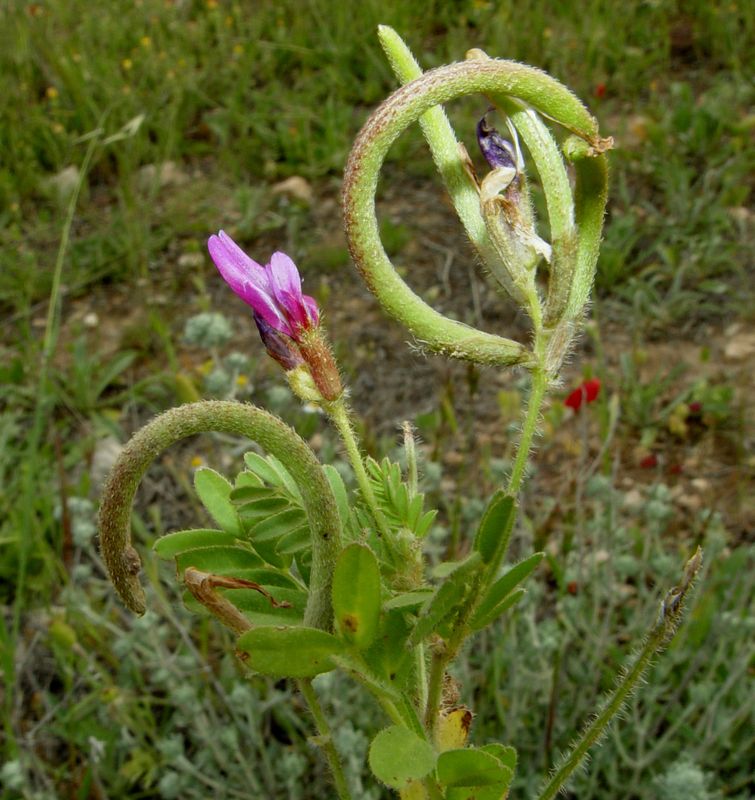
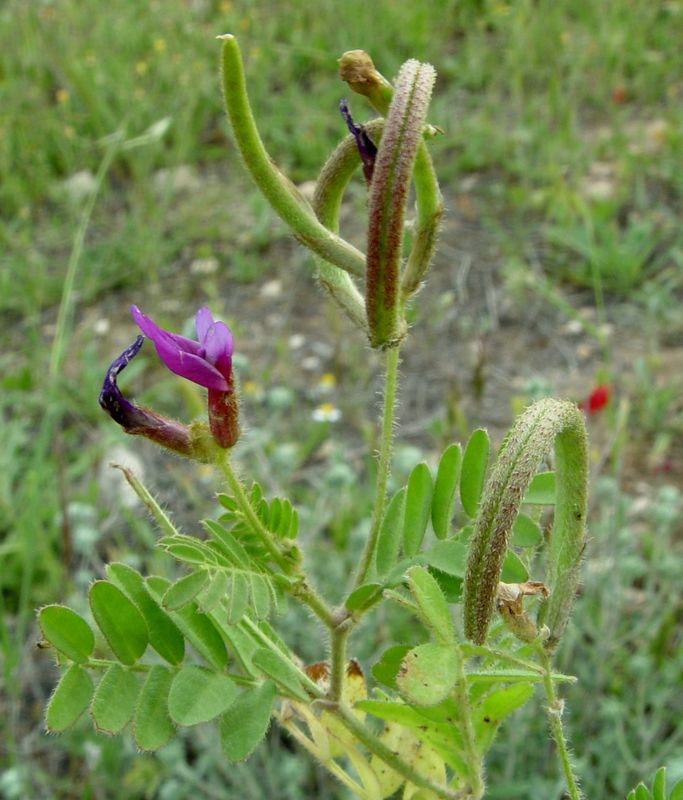
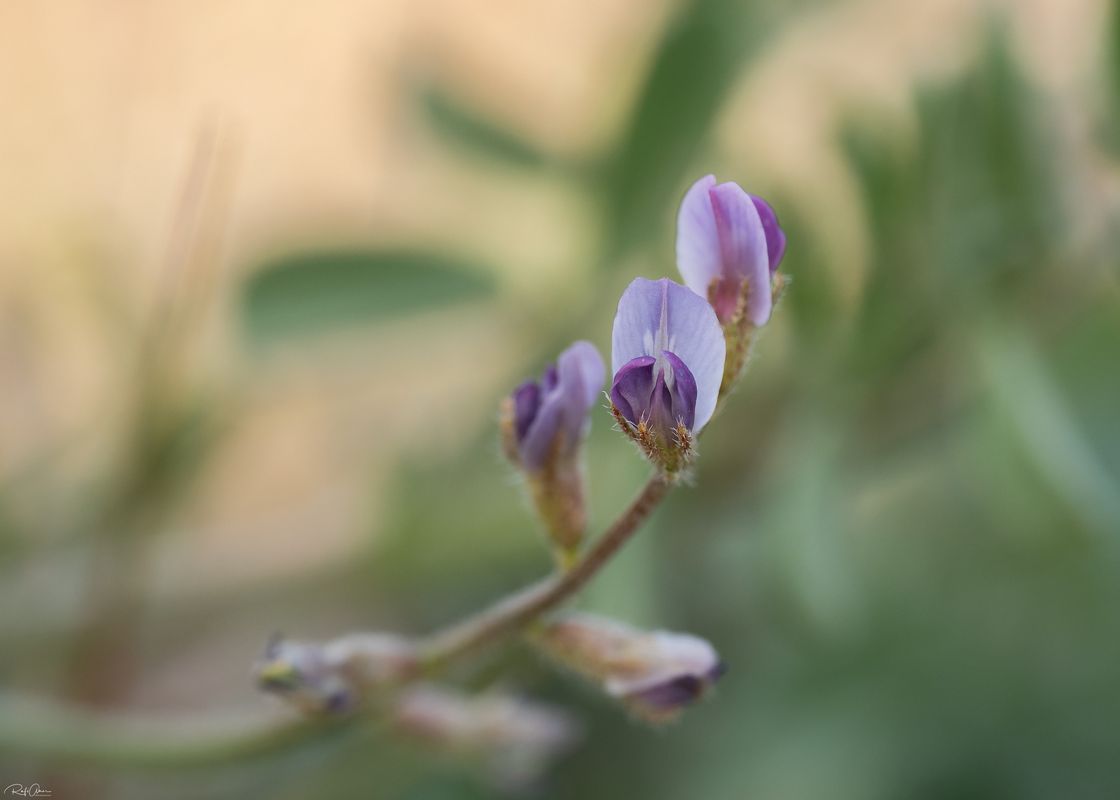
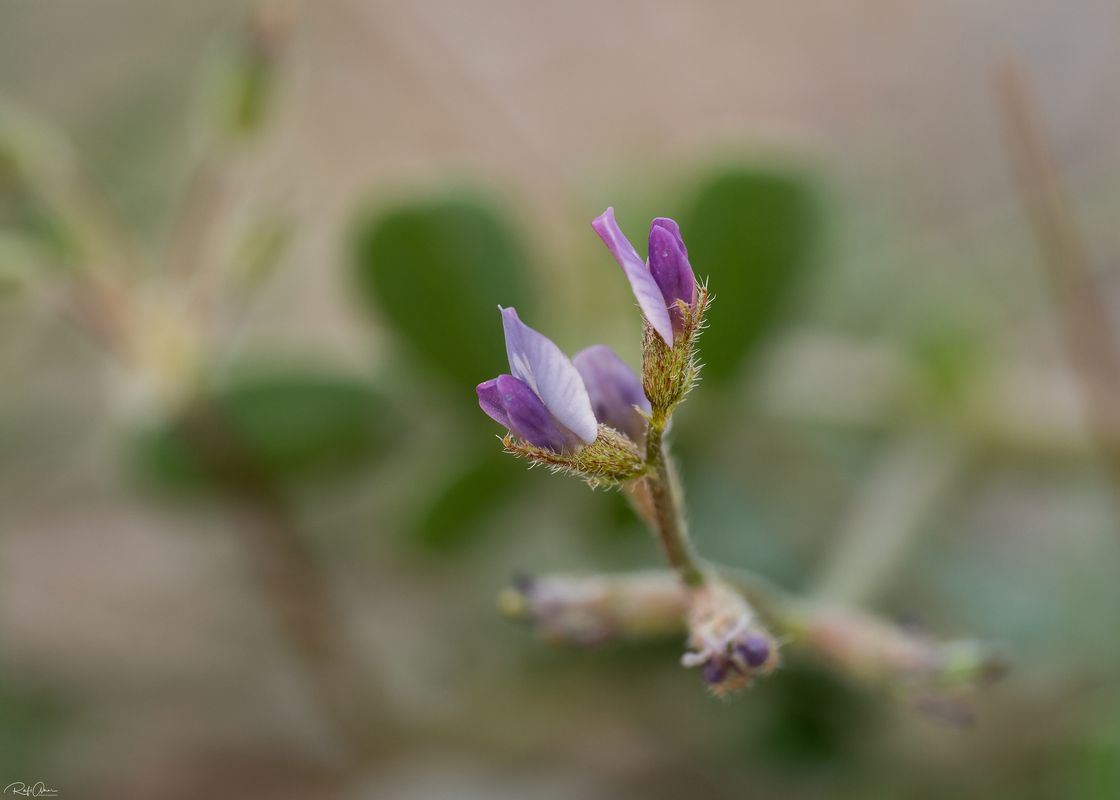
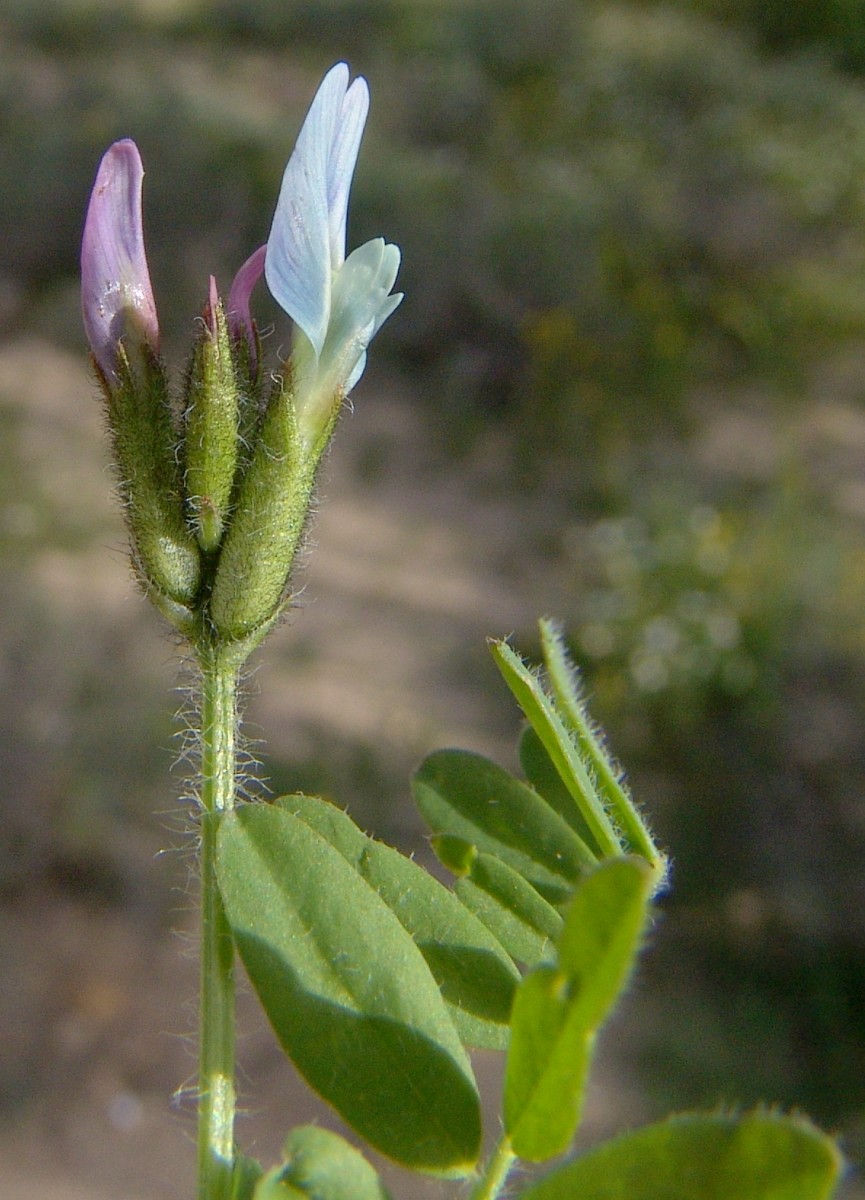
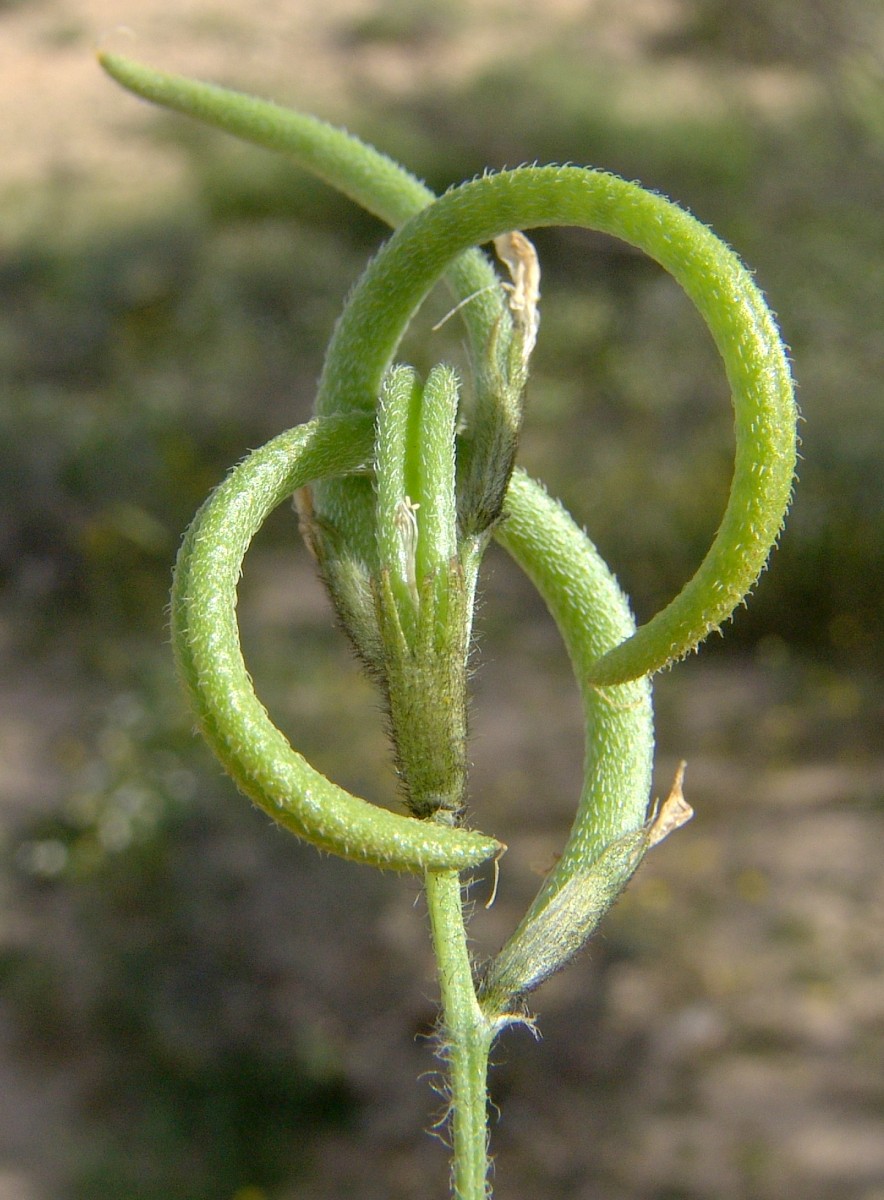
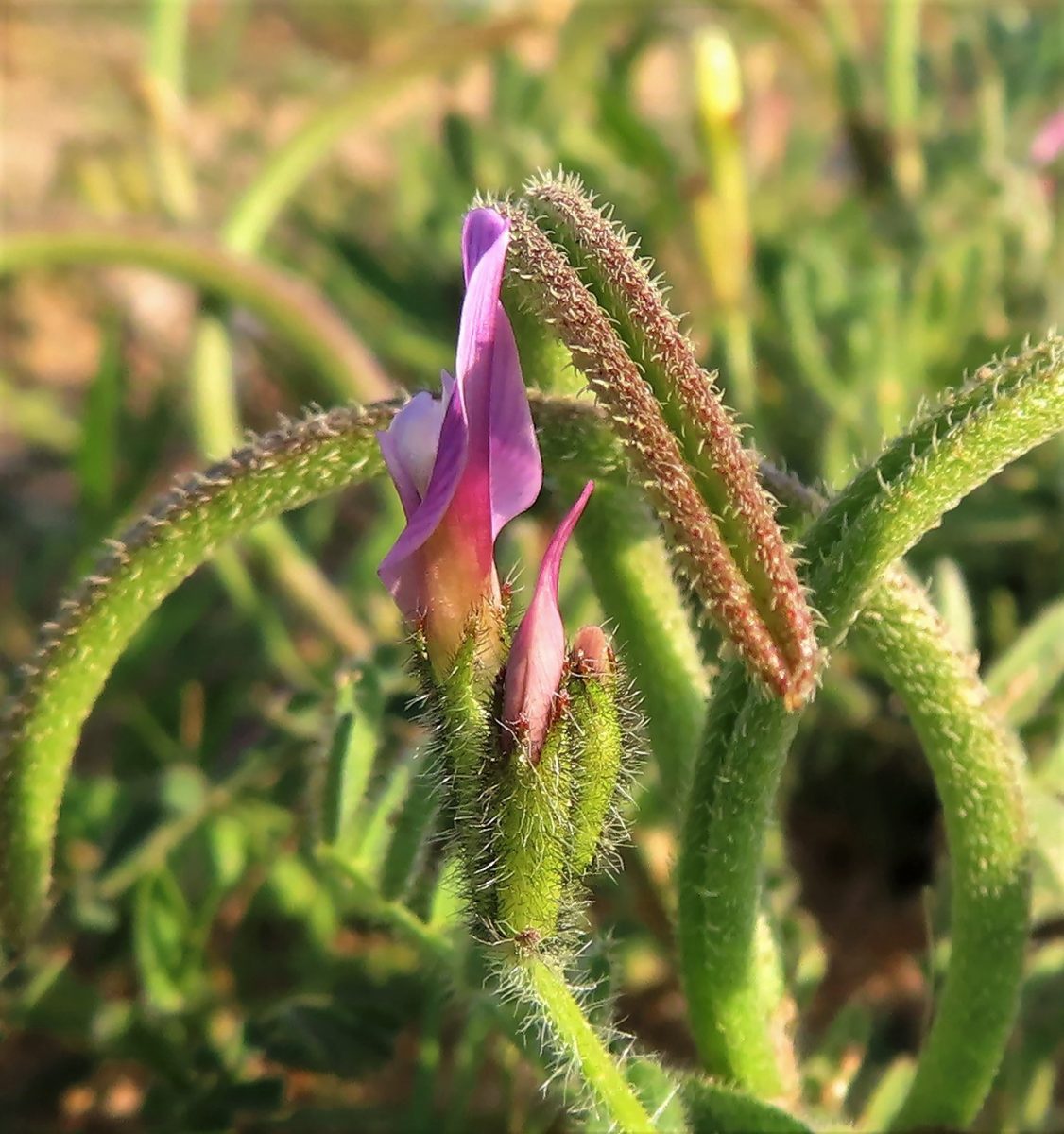
Astragalus hispidulus DC., it is an annual prostrate to erect herb, up to 25 cm long, hispid with spreading hairs. Leaves 3-5 cm long: stipules membranous. lanceolate, ciliate; leaflets 4-7 pairs, 5-10 mm long, oblong elliptic, obtuse. Peduncles at least as long as subtending leaves with a raceme (1-) 2-5 (-10)-flowered. Flowers 12-15 (-18) mm long. pink to pale purple; bracts 2-4 mm long. exceeding the pedicels. Calyx tubular. with spreading white and black hairs; teeth shorter than tube, subulate. Stigma non-barbellate. Pods (25-) 30-40 x 2-3 mm, sub flattened, arcuate to semicircular or almost circular, acute, hispid-scabrous with short appressed hairs mixed with short spreading tubercle-based hairs, usually 15-20-sceded in each locule.

Flowering in: Mar-Abr.

Life Form

Th

Phytochoria

SA. The native range of this species is Libya to Middle East.

Distribution in Libya

Zliten-Misurata Plain:  Al-Kararim 1968   Misurata 2008

Benghazi Plain:  Reported from Benghazi by Pampanini   Cirenaica, Msus, Ajdabia ed el-Agheila 1933

Al-Jabal Al-Akhder:  Reported from Derna by Durand & Barratte and from Shahat by Pampanini

Marmarica Plateau:  Reported from Tobruk by Durand & Barratte Reported in Marmarica north-eastern part of Libya by Pampanini 1930  Al-Tamimi 1963

Al-Jufra area:  Reported from Bou Njem, Gebel Soda by Durand & Barratte

First: Encyclopedia Flora of Libyan:

Jafri, S.M.H. & El-Gadi, A. (1980) Flora of Libya, Fabaceae Vol.  (86) Department of Botany, Al-Faateh Univ., Tripoli, Libya. Page. 59.

Second: Researches and PhD theses, master theses, Sorted by Newest:

Saaed, M.W.B., EL-Barasi, Y.M. & Rahil, R.O. (2021) An updated checklist and quantitative analysis of the Marmarica Plateau flora, in the north-eastern part of Libya. Phytotaxa 509 (1): 001-055. https://phytotaxa.mapress.com/pt/article/view/phytotaxa.509.1.1

An-updated-checklist-and-quantitative-analysis-of-the-Marmarica-Plateau-flora-مضغوط

Baayo, Kh. A. (2008): Floristic composition and Phytochorological Analysis of Misratah area, Libya, Assiut Univ.J. of Botany 37(2), P-P. 33-78 (2008).

Leave a Reply

Your email address will not be published. Required fields are marked *