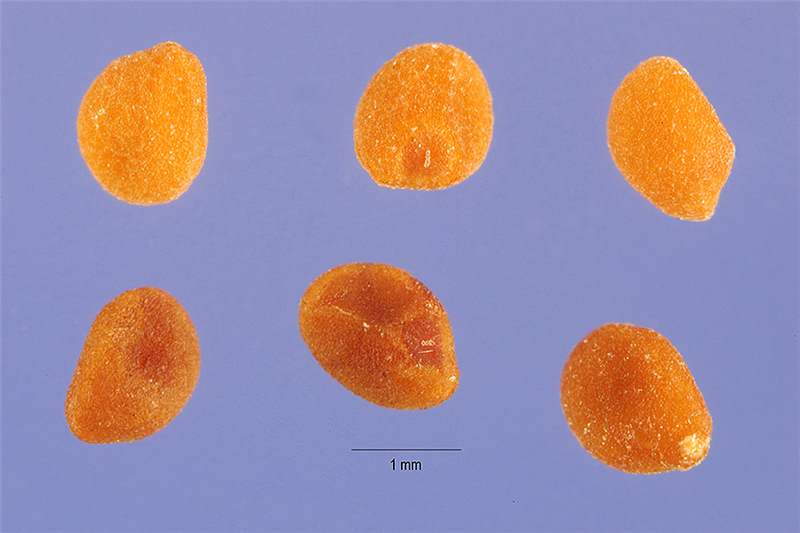
Cuscuta campestris Yunck. 

Category: Holoparasitic
Family: Convolvulaceae

General Appearance

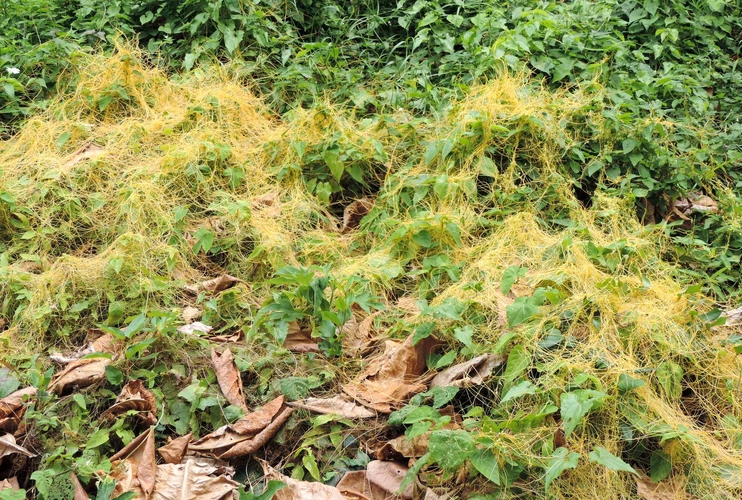
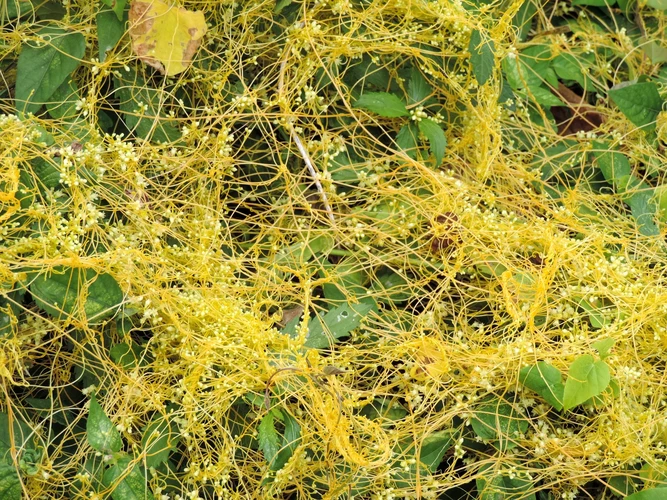
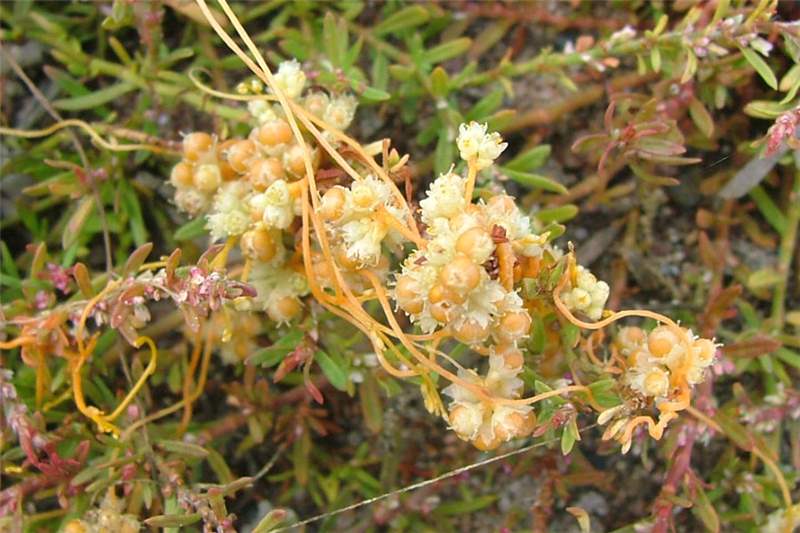
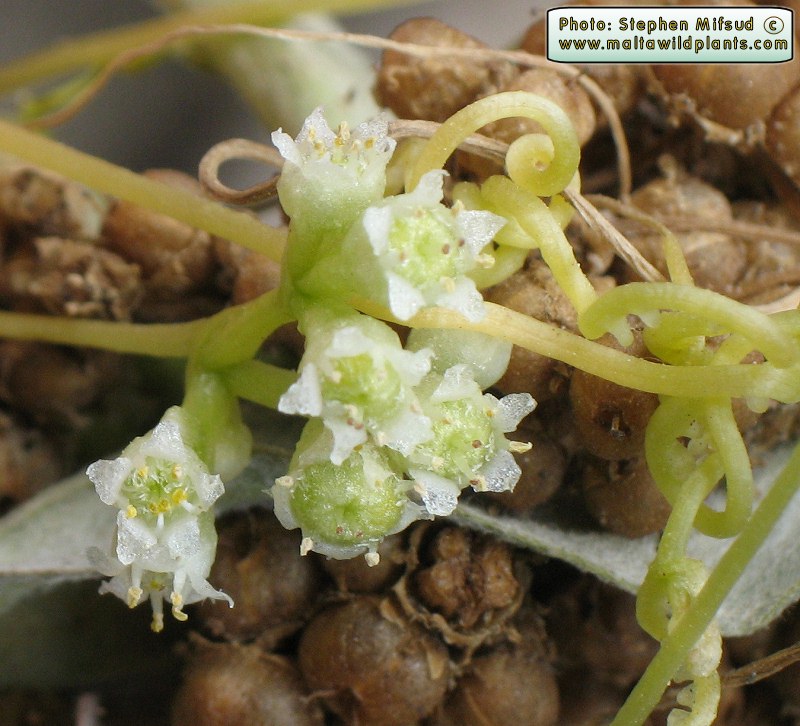
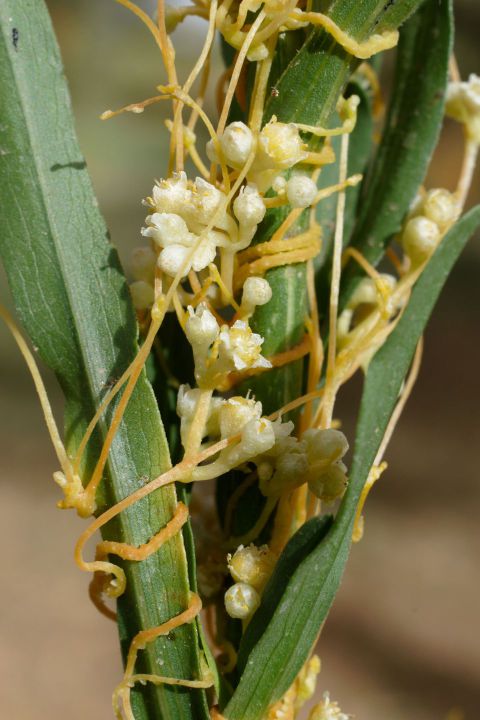
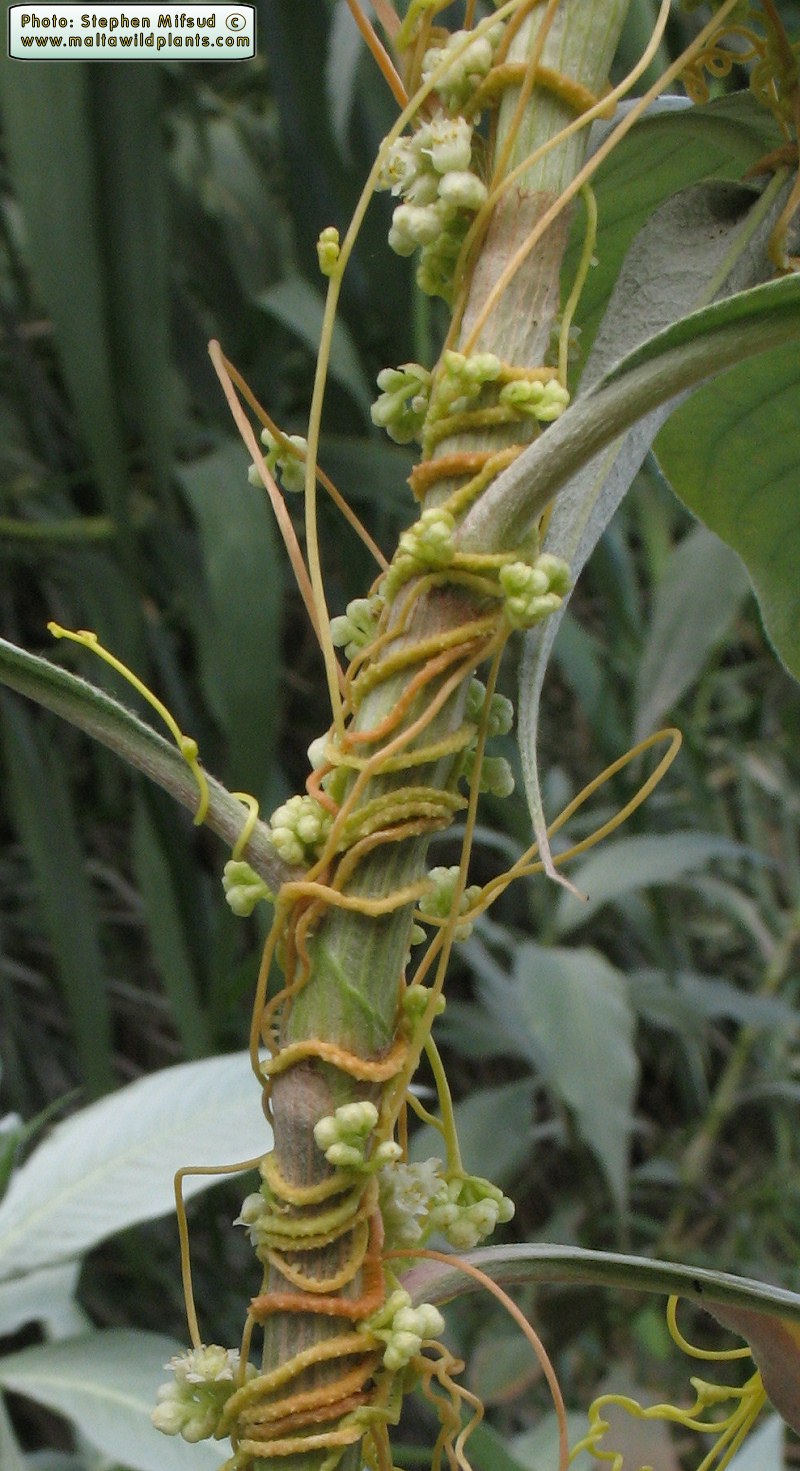
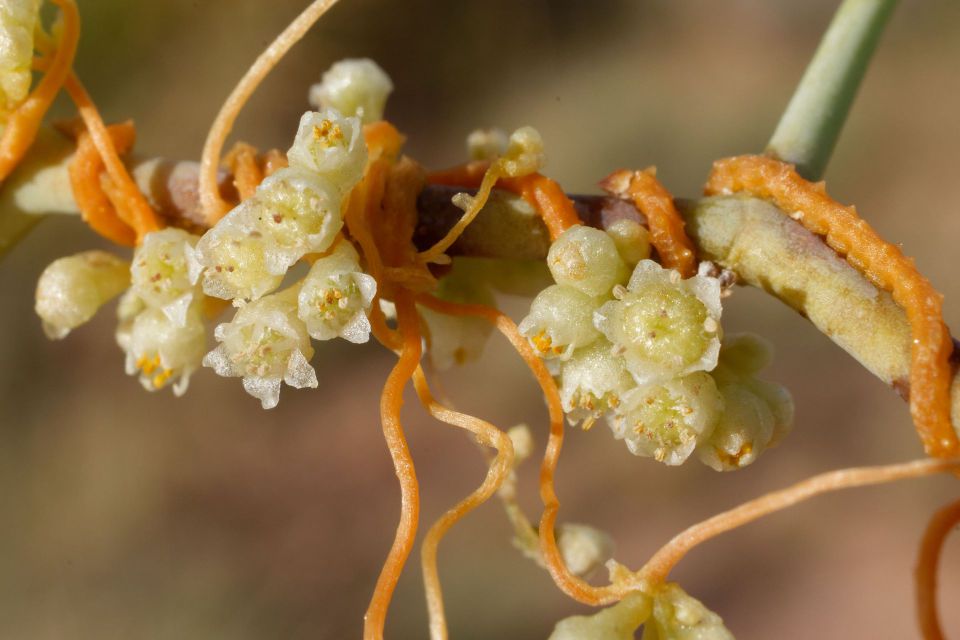
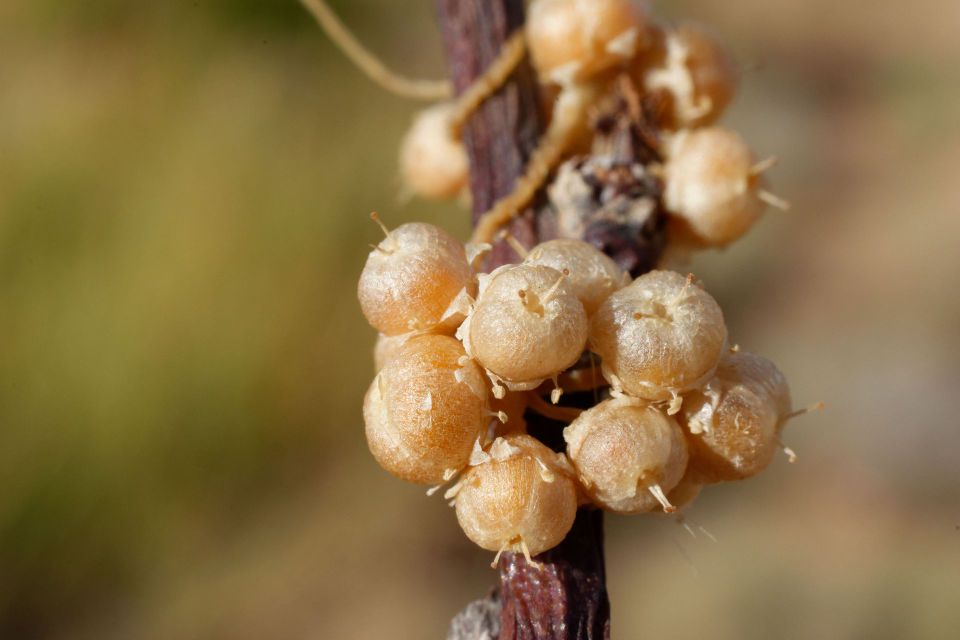
Cuscuta campestris Yunck., it is a climbing holoparasite. Stems moderately stout, yellowish. Flowers 2-3 mm, 5-merous; pedicels short; glomerules 10-12 mm in diameter, compact, globose. Calyx campanulate, about as long as corolla-tube; lobes ovate or orbicular, obtuse, slightly overlapping. Corolla-lobes acute, triangular, patent (often with inflexed apex), about as long as the shortly campanulate tube. Stamens exserted. Scales long, densely fimbriate, exserted. Styles slender, about as long as the globose ovary. Capsule 2-3 mm in diameter, depressed-globose, pale, with the persistent corolla at its base. Seeds 1-1.2 mm.

Life Form

Pa

Phytochoria

Cosm. The native range of this species is N. America, Caribbean. W. South America.

Distribution in Libya

Al-Jafarah Plain:  Al-Hdaba Treatment Plant Tripoli 2016

First: Encyclopedia Flora of Libyan:

====================

Second: Researches and PhD theses, master theses, Sorted by Newest:

Mahklouf, M. H. &Al Sghair, F. G. (2016) Biodiversity and Floristic Study of Al-Hdaba Treatment Plant Tripoli-Libya. American Journal of Life Science Researches, Original Article, pag. (101-103). Jul 2016, Volume 4, Issue 3, DOI: 10.21859/ajlsr-040307. https://www.researchgate.net/profile/Mohammed-Mahklouf, https://www.researchgate.net/profile/Fathi-Al-Sghair

Biodiversity and Floristic Study of Al-Hdaba Treatment Plant Tripoli–Libya. 2016

Leave a Reply

Your email address will not be published. Required fields are marked *