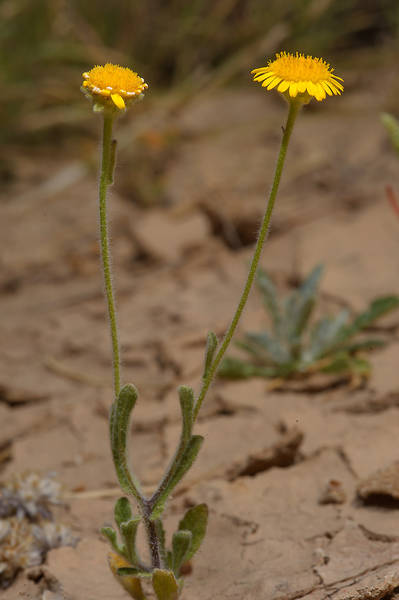
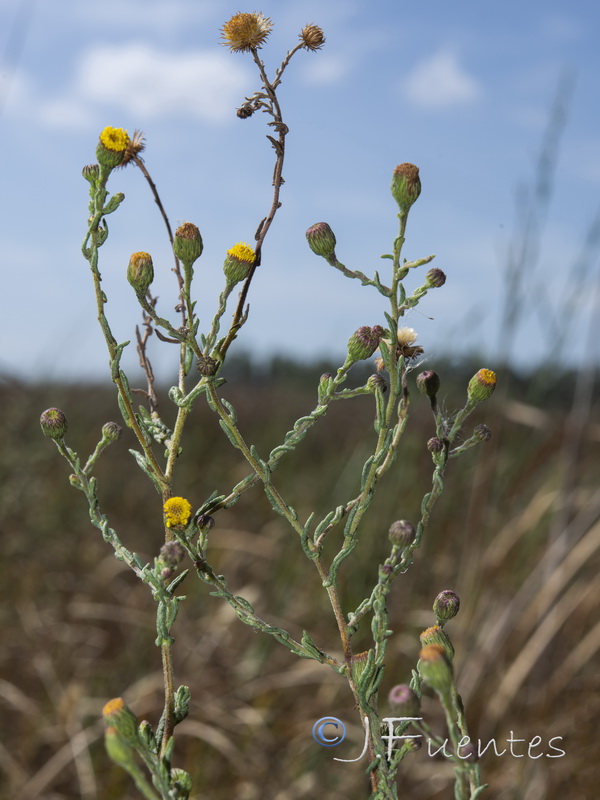
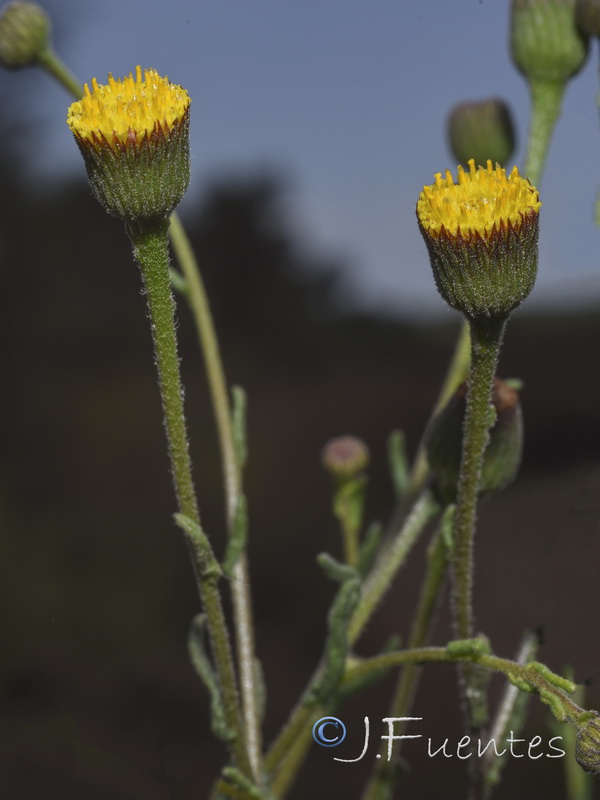
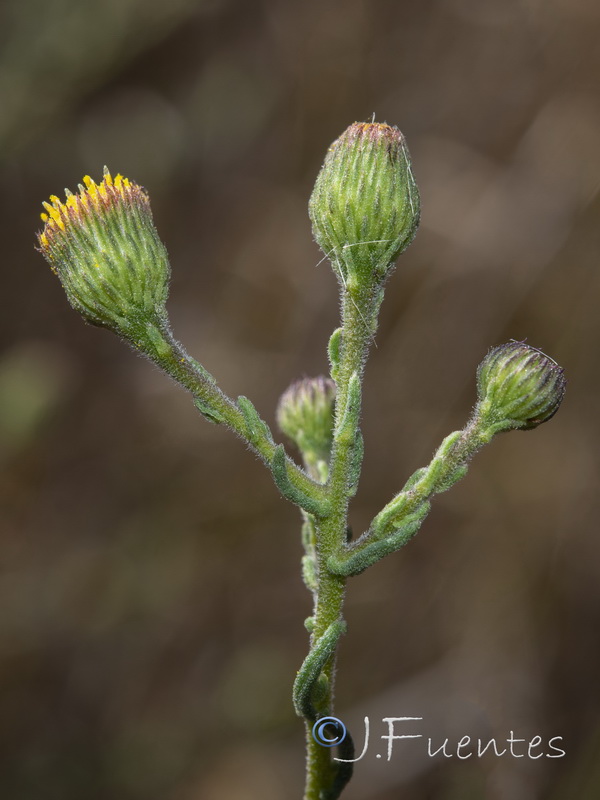
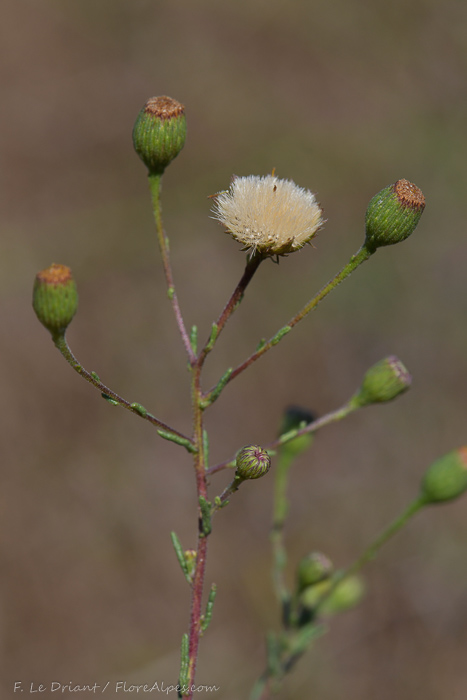
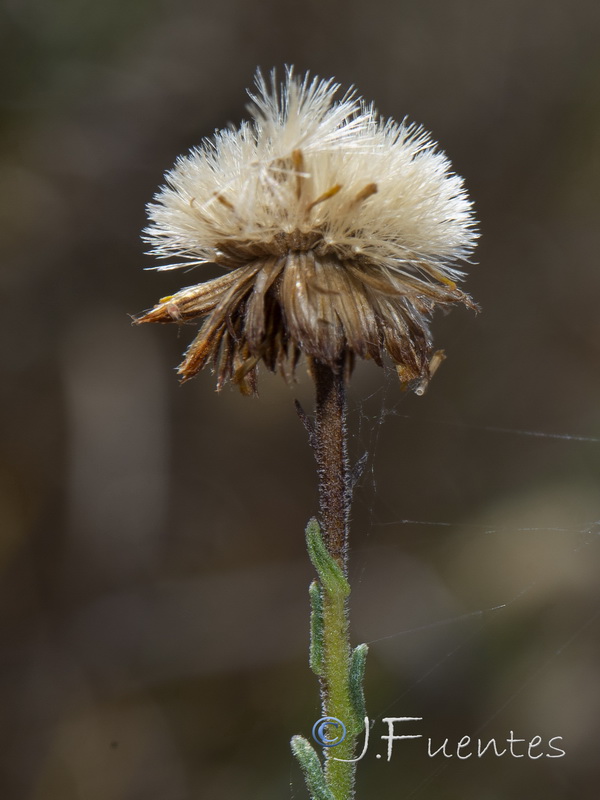
Pulicaria sicula (L.) Moris , it is an annual herb, up to 20-40 cm tall. Stems branched with adpressed pubescence. Leaves linear, rigid, acute, strongly revolute, entire or obscurely toothed, finely pubescent and glandular specially on the undersurface. Lower cauline leaves attenuate into a petiole. Upper and mid-cauline leaves sessile, with shortly articulate base. Capitula small, 6-10 mm. Peduncles up to 4 cm long, distinctly thickened after anthesis. Involucre 7-12 mm broad. Involucral bracts 3-4 rowed, narrowly oblanceolate, sparsely pubescent and angular. Outer involucral bracts 1.5-2.5 mm. herbaceous. Inner involucral bracts 4-5 mm, subacute. Ray florets c. 12, 1-rowed; corolla 3 mm. apically 3-toothed, ± erect, not or scarcely exceeding the involucre. Disc corolla 3 mm, 5, toothed; teeth glandular, acute. Cypsela 1.5-1.75 mm. densely adpressed pubescent; outer scales of the pappus connate at base only; inner pappus of 18-25 setae; setae c. 2.5 mm long, scabrid.



Leave a Reply