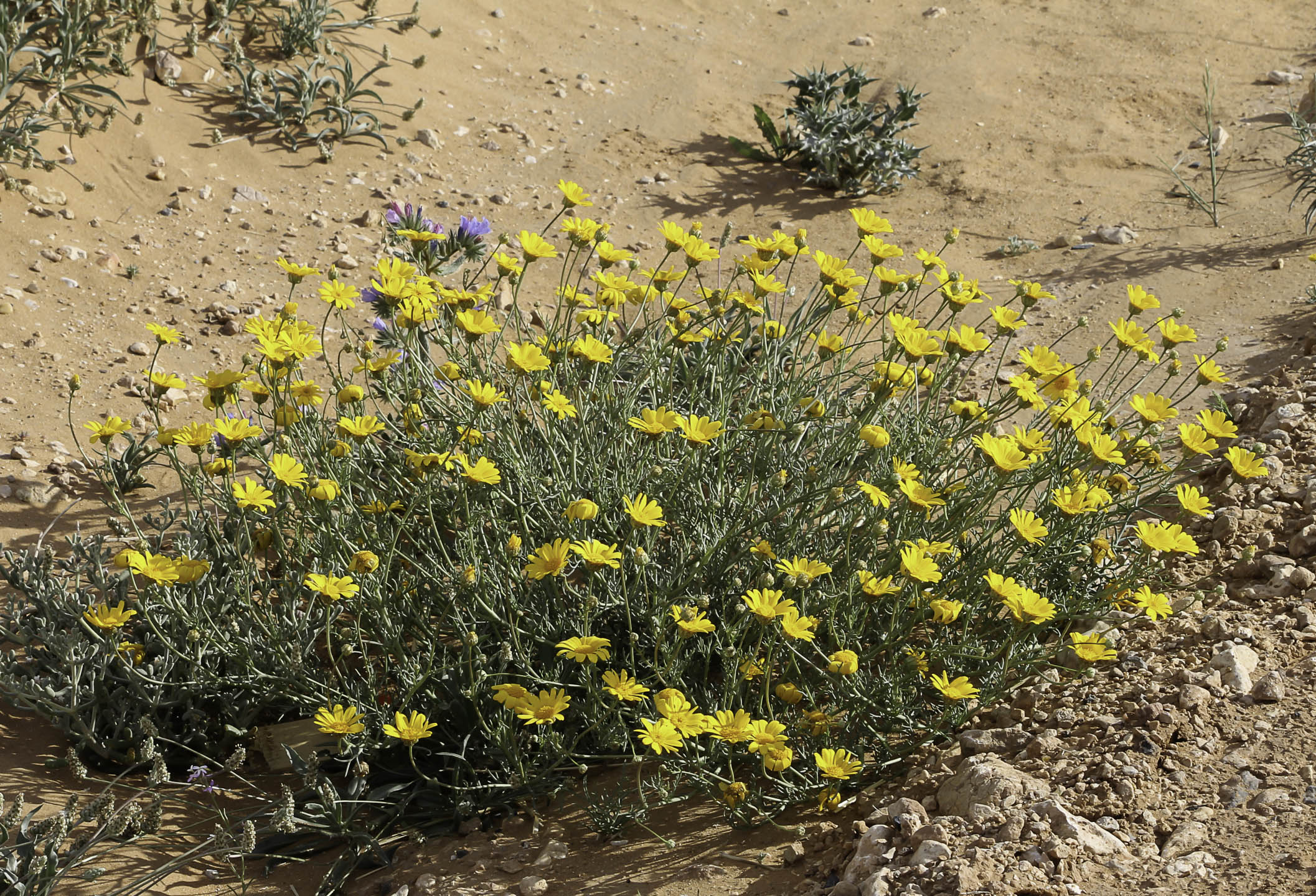
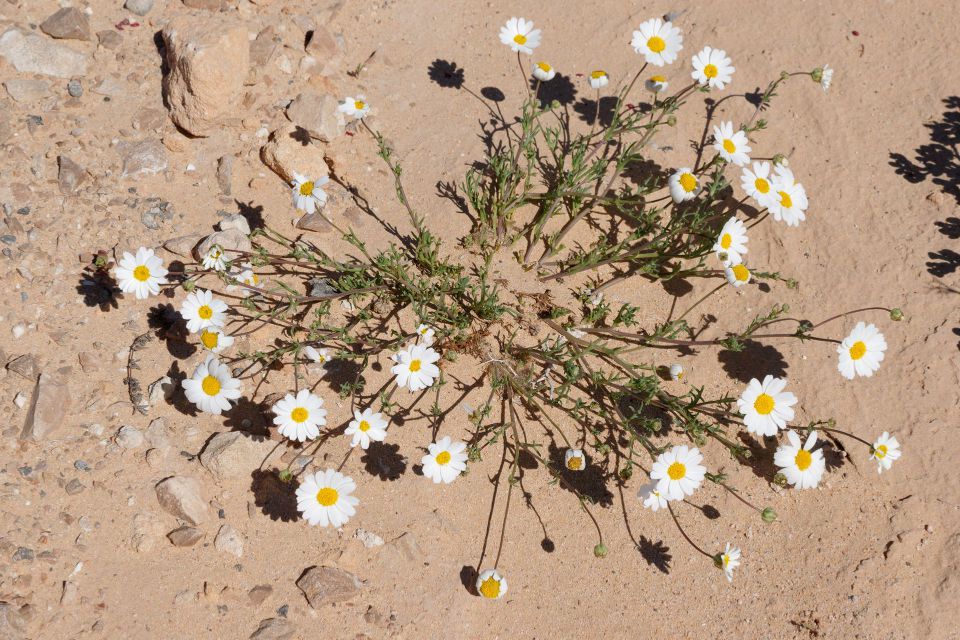
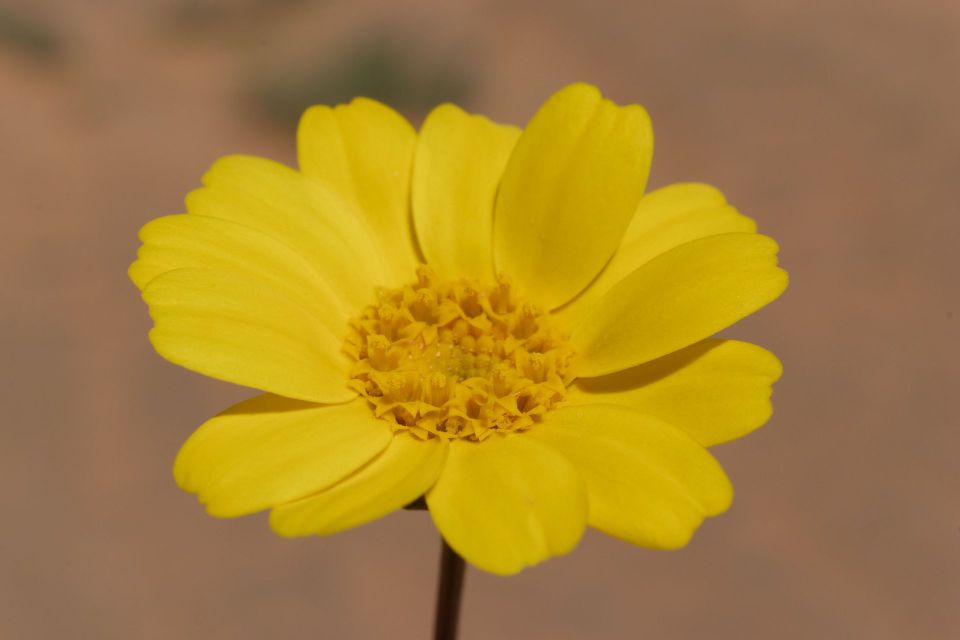
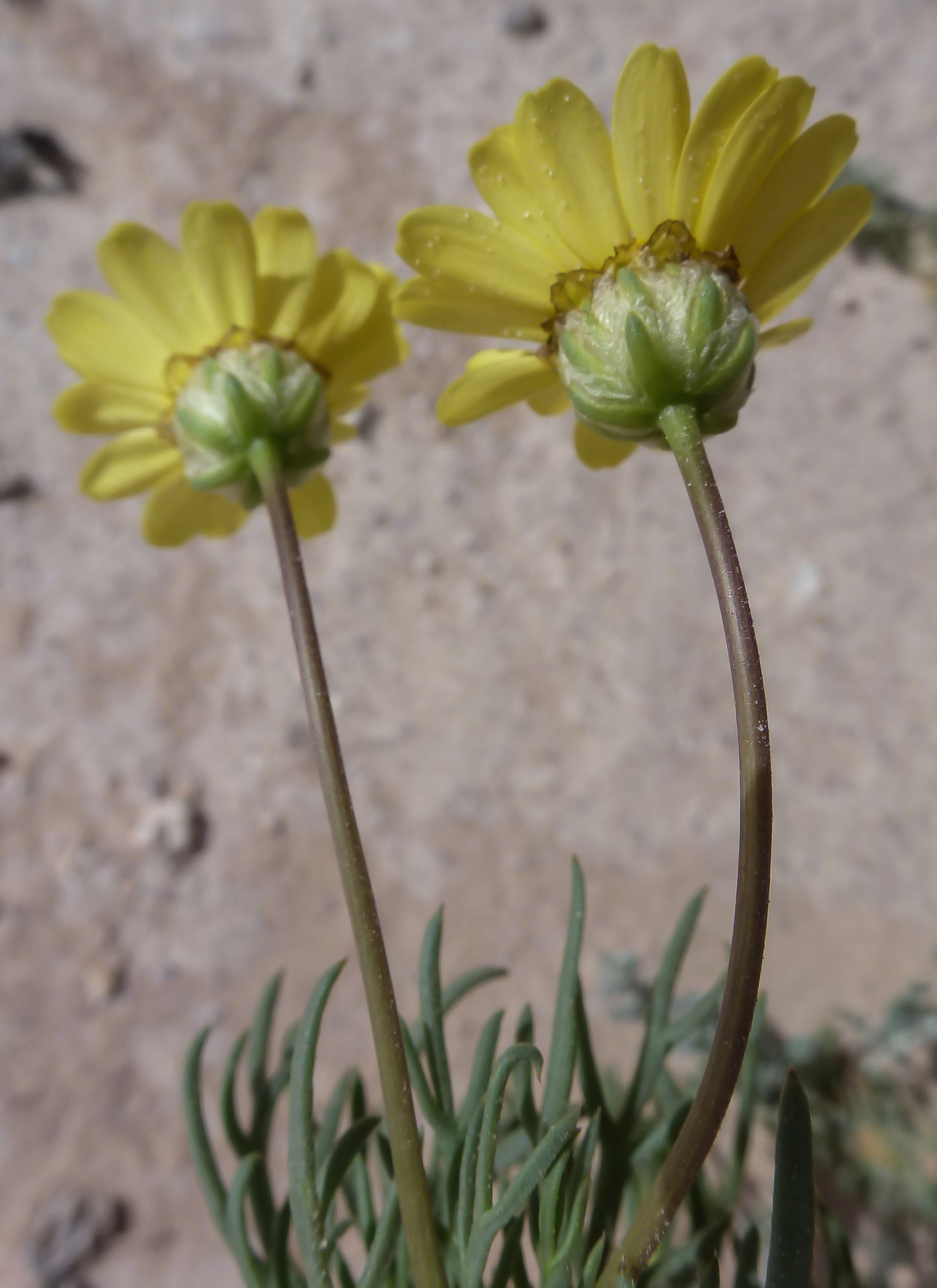
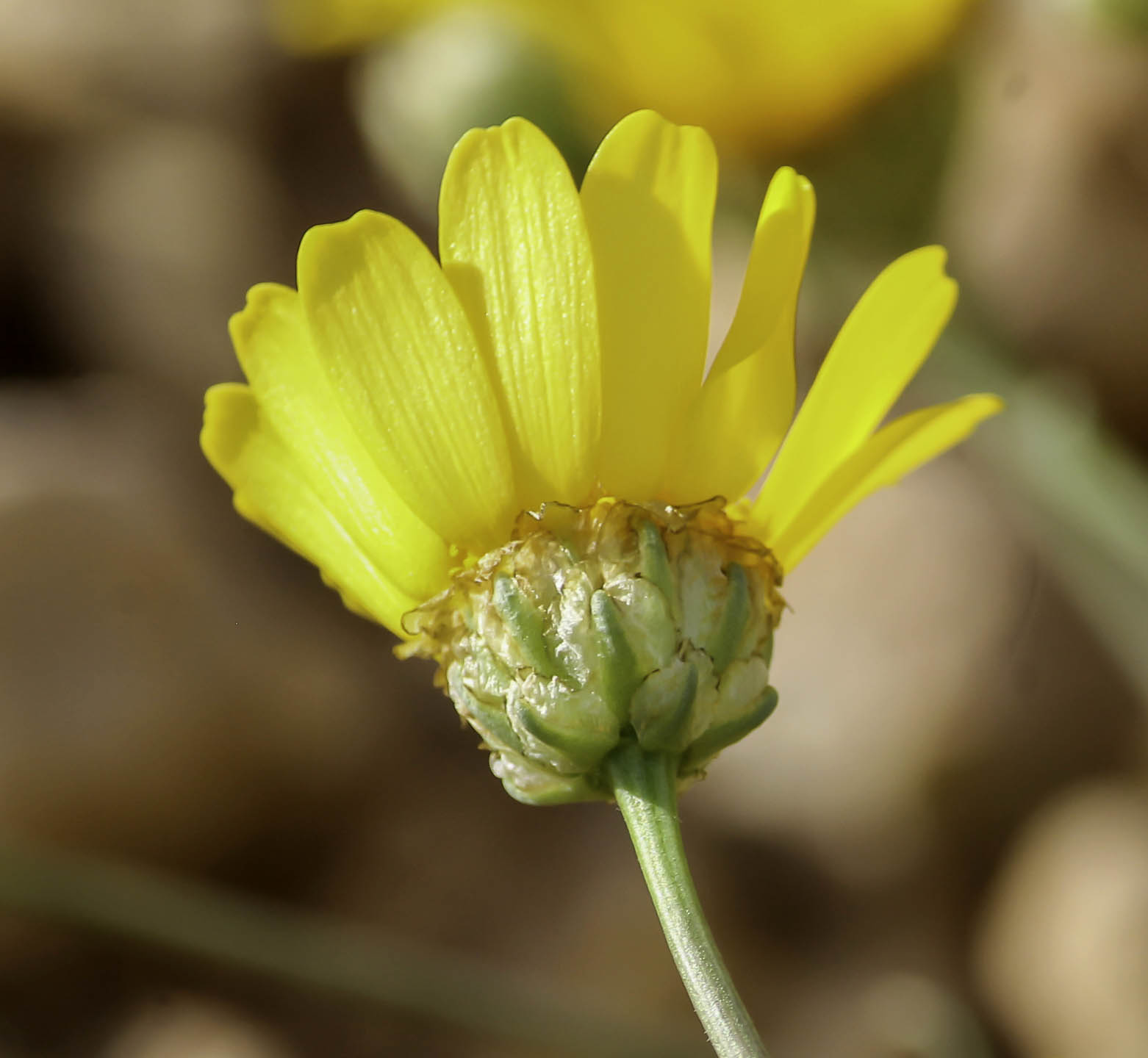
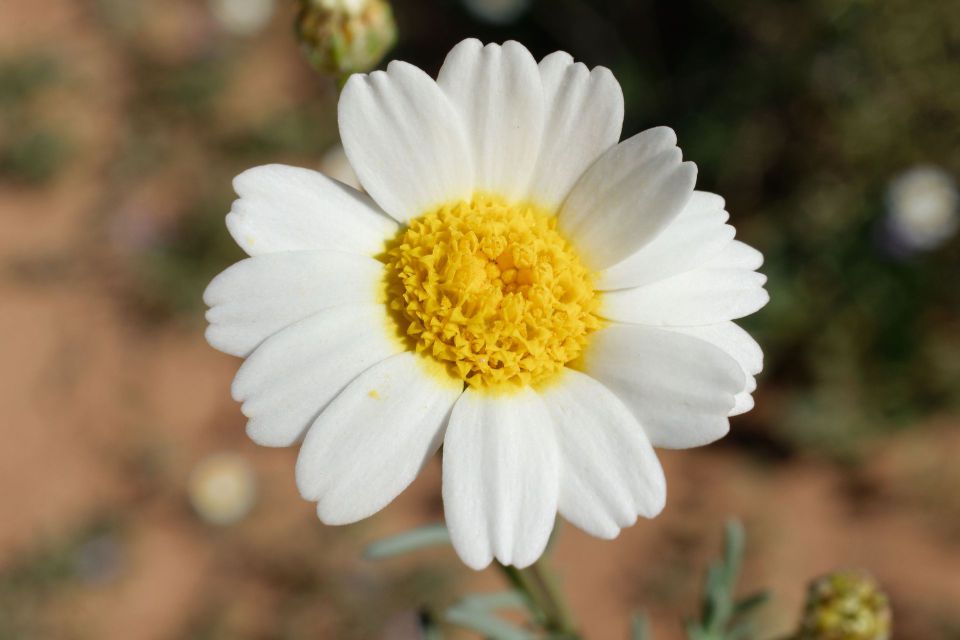
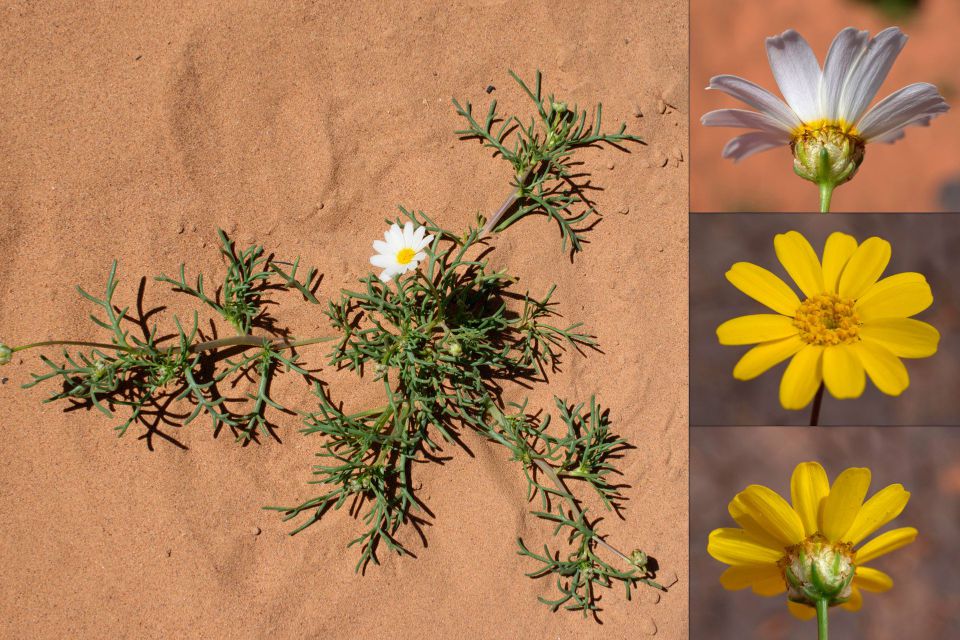
Endopappus macrocarpus Sch.Bip. // Infraspecifics: Endopappus macrocarpus ssp. macrocarpus / Heterotypic Synonyms: Prolongoa macrocarpa (Coss. & Kralik) Alavi, it is a herbaceous with an annual life cycle. Stem, the aerial part is generally erect, simple or branched. The leaves are arranged alternately and have a serrated (or dentate) blade and are of the doubly pinnate type. The shape varies from obovate to oblong. Inflorescence, consist of a terminal, pedunculated, radiate flower head. The flower heads consist of a meniscoid to hemispherical involucre composed of several bracts, within which a receptacle serves as the base for two types of flowers; ray florets and disk florets. The bracts, flat and herbaceous in texture (widely scarily light or dark on the margins), are arranged more or less imbricated in 3-4 rows. The receptacle, from flat to convex, is devoid of straws enveloping the base of the flowers. The flowers are tetracyclic (formed by four whorls; calyx, corolla, androecium, androecium) and pentamerous (calyx and corolla formed by five elements). They are divided into; ray florets (external): they are female, fertile, and arranged in a row; their shape is ligulate (zygomorphic); sometimes they may be absent or sterile; disc florets (central): they are more numerous with short tubular shapes (actinomorphic); they are hermaphroditic and fertile. Calyx; the sepals of the calyx are reduced to a crown of scales. Corolla: Ray florets; the corolla is more or less tubular-funnel-shaped at the base, while it is ligulate at the apex; the ligule may end with several teeth; the color is generally white or yellow. Disc florets, the shape is tubular, abruptly divided into five lobes; the lobes, patent or erect, are delta-shaped or more or less lanceolate; the color is yellow. Androecium: The androecium is composed of five stamens (alternating with the corolla lobes) supported by generally free filaments; the stamens are connate and form a cuff surrounding the style. The anthers, with a collar of baluster-like filaments, can be either basifixed or medifixed. The endothecial tissue (inner lining of the anther) is almost always non-polarized. The pollen is spherical with an average diameter of approximately 25 microns; it is tricolporate (with three openings, either slit-like or isodiametric or pore-like) and echinate (with protruding tips). Gynoecium: The ovary is unilocular and inferior, consisting of two carpels. The style (the pollen receptor) is deeply bifid (with two divergent stigmata) and has separate or contiguous marginal stigmatic lines. The two arms of the style are truncated and may be papillose or covered with tufts of hair. The fruits are achenes with a pappus. They are dorsoventrally flat with three angles and lateral ribs. The apex is rounded at the edges or has a small, rigid crown. The pericarp contains mucilaginous cells but lacks resin sacs.



Leave a Reply