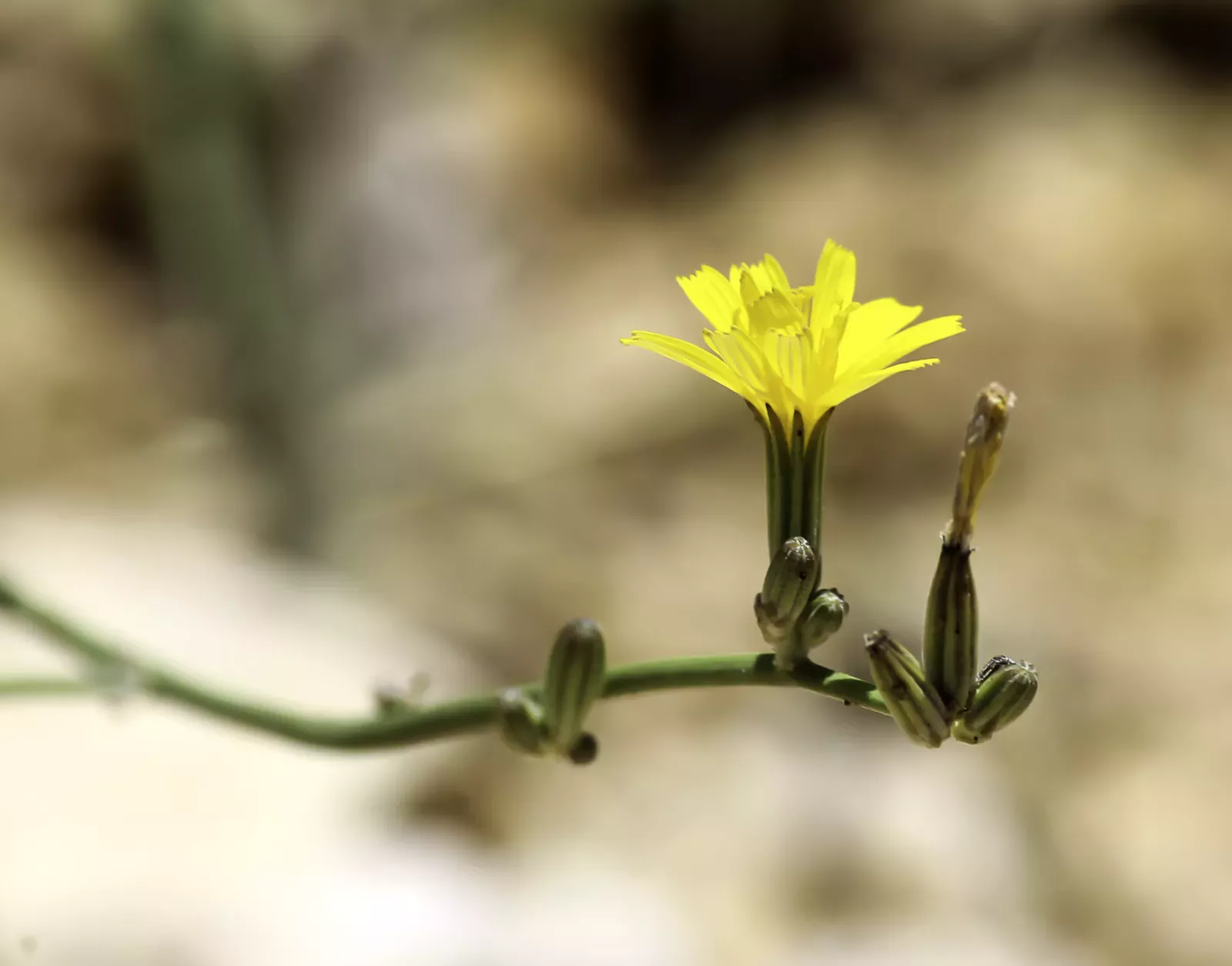
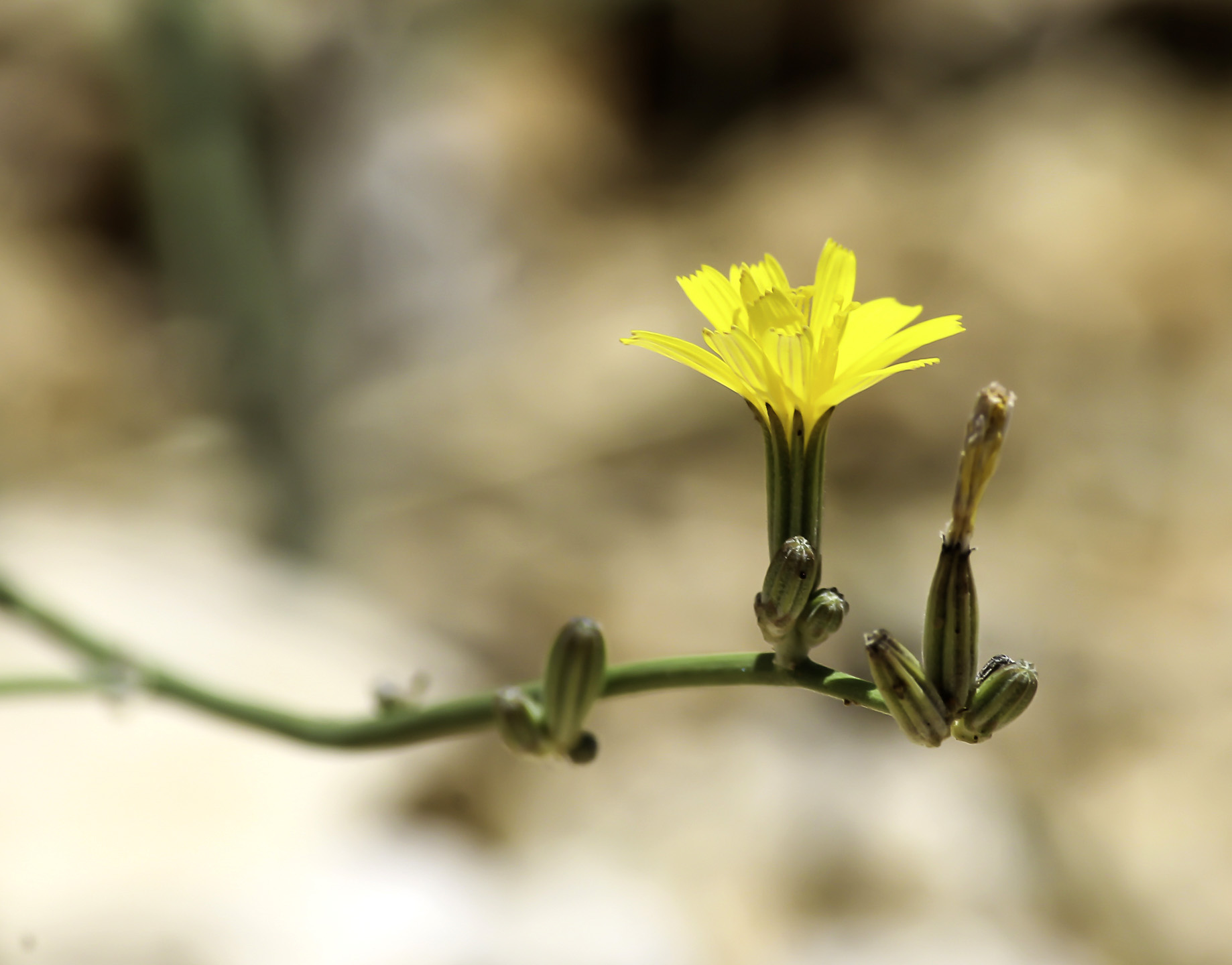
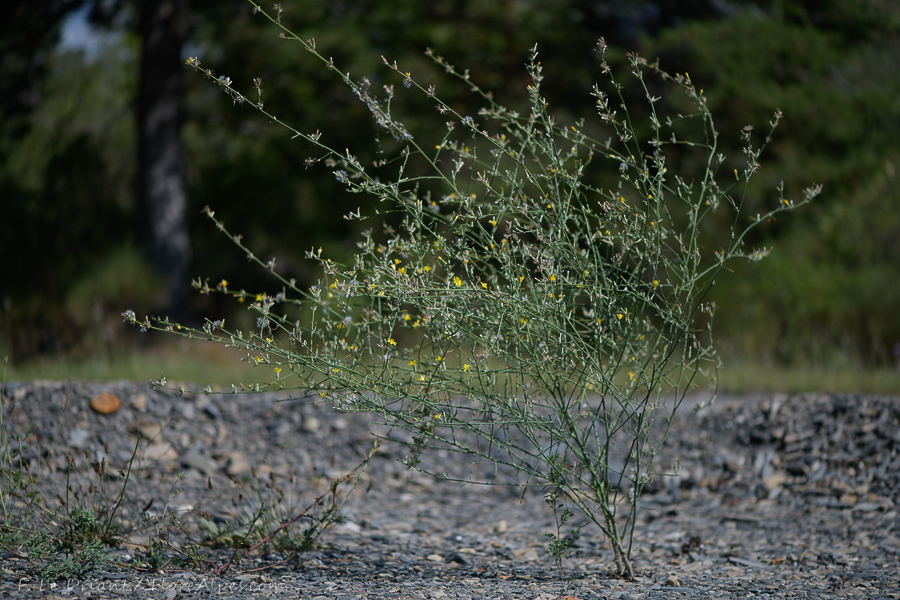
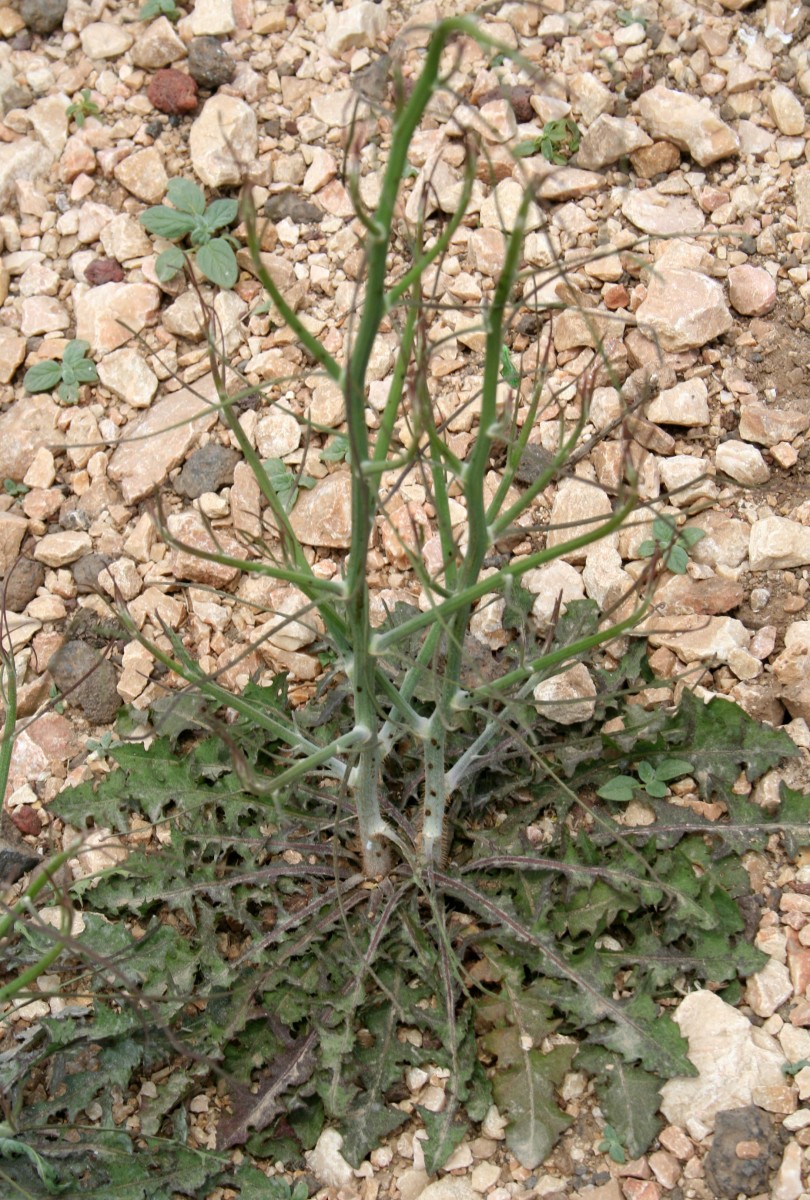
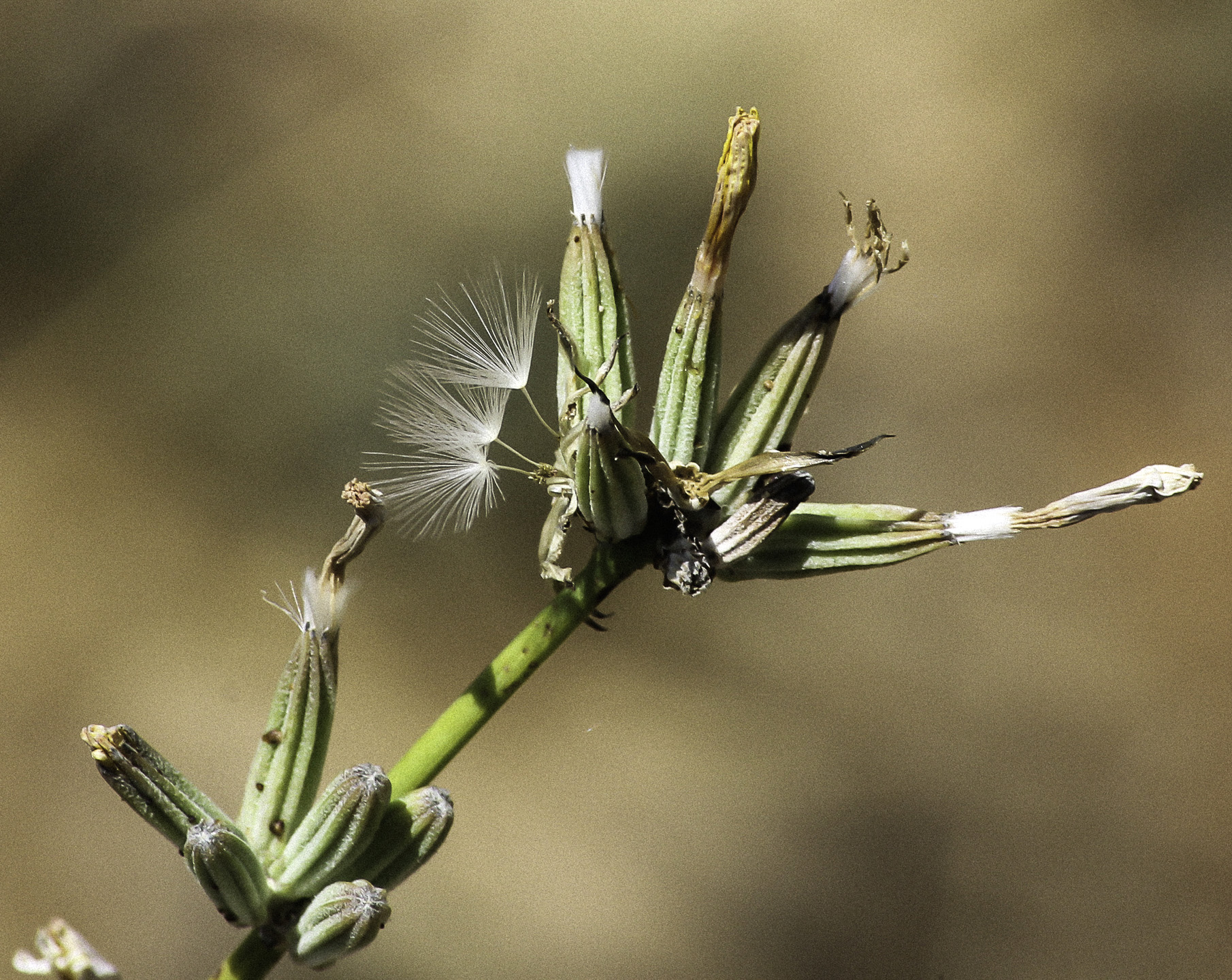
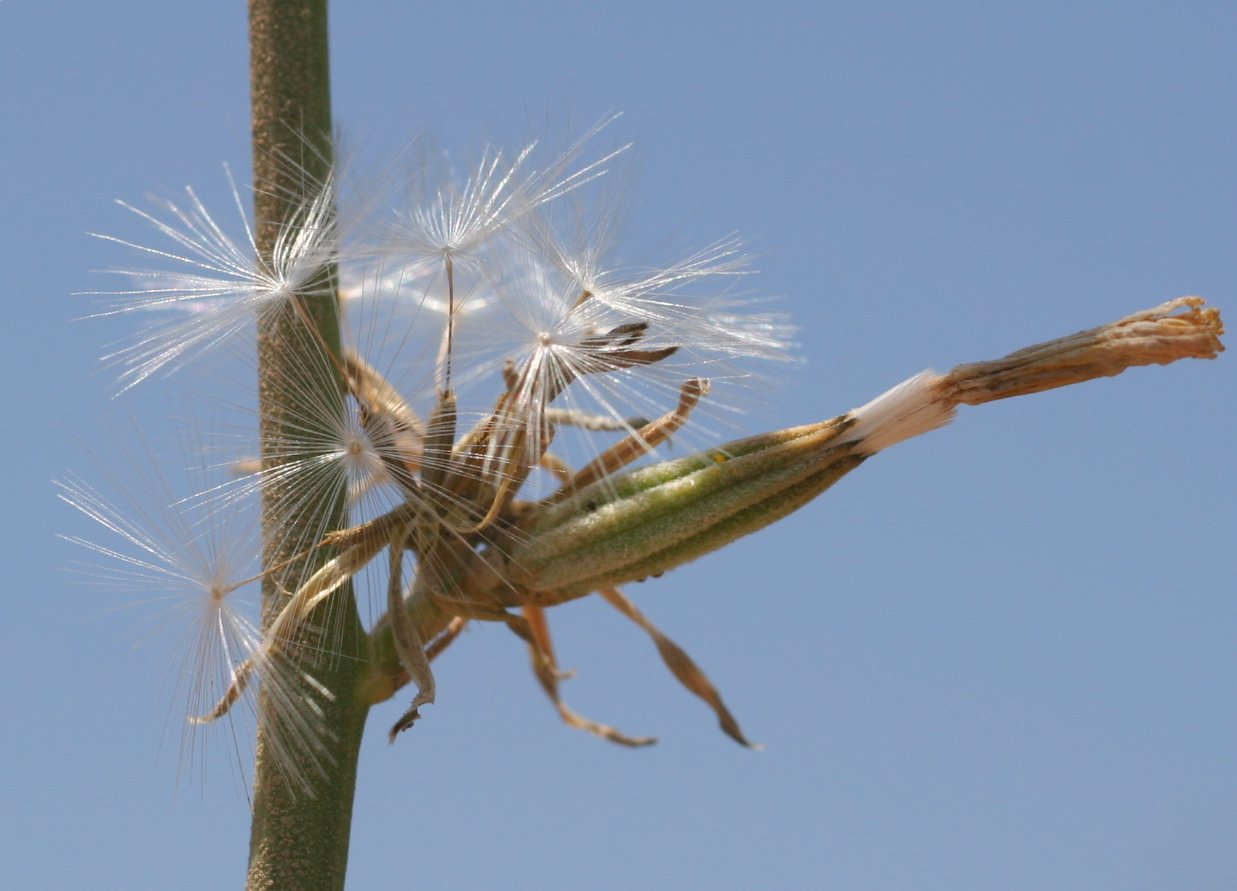
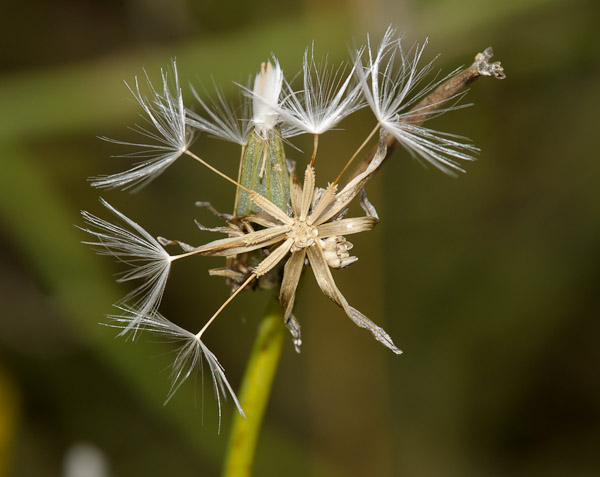
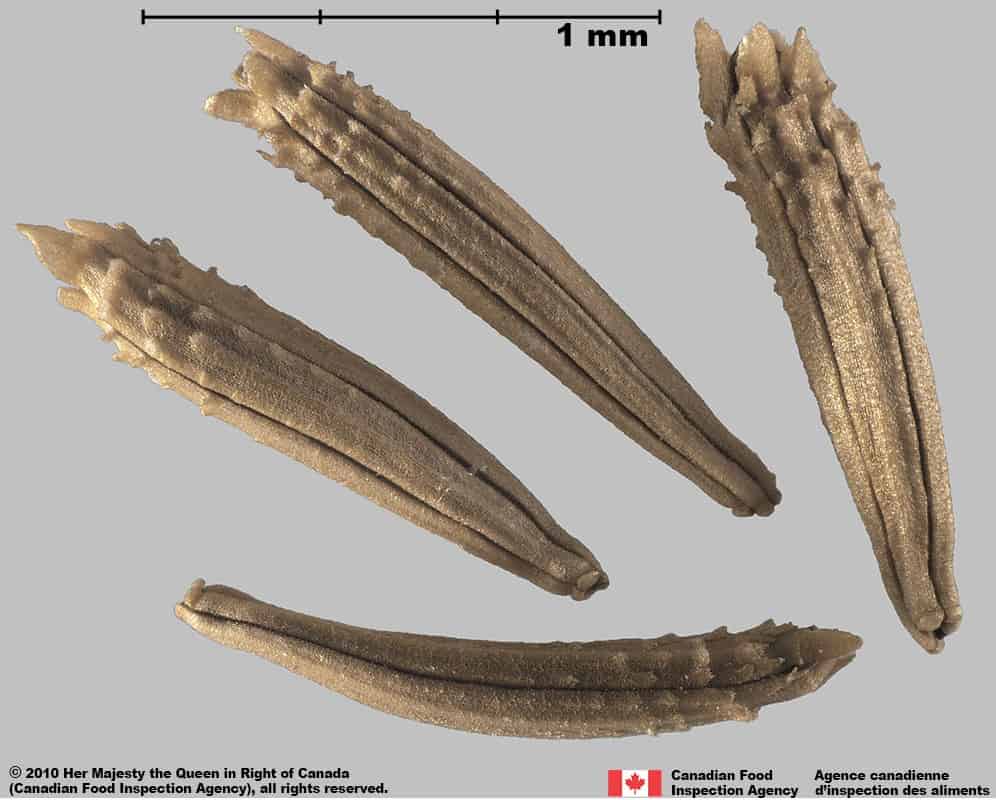
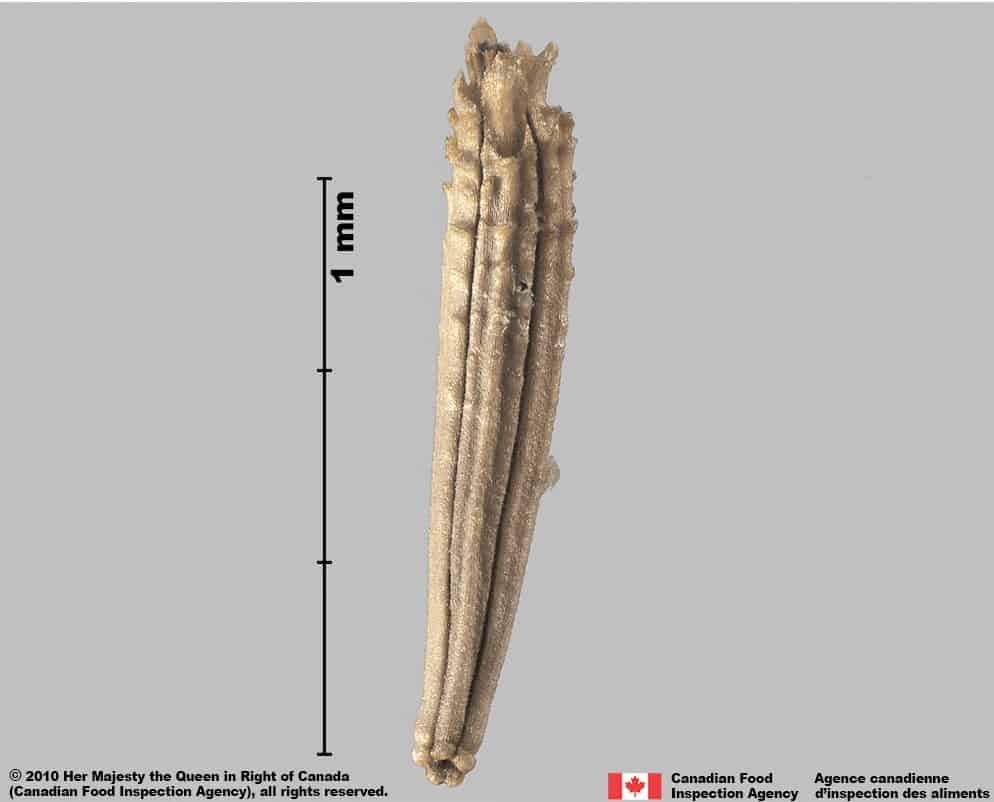
Chondrilla juncea L., it is a biennial to perennial, glaucous or greyish-green. hispid or glabrescent . Stems usually solitary, up to 40-100 cm, with numerous ascending, interlaced, slender and stiff branches; indumentum (when present) of rigid, retrorse hairs and sometime with short appressed hairs often confined to the lower parts. Leaves glabrous or with few rigid hairs. Basal leaves 40-120 x 15-45 mm, oblanceolate, ± acute, entire to deeply and irregularly runcinate dentate, attenuate into a short, winged petiole, soon withering. Lower cauline leaves smaller, usually like basal, the remainder long-linear, sometimes lanceolate, entire or denticulate. Capitula numerous, 9-12 flowered, terminal, lateral or axillary, solitary or in groups of 2-5, sessile or with short peduncles. Involucre 9-12 x 2.5-5 mm. Involucral bracts linear-lanceolate, obtuse to subacute, glabrous or sparsely tomentose, sometimes with a row of rigid hairs on the median line. Inner involueral bracts 7-9, searious at margins. Cypselas 8-10 mm (including 4-5 mm beak), pale yellowish-brown; beak slender, not articulated at the base; pappus c. 6 mm long.





Leave a Reply