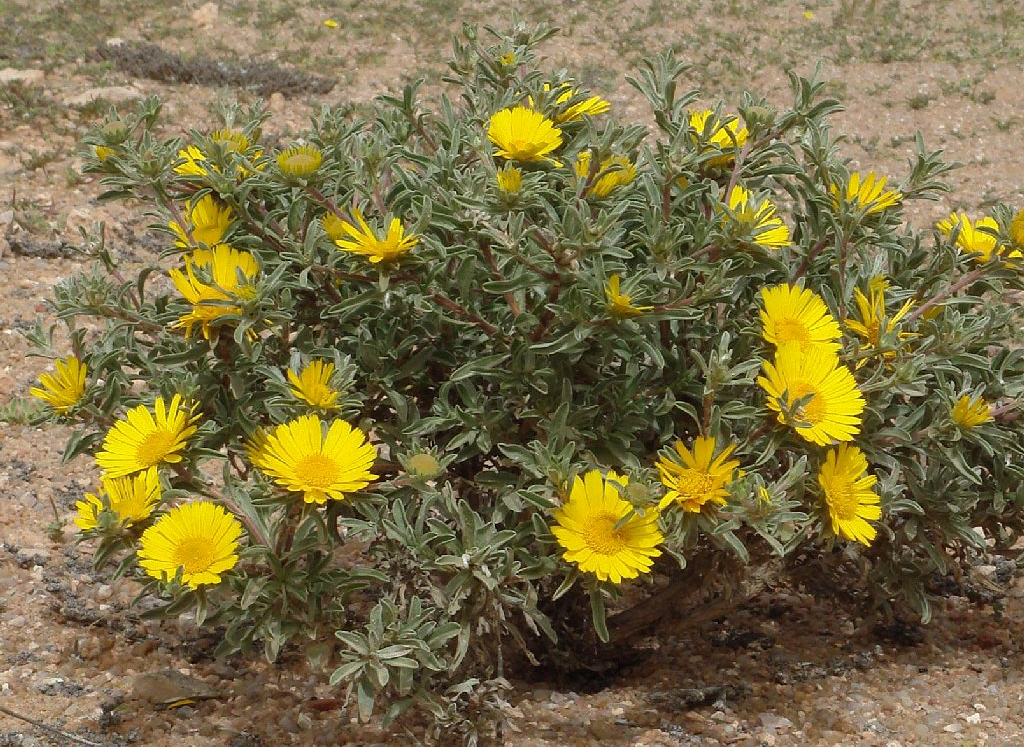
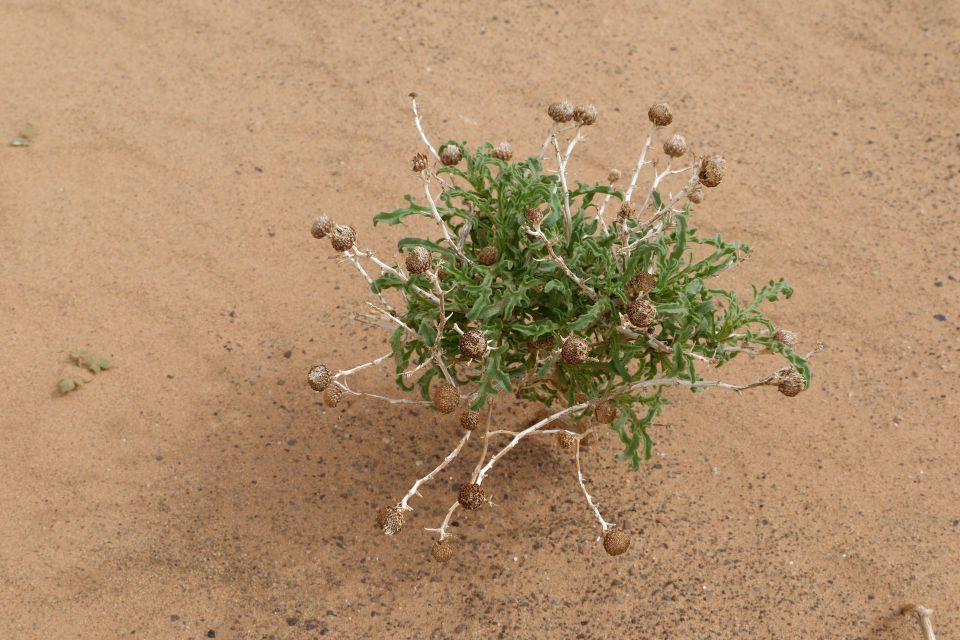
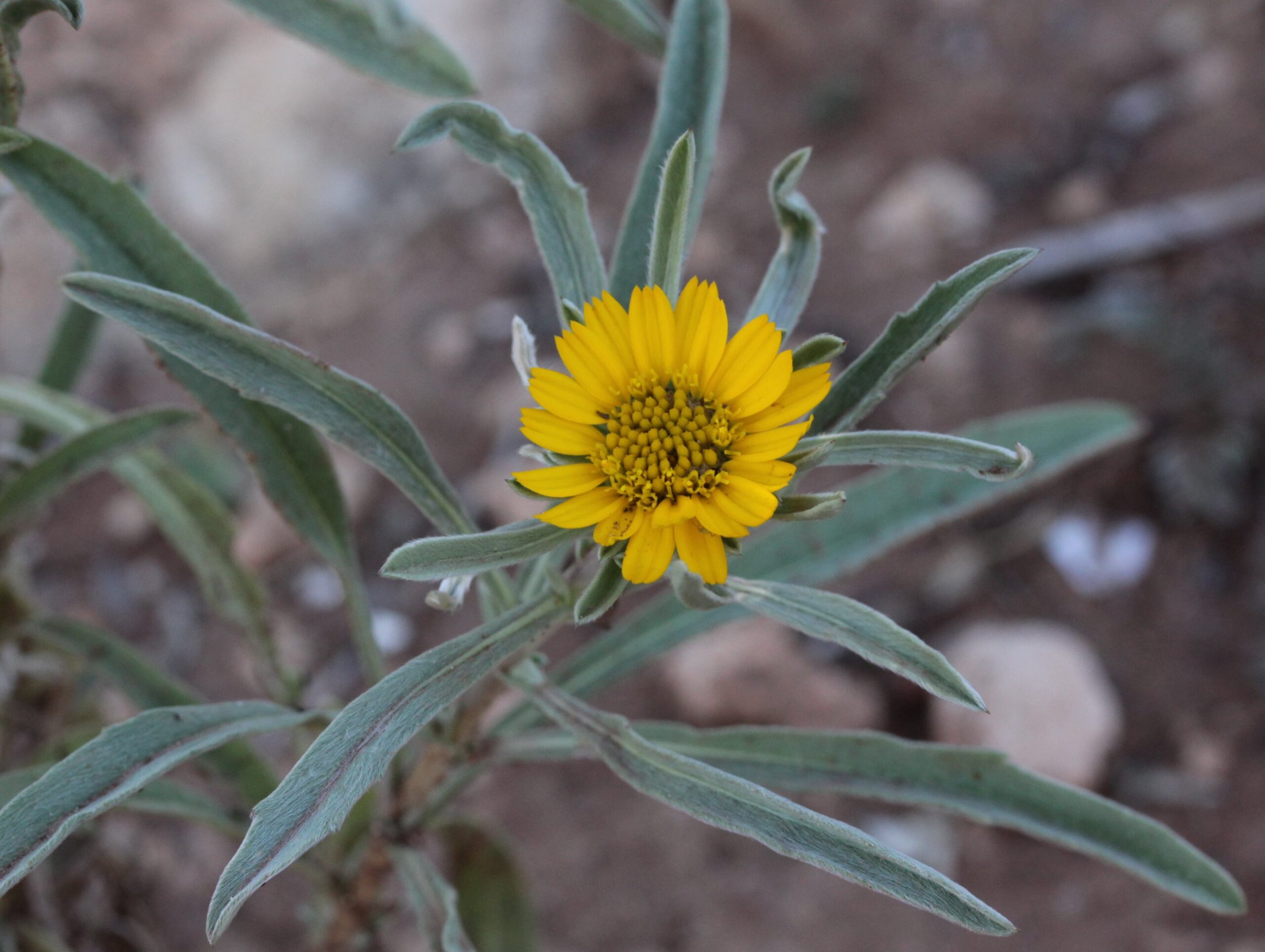
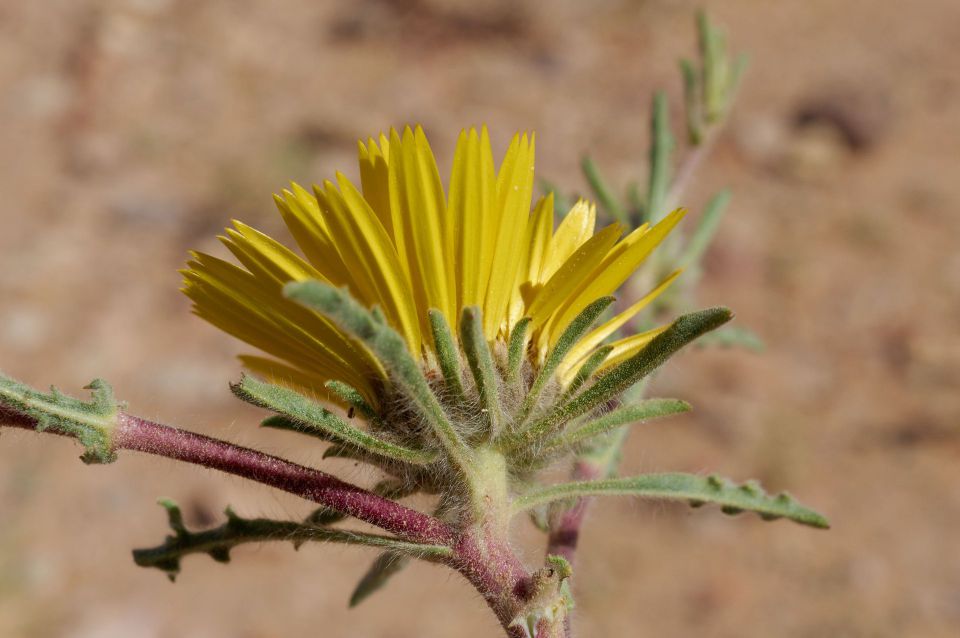
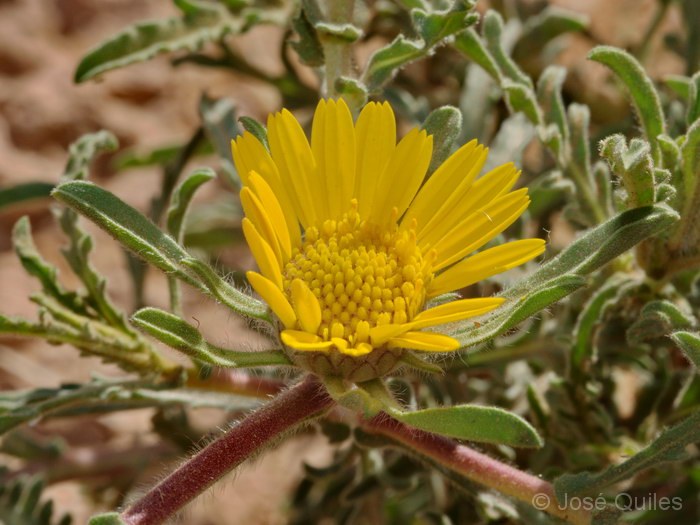
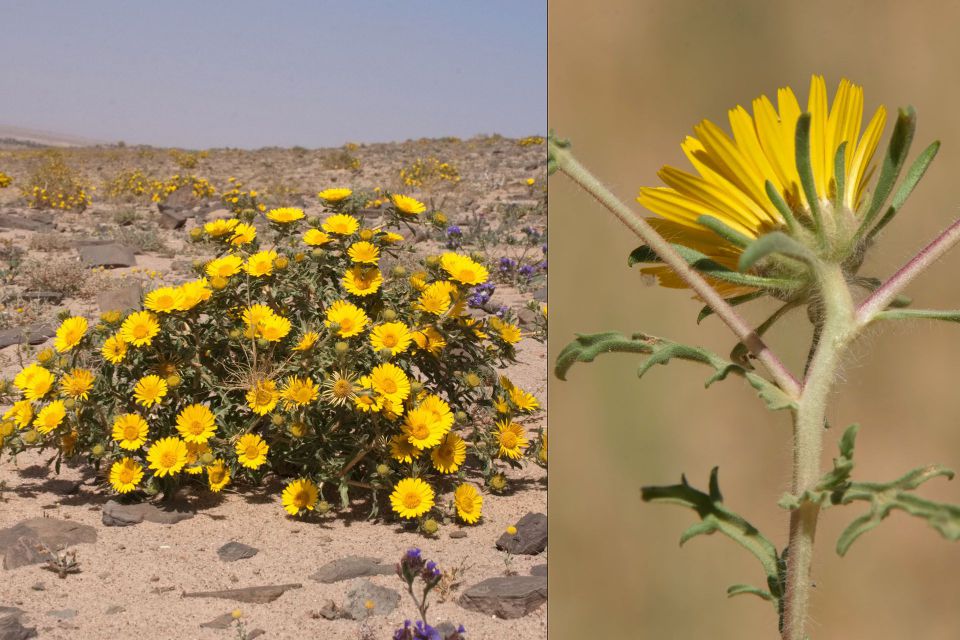
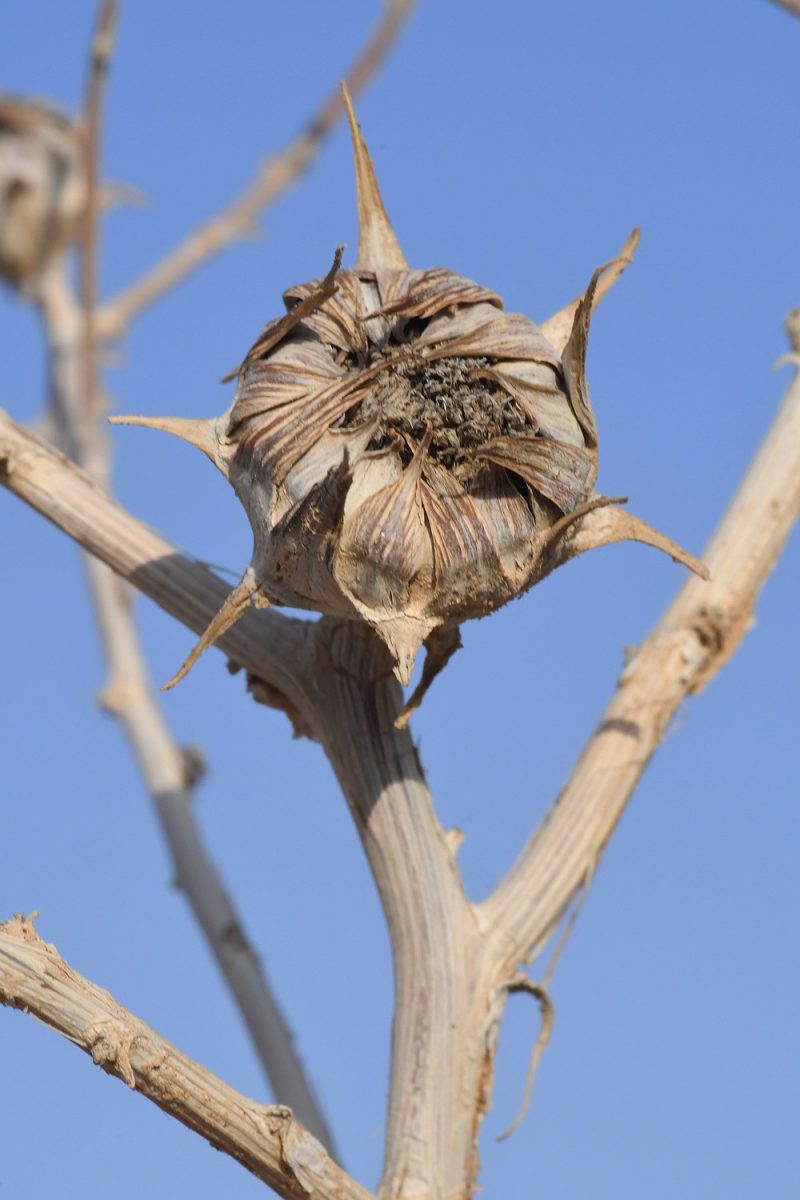
Asteriscus graveolens (Forssk.) Less. / Homotypic Synonyms: Nauplius graveolens (Forssk.) Wiklund, it is a perennial up to 20-50 (-60) cm tall, Sub-arborescent, with spreading branches. Leaves 20-40 (-50) mm long and 10 mm wide (excluding the lobes), oblong-linear, amplexicaul at the bases, pinnatilobed; lobes 4.7 pairs, 15-20 mm long, acute, incised toothed; leaves subtending the capitulum 40-46 x 7-8 mm, oblong-linear, not amplexicaul at the bases, pinnatilobed; lobed 3-4 pairs, with smooth margins. Capitulum 2.5-2.75 cm in diameter (including the ray florets), yellow, sub pedunculate, terminal or in the angle between the bifurcations of branches. Involucral bracts of the 1st, row 0.5 x 3 mm, oblong-ovate, apex drawn into a long, soft acumen (which withers away at maturity), coriaceous in the lower part and rest fleshy-foliaceous, outer face & margins densely hairy, tip hairy on both surfaces. InvolucraI bract of 2nd, row 7 x 2.5 mm, broadly oblanceolate, sharply acute, coriaceous throughout, outer surface and margins densely hairy. Involucral bracts of 3rd, row 5.5 x 2.25 mm, obovate, acute, coriaceous, outer surface and margins in the upper half hairy. Palca 5 mm, strongly curved, conduplicate, coriaceous, strongly carinate at the back, dorsal surface near the apex bearded, margins membranous, ciliate. Ray florets ± 40, yellow (sometimes pale-yellow to cream coloured), 9-10 x 2 mm (including basal tube 2.5-2.75 mm and apical lobe 0.25 mm), oblong, 3-lobed; basal tube cylindrical, smooth. Ovary 1.75-2 mm, triangular, with adaxial (inner) face slightly concave, 3-ribbed, silky hairy; ribs with two parallel veins with 6-7 cross veins; pappus of 4 scales, 1.5-2 mm. Disc florets yellow. Corolla 4.5-5 mm, 5 lobed, tubular; tube gradually widening up, lower part slightly compressed. Ovary I.5 mm, obconical, 4-ribbed; ribs similar to those of the ovary of ray floret; pappus of 4-scales, 1.5 mm.



Leave a Reply