General Appearance
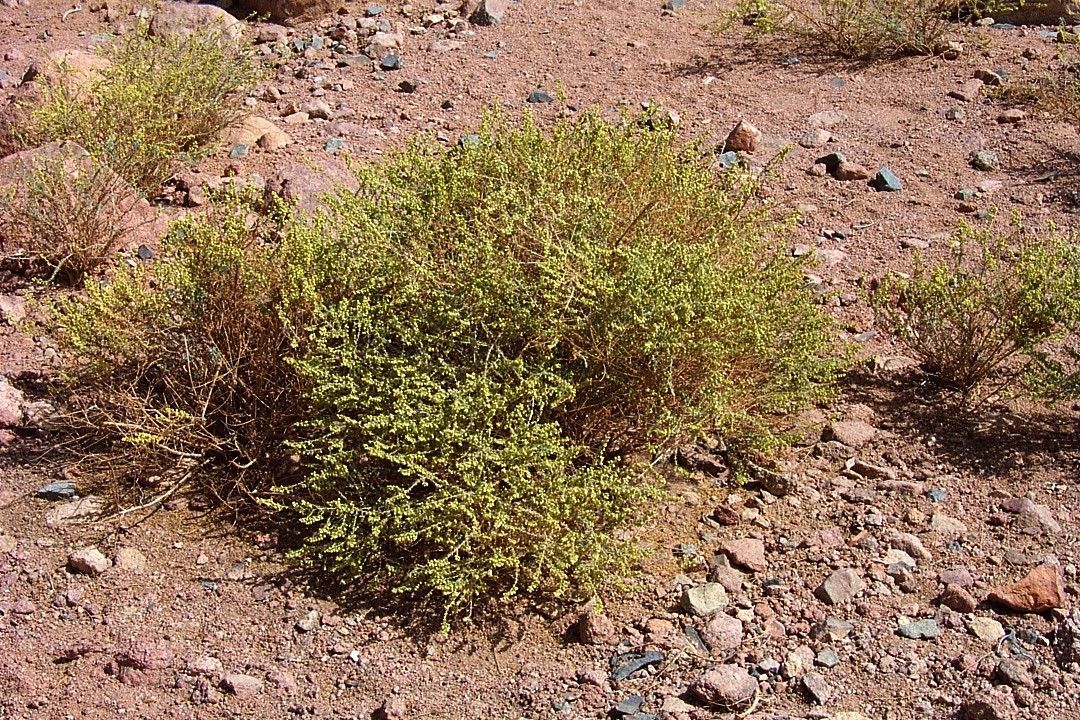
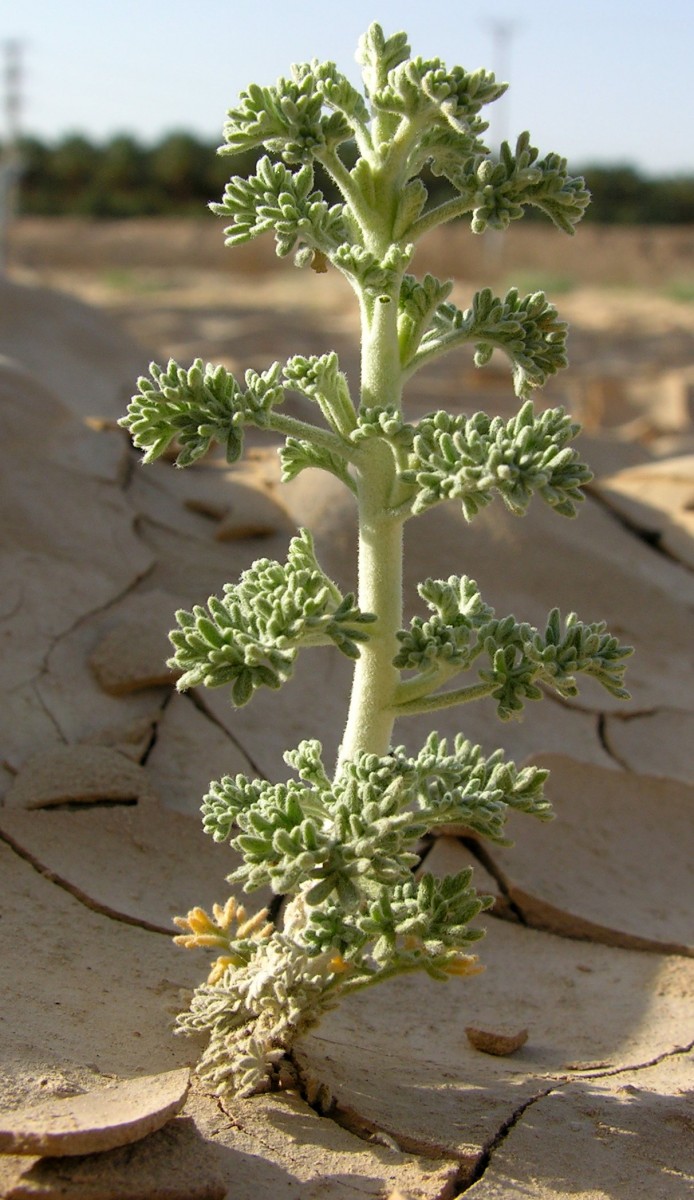
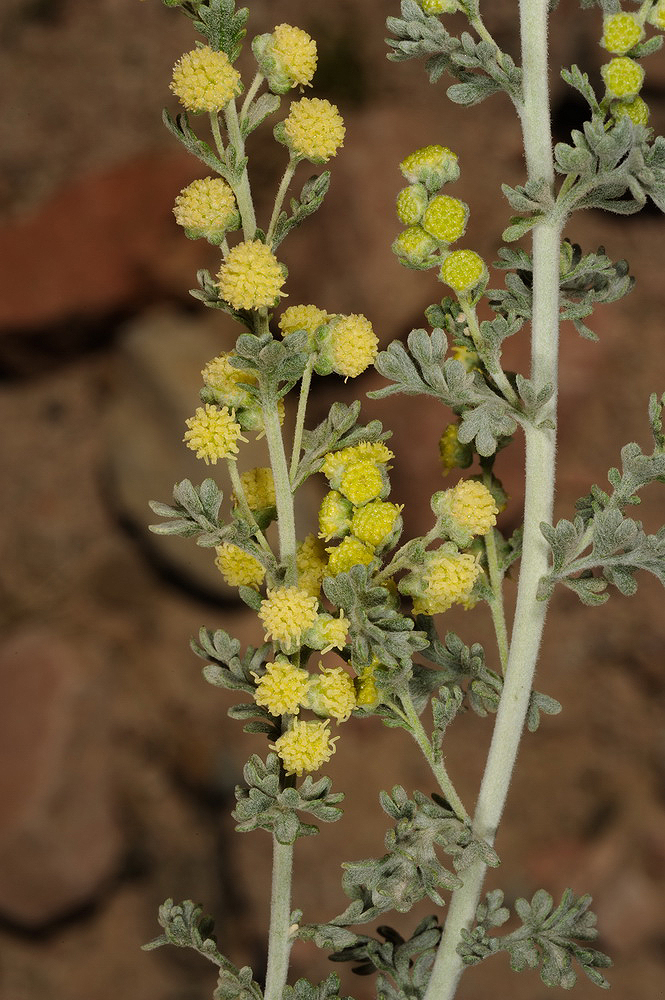
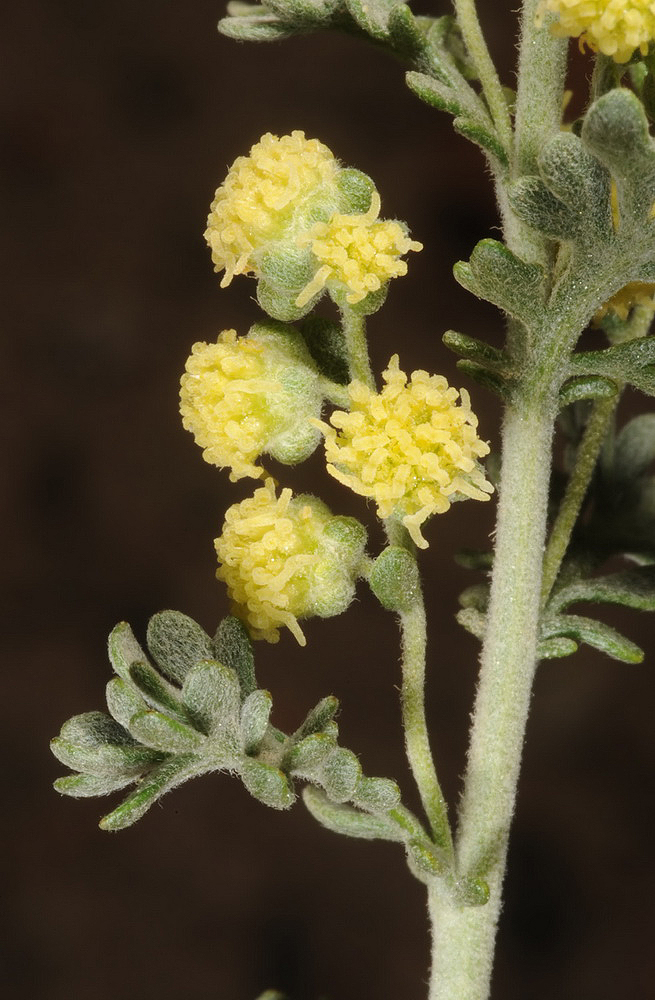
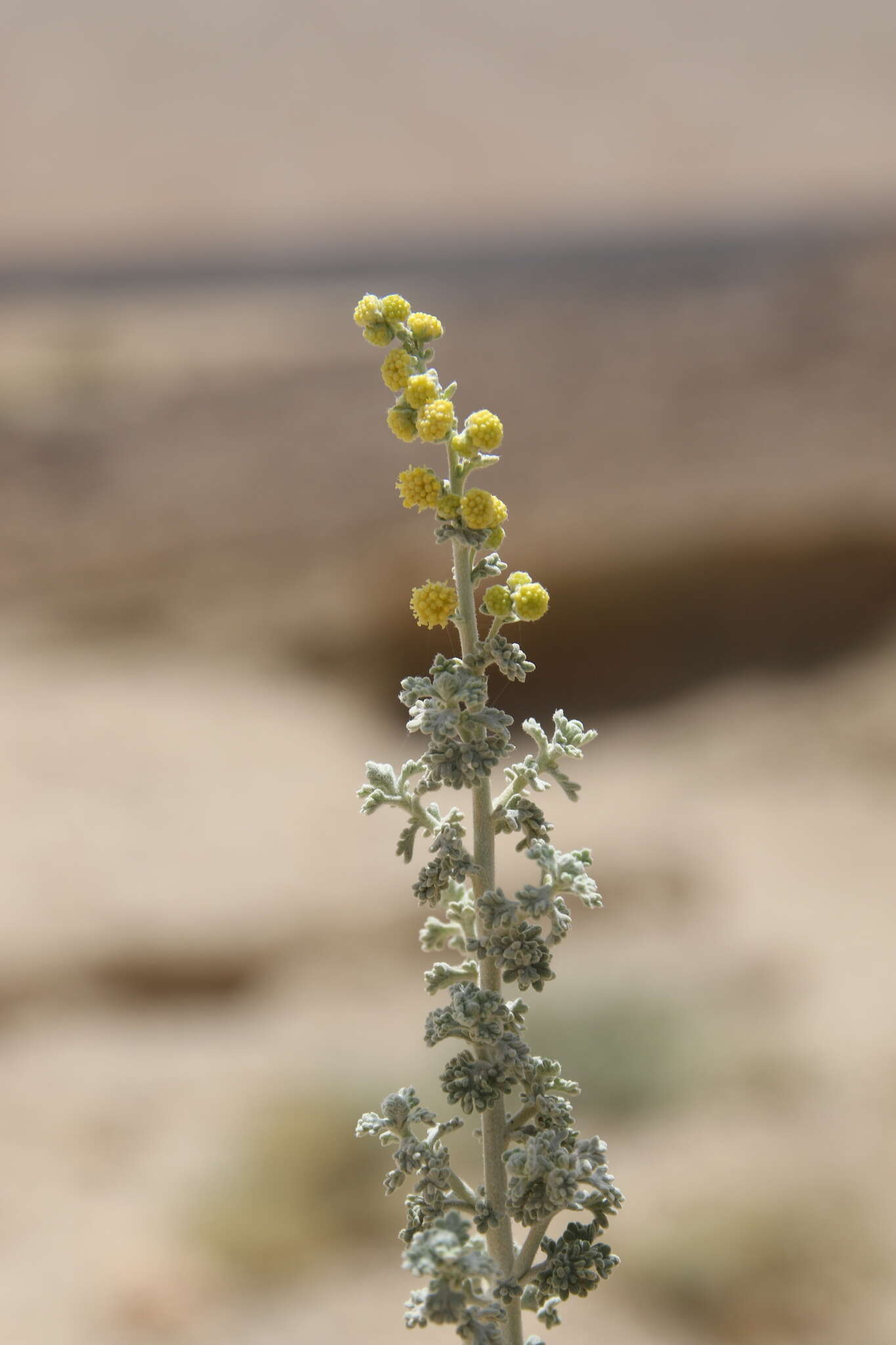
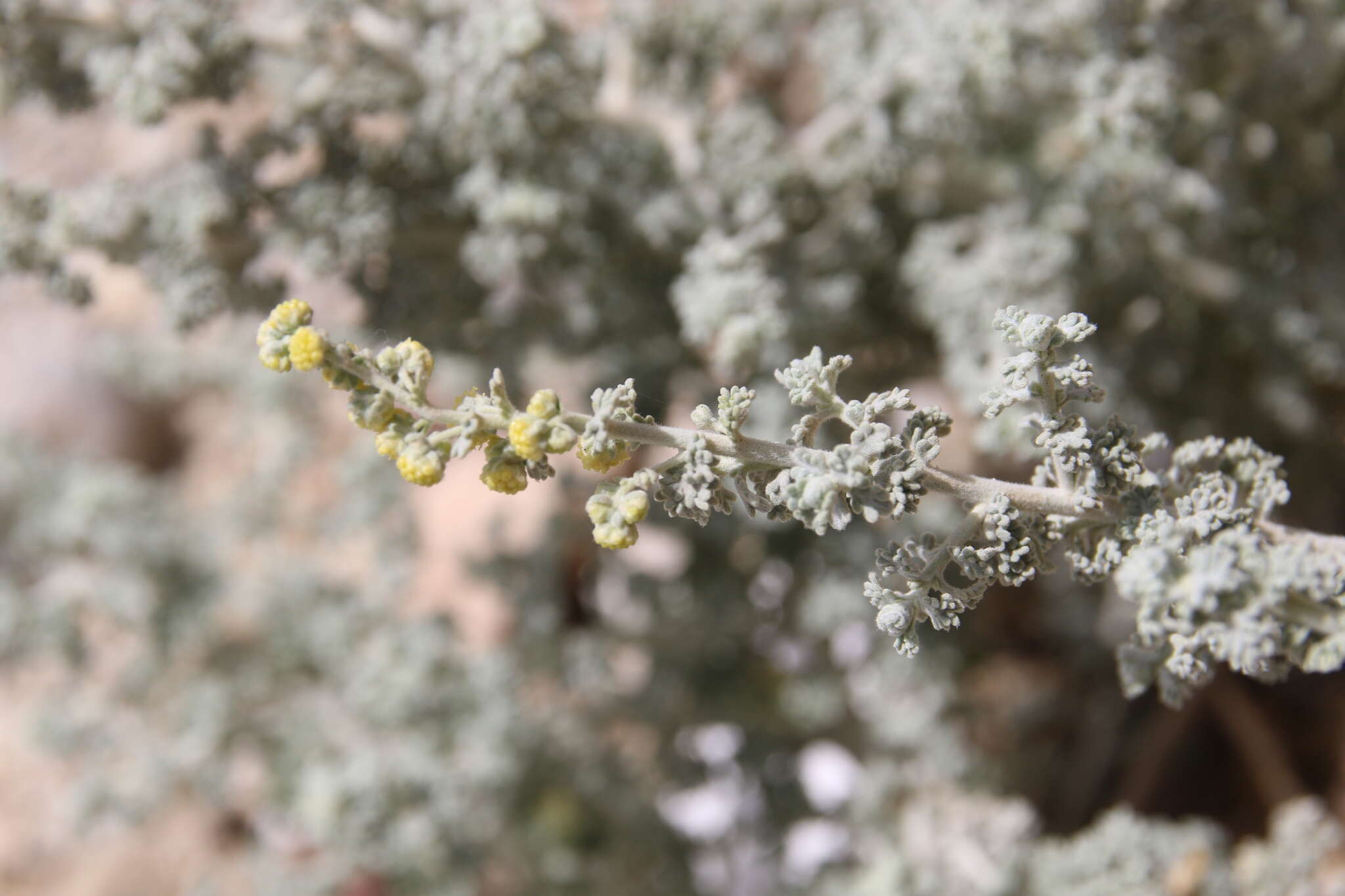
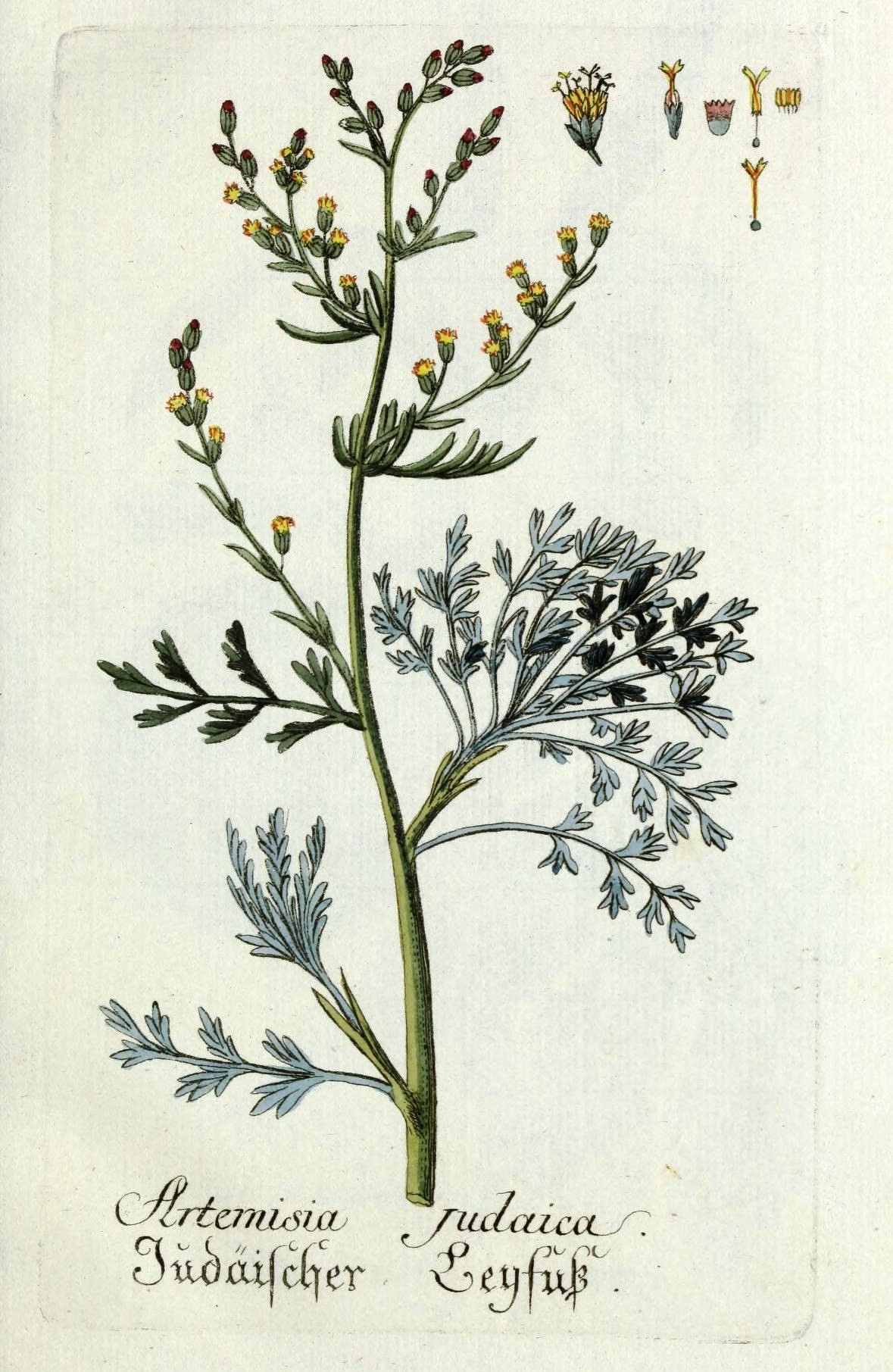
Artemisia judaica L. / Infraspecific taxa: Artemisia judaica ssp. sahariensis (L.Chevall.) Maire, it is a gray-tomentellous-canescent, strongly odorous, up to 50-70 cm tall, spreading shrublet branching into a lax compound, pyramidal panicle. Leaves of sterile branches obovate-cuneate, 1-2-pinnatifid or parted, primary lobes 3-7-lobed; lobes of the 2nd order ovate-oblong to oblong, entire or obtusely toothed lobed. Leaves of the flowering branches minute, clustered. Capitula hemispherical, c. 3 mm in diam., yellow or brownish yellow, nearly sessile in dense racemes along the branches of the panicle. Involucral bracts broadly ovate, hairy on the outside. Receptacle glabrous. Florets 10-20 per capitulum, all fertile; marginal florets female; central ones hermaphrodite. The yellow flowers are actinomorphic, tetra-cyclic (i.e. formed by 4 verticils: calyx – corolla – androceo – gynaeceum) and pentamers (calyx and corolla formed by 5 elements), with dimensions of 2 – 3 mm. The fruits are achenes without pappus. The shape is ellipsoid and compressed on the sides. Fruit size: 0.3 – 1 mm.
Life Form
Phytochoria
Distribution in Libya
Jabal Nafusa:
Wadi Kaam (Main course, Headwaters) 2022
Al-Jabal Al-Akhder:
Wadi Zaza 2003 Wadi El-Kouf 2014
Al-Jufra area:
Hun 2008 Al-Jufra region 2020
Fezzan area:
Reported from S. parts of Libya (Wadi Serir Ben Afen in the former Fezzan area) by Corti
Notes
Wild in Libya, medicinal plant.
Link of images: https://eol.org/pages/6180172, https://flora.org.il/en/plants/ARTJUD/
For more information
https://powo.science.kew.org/taxon/urn:lsid:ipni.org:names:179663-1, https://www.ipni.org/n/179663-1, http://www.worldfloraonline.org/taxon/wfo-0000084245, https://www.gbif.org/species/3120789, https://africanplantdatabase.ch/en/nomen/specie/129147/artemisia-judaica-l, https://www.ksanature.com/plants/artemisia_judaica/, https://antropocene.it/en/2023/01/23/artemisia-judaica-2/, https://flora.org.il/en/plants/ARTJUD/, https://eol.org/pages/6180172, https://antropocene.it/en/2023/01/23/artemisia-judaica-2/ , https://encyclopedia.pub/entry/19503
First: Encyclopedia Flora of Libyan:
Jafri, S. M. H. & El-Gadi, A. (1983) Flora of Libya, Asteraceae Vol. (107) Department of Botany, Al-Faateh Univ., Tripoli, Libya.
Second: Researches and PhD theses, master theses, Sorted by Newest:
Almushghub, F., Ahmed, D., Sharaf El-Din, A., Shaltout, k. (2022) Vegetation analysis of Wadi Kaam at northwest Libya. Journal of Basic and Environmental Sciences, 9 (2022) 20-37. https://www.researchgate.net/publication/357516127_Vegetation_analysis_of_Wadi_Kaam_at_northwest_Libya, https://jbes.journals.ekb.eg/article_372060_558ee8095e2cf97881a8a3cc705aa126.pdf
Khalifa, S.M. & Bader, B.M. (2020) Floristic analysis of the family Asteraceae in Al-Jufra region, Libya. Journal of Medicinal Plants Studies-2020- Vol. 8, Issue 6, Part A. https://www.plantsjournal.com/archives/?year=2020&vol=8&issue=6&part=A&ArticleId=1223, https://www.plantsjournal.com/archives/2020/vol8issue6/PartA/8-6-2-621.pdf
El-Mokasabi, F M. (2014) Floristic Composition and Traditional Uses of Plant Species at Wadi Al-kuf, Al-Jabal Al-Akhder, Libya. American-Eurasian J. Agric. & Environ. Sci., 14 (8): 685-697, 2014, ISSN 1818-769,IDOSIPublications,2014DOI:10.5829/idosi.aejaes.2014.14.08.12375. https://pdfs.semanticscholar.org/441b/23b83960f007044aca94e26f5c6b170fe102.pdf
Baayo, Kh. A. (2008) Floristic composition of Sahara Area in Libya. Catrina (2008), 3(3):37-53.https://cat.journals.ekb.eg/article_18541_f0ebe9187acd58ae16701b93a9bf9cc2.pdf
El-Barasi, Y. M., EI-Sherif, l. M. & Gawhari, A. M. H. (2003) Checklist and analysis of the flora and vegetation of Wadi Zaza at AI-Jabal AI Akhdar (Cyrenaica, Libya). Bocconea 16 (2): 1091-1105. 2003. – ISSN 1120-4060. https://www.researchgate.net/profile/Yacoub-El-Barasi, https://www.researchgate.net/profile/Ahmed-Gawhari, https://www.researchgate.net/publication/281559070_Checklist_and_analysis_of_the_flora_and_vegetation_of_Wadi_Zaza_at_AI-Jabal_AI_Akhdar_Cyrenaica_Libya

Leave a Reply