General Appearance
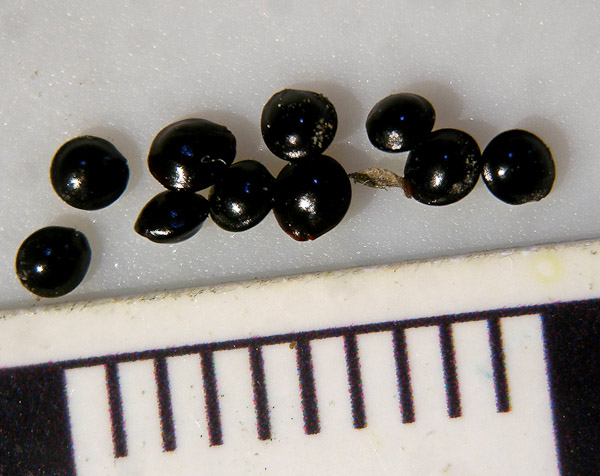
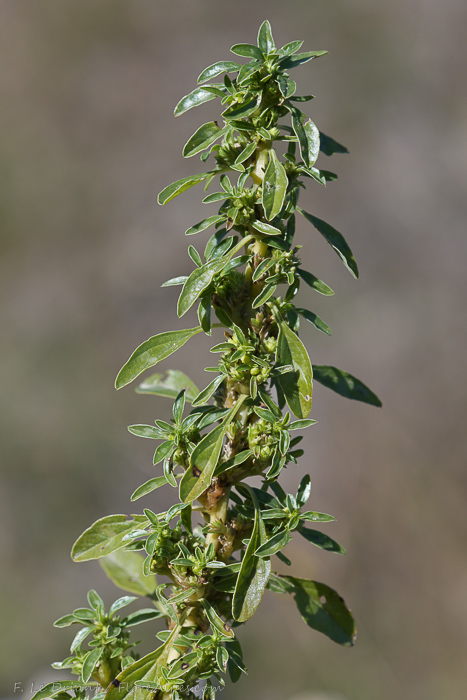
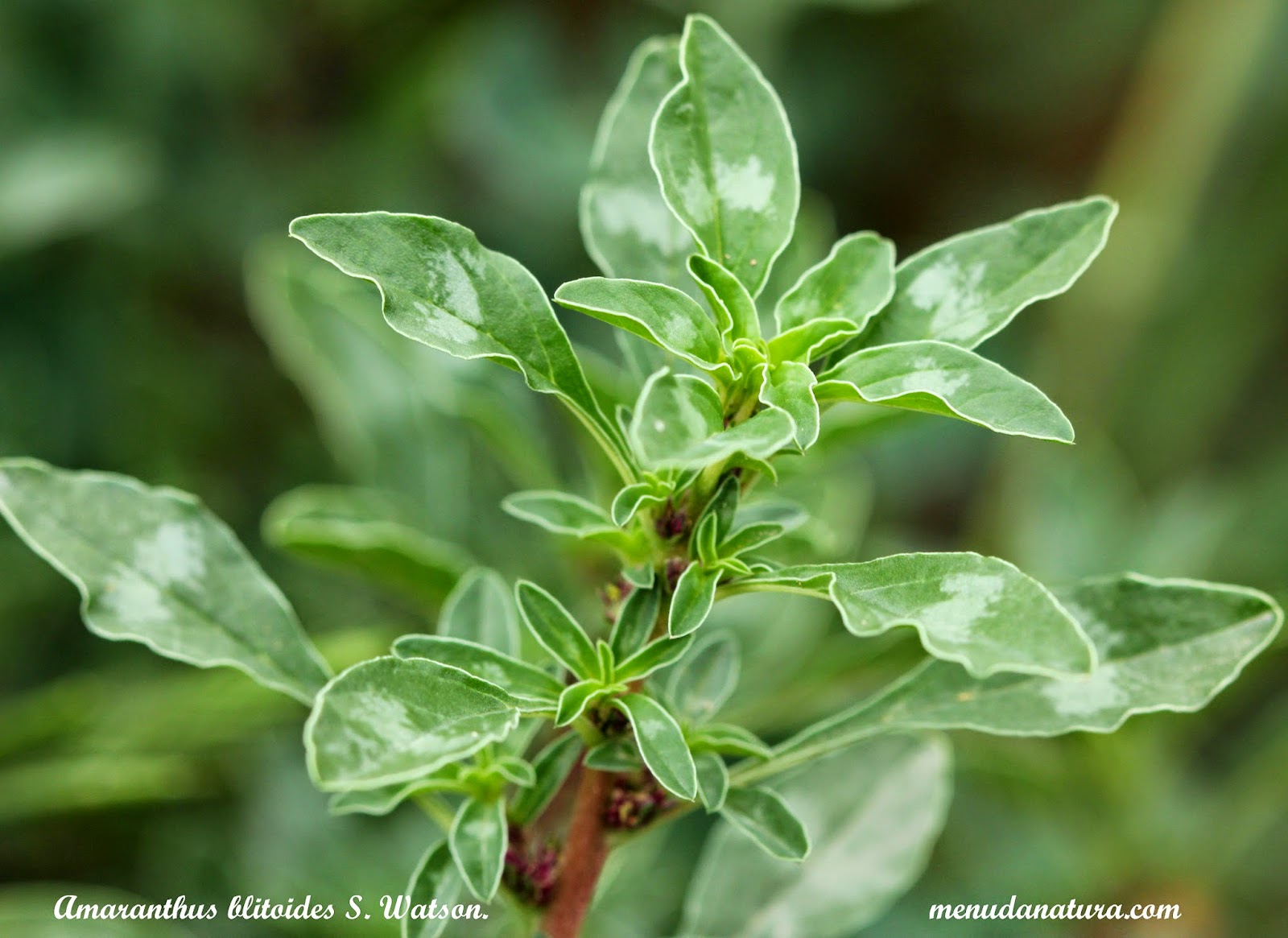
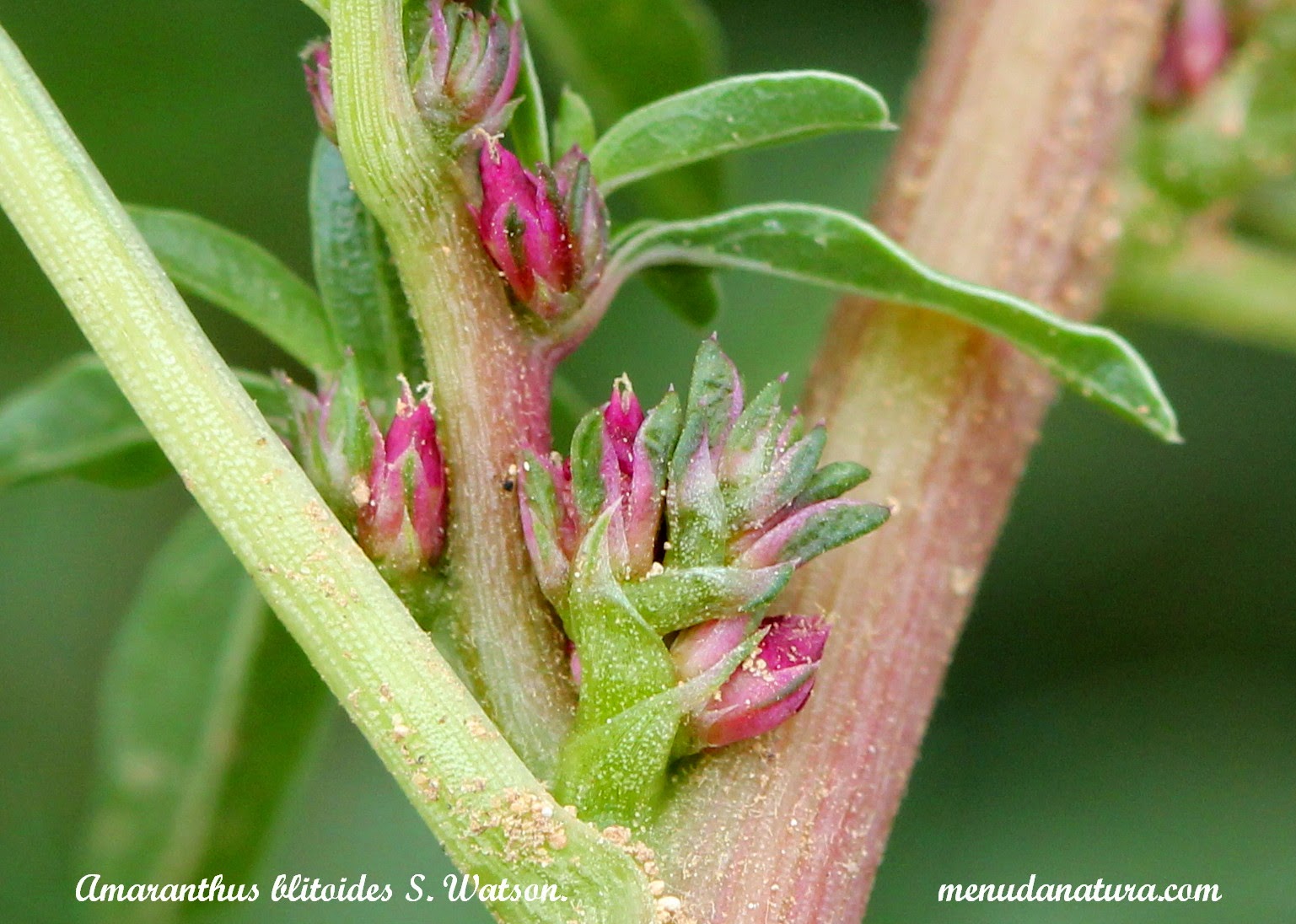
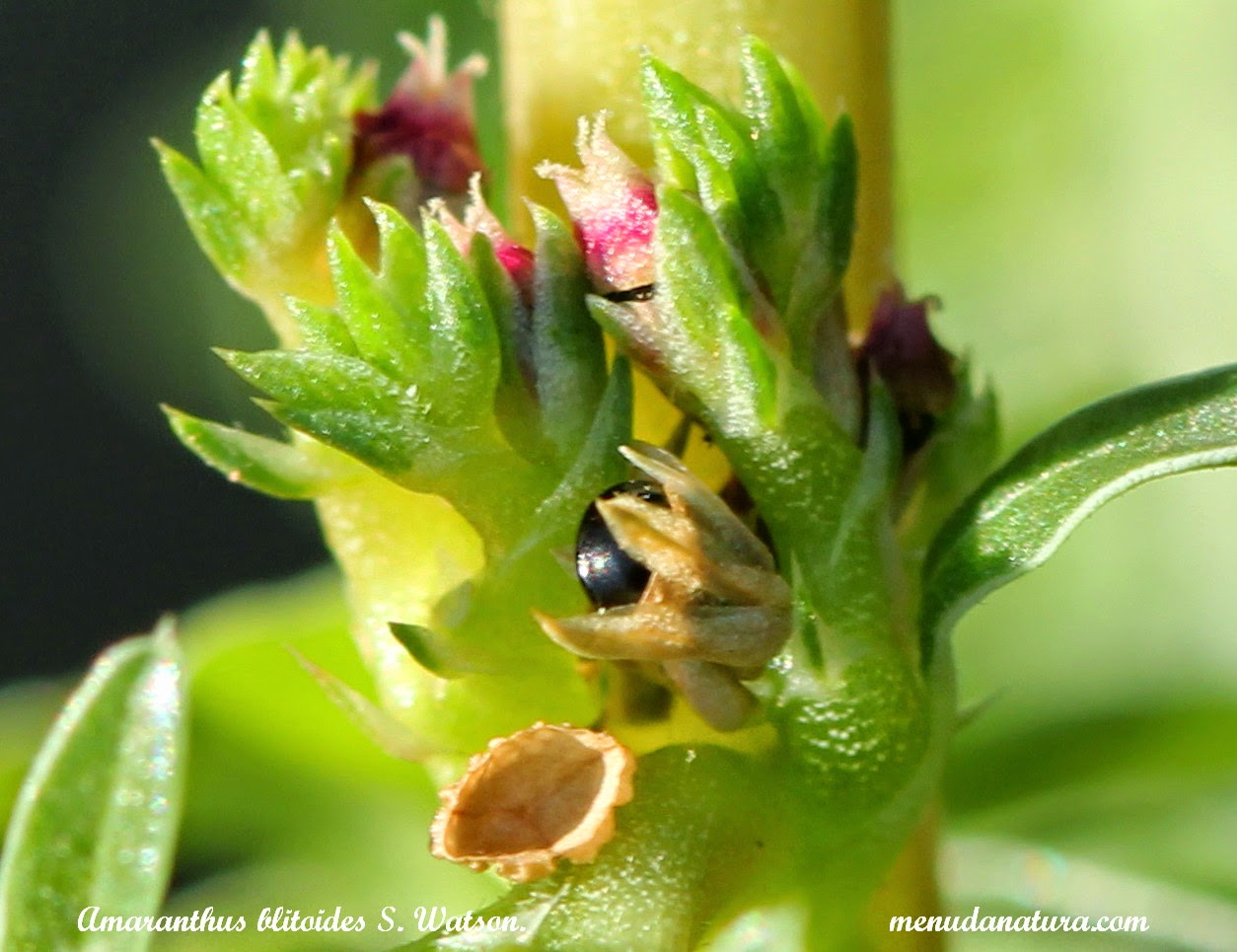
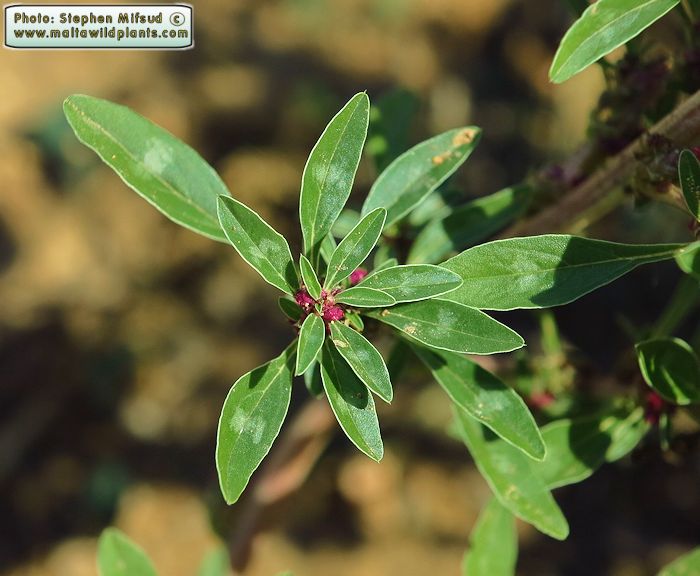
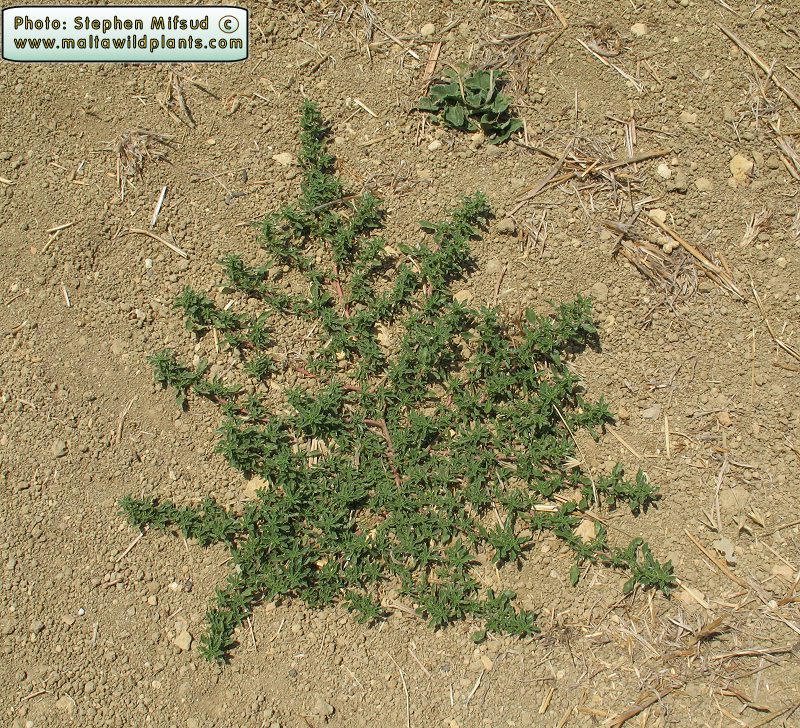
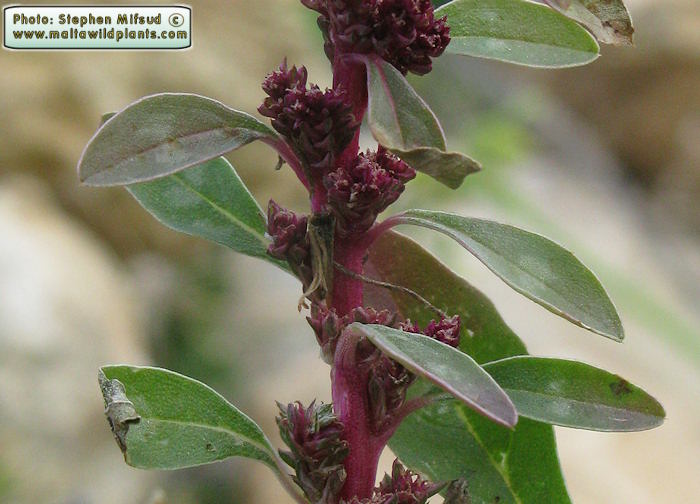
Amaranthus blitoides S.Watson, it is an annual plant, glabrous. Stems prostrate or ascending (very rarely suberect), much-branched (usually from base), (0.1-)0.2-0.6(-1) m. Leaves: petiole ± 1/2 as long as blade; blade obovate, elliptic, or spatulate, 1-2(-4) × 0.5-1(-1.5) cm, base cuneate and tapering, margins usually entire, plane, rarely slightly undulate, apex obtuse, rounded, mucronulate. Inflorescences axillary glomerules, green. Bracts of pistillate flowers narrow, thin, 1.5-5 mm, ± equaling or slightly exceeding tepals. Pistillate flowers: tepals (3-)4-5, narrowly ovate to broadly linear, unequal or subequal, 1.5-3 mm, thin, apex acute or acuminate; style branches spreading; stigmas 3. Staminate flowers intermixed with pistillate; tepals 3(-4); stamens 3. Utricles broadly ovoid, 1.7-2.5 mm, equaling tepals, mostly smooth (slightly verrucose or rugose in dry plants), dehiscence regularly circumscissile. Seeds black, lenticular to broadly plumply lenticular, 1.3-1.6 mm diam., rather dull.
Life Form
Phytochoria
Distribution in Libya
Al-Jafarah Plain:
Al-Hdaba Treatment Plant Tripoli 2016 Souq Al-Gomaa 10 km east of Tripoli- and Ain Zara 20 km east of Tripoli 2016
Jabal Nafusa area:
Msallata-Garaboulli Province 2020
Marmarica Plateau:
Marmarica (north-eastern part of Libya) 2002 Dafna region (Tobruk to Msaid) 2008
Notes
Invasive, noxious, introduced in Libya.
For more information
https://powo.science.kew.org/taxon/urn:lsid:ipni.org:names:10615-2, https://www.ipni.org/n/10615-2, https://www.worldfloraonline.org/taxon/wfo-0000530076, https://www.gbif.org/species/5384395, https://africanplantdatabase.ch/en/nomen/specie/291/amaranthus-blitoides-s-watson, https://maltawildflowers.com/AMAR/Amaranthus_blitoides.php, https://www.florealpes.com/fiche_amaranbitoide.php, http://www.menudanatura.com/2014/09/amaranthus-blitoides-s-watson.html, https://oregonflora.org/taxa/index.php?taxon=2689, https://hoseito.com/producto/amaranthus-blitoides-s-watson/
First: Encyclopedia Flora of Libyan:
Jafri, S. M. H. & El-Gadi, A. (1977) Flora of Libya, Amaranthaceae Vol. (42) Department of Botany, Al-Faateh Univ., Tripoli, Libya.
Second: Researches and PhD theses, master theses, Sorted by Newest:
Mahklouf, M.H., Sherif, A.S., Betelmal, A.G. (2020) Floristic Study and Species Diverisy of Msallata-Garaboulli Province in Libya. J. of Advanced Botany and Zoology Volume 7 / Issue 3 ISSN: 2348 – 7313. https://scienceq.org/wp-content/uploads/2020/04/JABZV7I304.pdf
Mahklouf, M.H., Abuhadra, M.N., Essokne, R.S. (2016) A New Record Amaranthus blitoides S. Watson. (Amaranthaceae) For the Flora of Libya. American Journal of Life Science Researches-Jul-2016, Volume 4, Issue 3. aceae_For_the_Flora_of_Libya , http://mail.diili.org/ojs-2.4.6/index.php/ajlsr/article/view/102, https://scholar.google.com/citations?user=stdDAFoAAAAJ&hl=ar
Mahklouf, M. H. & Al Sghair, F. G. (2016) Biodiversity and Floristic Study of Al-Hdaba Treatment Plant Tripoli-Libya. American Journal of Life Science Researches, Original Article, pag. (101-103).Jul 2016, Volume 4, Issue 3, DOI: 10.21859/ajlsr-040307. https://www.semanticscholar.org/paper/Biodiversity-and-Floristic-Study-of-Al-Hdaba-Plant-Mahklouf-Sghair/ea64830d86fda1cce3739d650b0536260055577b, https://www.semanticscholar.org/author/M.-Mahklouf/89540276
Barrani, M. W. (2008) A study of environmental degradation factors in the semi-desert Dafna Region-Libya. Master Thesis-Department of Science and environmental Engineering-Postgraduate Academy Benghazi branch. (In Arabic)
El-Shaary MS. 2002. The Natural Vegetation in Marmarica plateau (North-eastern Libya). First ed. Tobruk (Libya): Published by the local Authority. (In Arabic)

Leave a Reply